
KEMRI SERU Stakeholders Push for Faster Research Approvals, Digital Transformation and Stronger Ethics Oversight
October 15, 2026A Win for KEMRI as Two Collaboration Areas Emerge from Korean Biotech Firm CEO’s Visit
BY GIDEON KIRUI & ISAAC MUTHOTHO
The Institute is poised to benefit significantly from potential research and innovation partnerships with South Korea-based biotechnology firm PCL Inc., following the identification of two areas for collaboration in diagnostic technology development and coffee-derived probiotics.
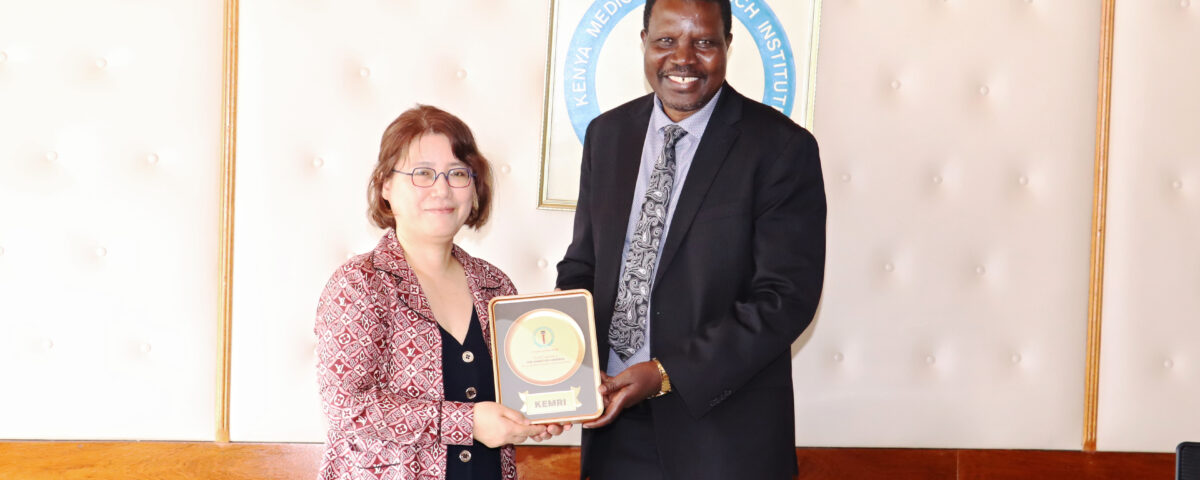
The opportunities emerged from discussions during a two-day visit by PCL Founder and Chief Executive Officer, Prof. Soyoun Kim, between 7th and 9th October 2026, with plans for her to establish a manufacturing company in Kenya where KEMRI will play a significant role.
The potential projects could strengthen local capacity in health technology innovation, product development and commercialisation, while creating opportunities for knowledge and technology transfer between the two institutions.
Prof. Kim’s visit included a courtesy call on KEMRI’s Acting Vice Chancellor and Chief Executive Officer, Prof. Elijah Songok, where the VC underscored the importance of partnerships that translate scientific knowledge into locally developed and manufactured health products, technologies and services. He noted that such collaborations could strengthen institutional capacity, support skills development and enhance KEMRI’s contribution to Kenya’s health and economic development.
Over the two days, she held discussions with teams from KEMRI’s Innovation and Technology Transfer Division (ITTD) and the Centre for Traditional Medicine and Drug Research (CTMDR), exploring opportunities for collaboration in health research, diagnostics, vaccine development and product innovation.
A key focus of the engagements was KEMRI’s vaccine research and development capacity and the need to strengthen local manufacturing of vaccines and other health products.
The Institute outlined its approach of linking research institutions, industry and government to advance scientific discoveries from laboratory development and prototypes to production, commercialisation and wider distribution.
The discussions highlighted the importance of reducing reliance on imported vaccines and other health products, particularly in light of supply-chain vulnerabilities exposed by the COVID-19 pandemic. Strengthening domestic manufacturing was identified as an important pathway towards improved health security, pharmaceutical self-reliance and economic growth.
KEMRI highlighted its vaccine research capabilities, including experienced scientists, laboratory infrastructure, small-animal research facilities, a large sample repository and a network of more than 23 clinical trial sites across the country.
The Institute is also building its capacity through the mRNA technology-transfer programme supported by the World Health Organization (WHO) and the Medicines Patent Pool (MPP), under which KEMRI is among 15 recipients globally. The programme seeks to strengthen local expertise in mRNA vaccine development and expand the technologies available for future vaccine research.
Preparations for KEMRI’s mRNA production facility were reported to be nearing completion, with equipment and technical processes being developed to support implementation.
Discussions with Prof. Kim explored potential collaboration in mRNA vaccine development, including production processes, formulation technologies and the technical expertise needed to advance vaccine candidates.
The development of an mRNA-based dengue vaccine candidate was another area of discussion. Prof. Kim presented PCL’s work on a candidate designed to target all four dengue virus serotypes, intending to progress towards clinical evaluation.
The discussions also explored the potential for Kenyan researchers to contribute to further development of the candidate. Any proposed human clinical trials would, however, require the necessary safety assessments and regulatory approvals before proceeding.
Beyond vaccines, the engagements examined diagnostic technologies, including portable testing platforms and opportunities for local production of diagnostic kits. Such technologies could help improve access to affordable testing, while local manufacturing could build domestic capacity and reduce reliance on imported products.
Prof. Kim was also appointed a visiting professor at KEMRI for a three-year term, providing a platform for collaboration in research, innovation and the training of students and scientists.
The discussions also identified coffee-derived probiotics as another project, offering an opportunity to add value to Kenyan coffee and explore applications beyond its traditional use as a beverage.
The engagements were coordinated by the Acting Director of Research Capacity Building, Dr. Martin Bundi, and the Acting Deputy Director of Resource Development and Knowledge Management, Mrs. Lilian Mayieka.
Also present during the courtesy call were the Acting Director of Scientific Programmes, Partnerships and Grants Management, Dr. Zipporah Bukania; the Director of Corporate Services, Mr. Jones Otuke; the ITTD team led by its Head, Dr. James Kimotho; and the CTMDR team led by the Centre’s Acting Deputy Director, Dr. Jeremiah Gathirwa.