Quick Facts at a Glance
|
Causative agent |
Ebola virus (genus Ebolavirus, family Filoviridae) — 6 known species |
|
Most common strain |
Zaire ebolavirus — responsible for most major outbreaks |
|
Case fatality rate |
25–90% depending on strain and quality of care |
|
Incubation period |
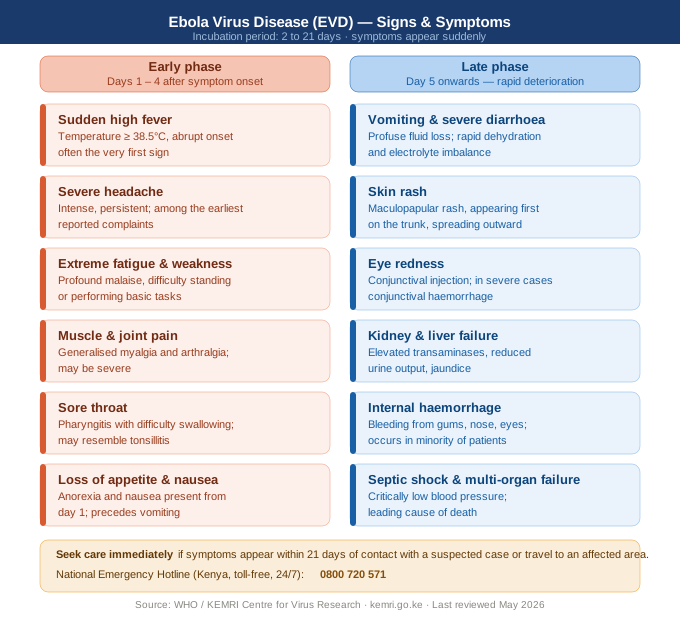
2 to 21 days from exposure to symptom onset |
|
Transmission |
Direct contact with blood or bodily fluids of infected persons or animals |
|
Airborne transmission |
No — not transmitted through air, water, or food |
|
Natural reservoir |
Fruit bats (Pteropodidae family) are the most likely reservoir |
|
Vaccine available |
Yes — rVSV-ZEBOV (Ervebo) approved for Zaire strain since 2019 |
|
Treatment |
Monoclonal antibodies (mAb114, REGN-EB3); supportive care |
|
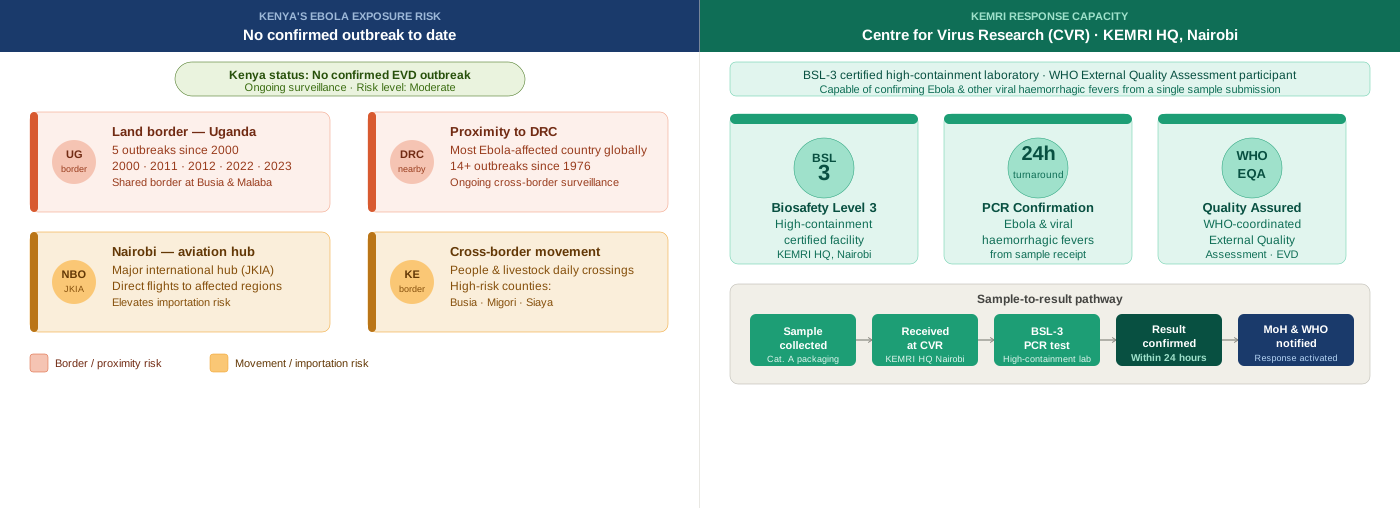
Kenya risk level |
Moderate — no endemic transmission; elevated risk due to regional proximity |
Overview
Ebola disease (EBOD) is a rare but severe illness in humans (1). It is often fatal.
Ebola disease is caused by viruses that belong to the Orthoebolavirus genus of the filoviridae family (2). Six species of Orthoebolaviruses have been identified to date, with three known to cause large outbreaks:
- Ebola virus (EBOV) causing Ebola virus disease (EVD)
- Sudan virus (SUDV) causing Sudan virus disease (SVD)
- Bundibugyo virus (BDBV) causing Bundibugyo virus disease (BVD).
Ebola disease first occurred in 1976 in two simultaneous outbreaks: one outbreak was of Sudan virus disease in Nzara in what is now South Sudan, and the other outbreak was of Ebola virus disease in Yambuku, in what is now the Democratic Republic of the Congo. The latter occurred in a village near the Ebola River, from which the disease takes its name.
While there are licensed vaccines and therapeutics for Ebola virus disease, there is no approved vaccine or treatment for other Ebola diseases, such as SVD or BVD. Candidate products are in development.
Early intensive supportive care including rehydration and treatment of specific symptoms, can improve survival. Seeking early care can be lifesaving.
|
Note: Kenya has never recorded a confirmed Ebola outbreak. However, Kenya's open borders and air transport links with affected countries require sustained surveillance and preparedness at all levels of the health system. |
How it spreads
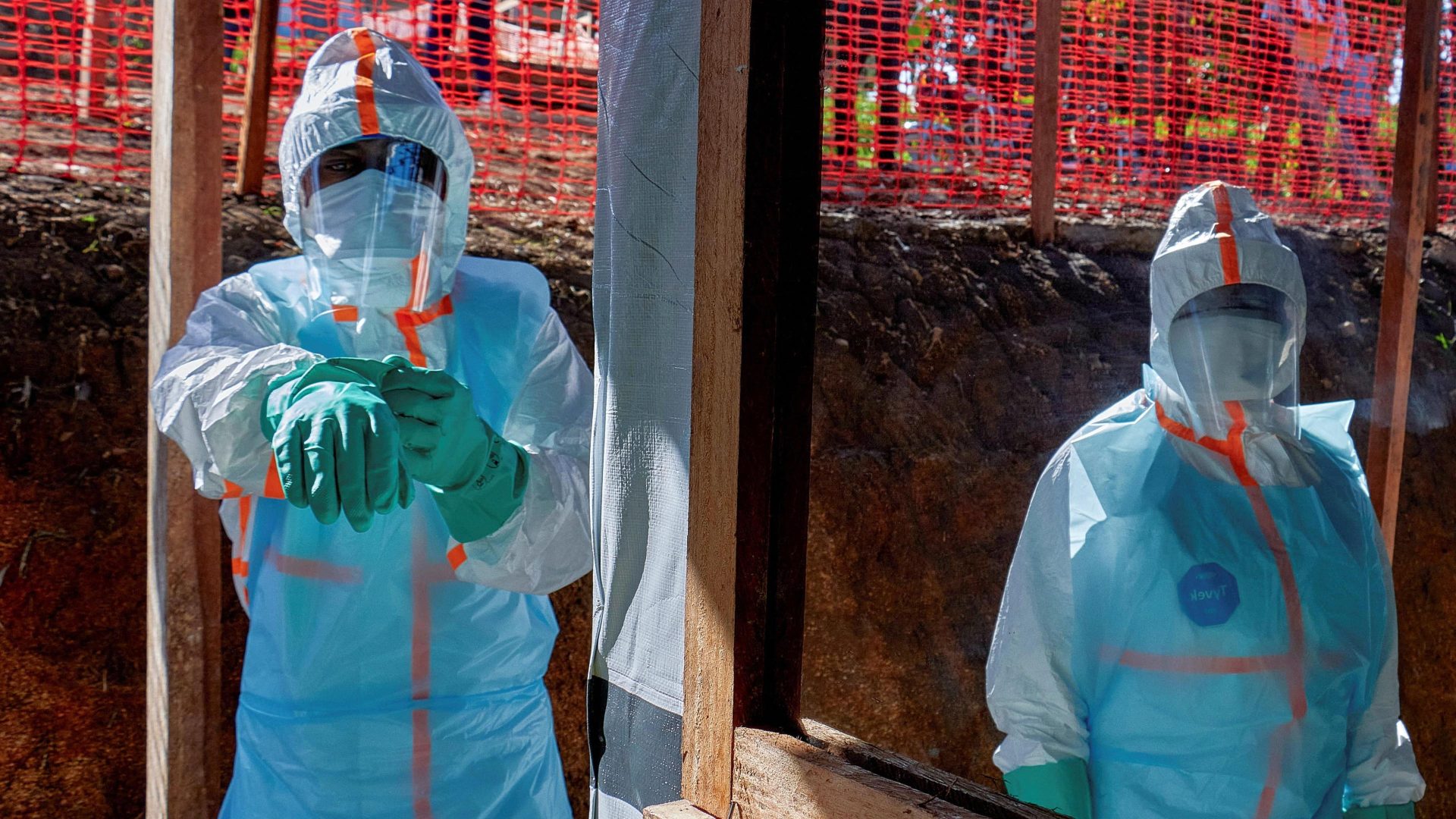
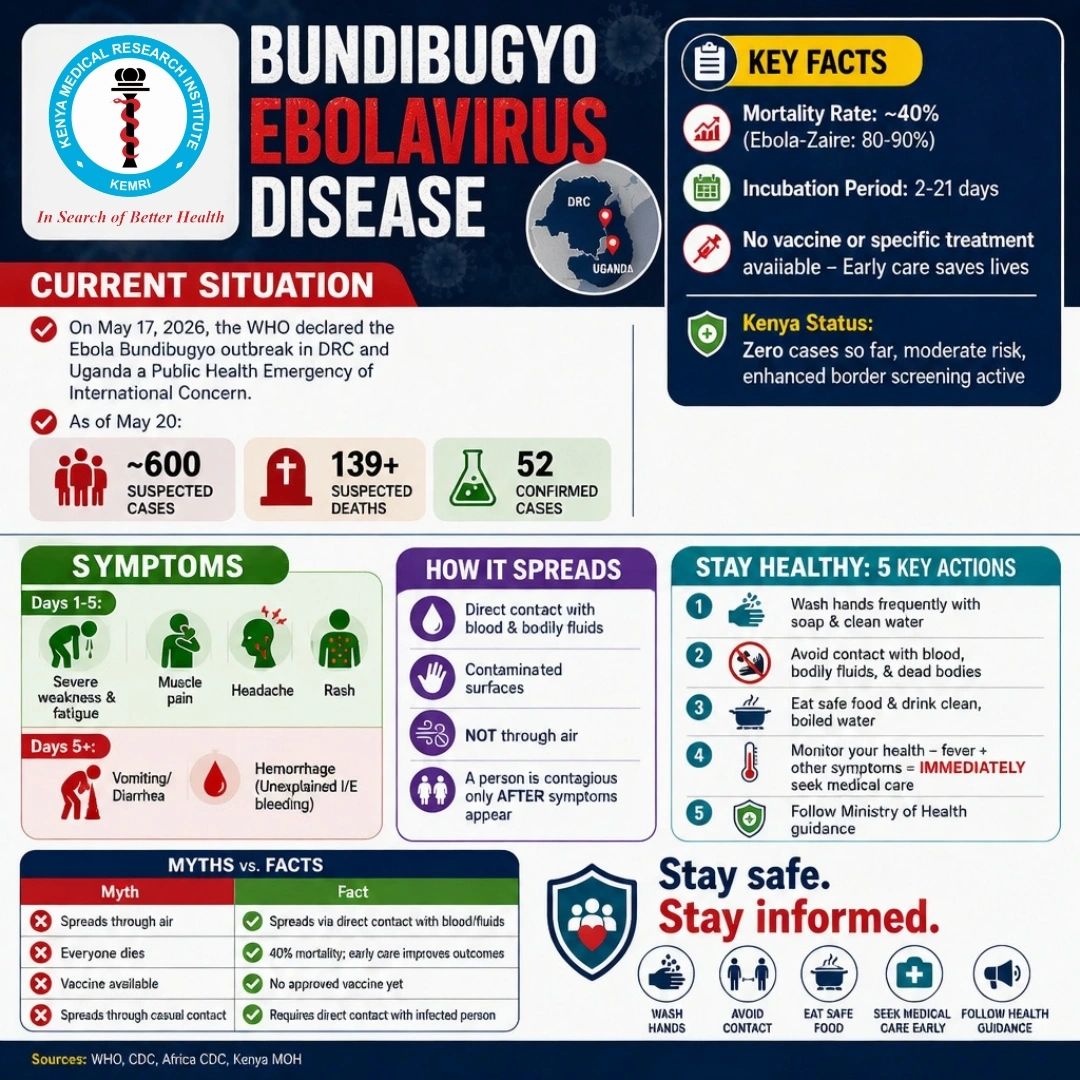
Ebola spreads through direct contact with the blood, secretions, organs, or other bodily fluids of infected people, and with surfaces and materials such as bedding contaminated with these fluids. Health workers have frequently been infected while treating patients with suspected or confirmed EVD.
Transmission can occur through:
- Blood and bodily fluids (saliva, sweat, vomit, faeces, urine, breast milk, semen) of a person who is sick with or has died from EVD
- Objects contaminated with the bodily fluids of an infected person (needles, soiled clothing, bedding)
- Infected fruit bats or non-human primates (apes, monkeys) through contact with blood, secretions or raw meat
- Semen of a man who has recovered from EVD — the virus can persist in semen for up to 12 months