KASH
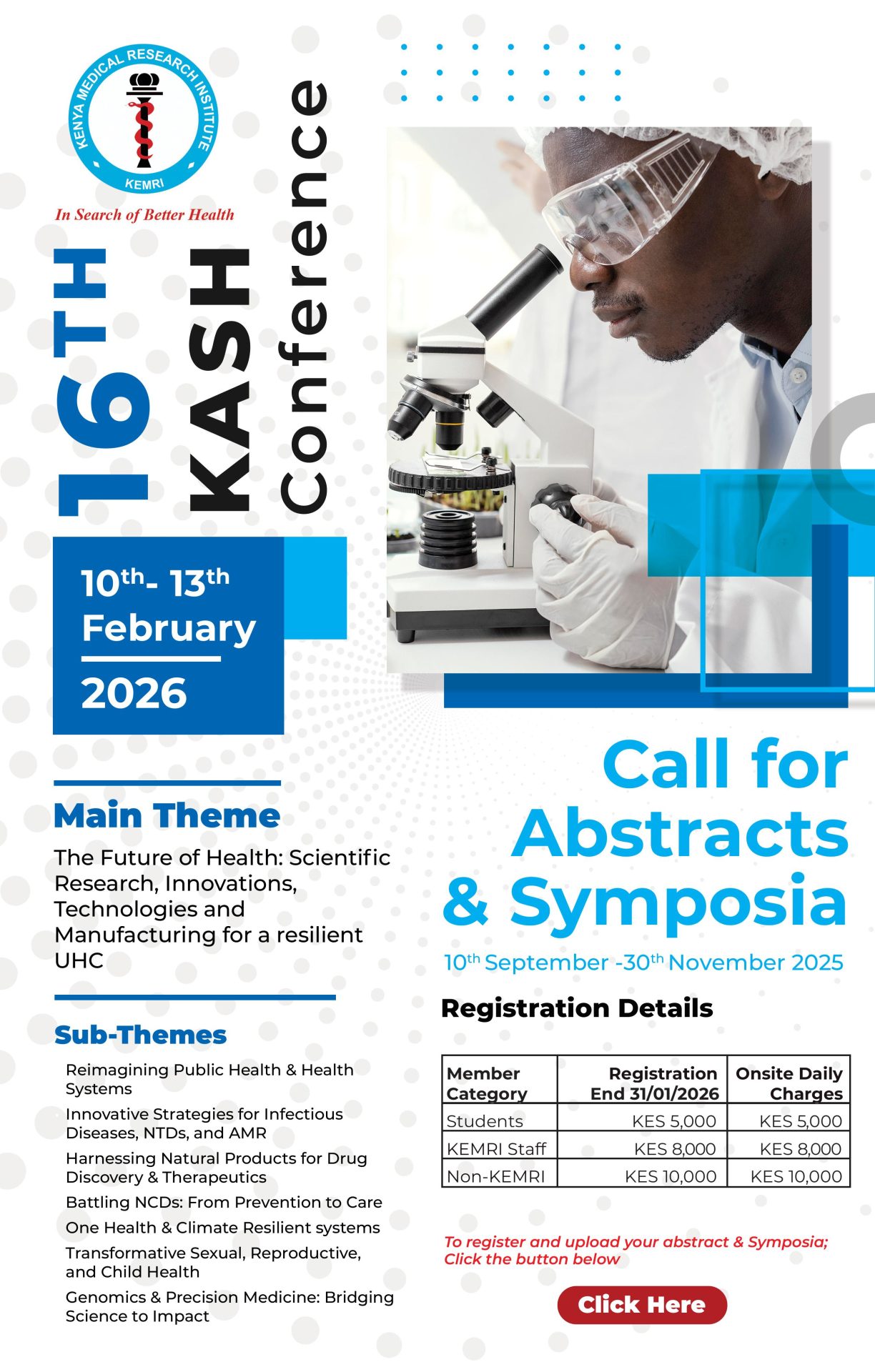
16TH KEMRI ANNUAL SCIENTIFIC AND HEALTH CONFERENCE

- KASH HOME
- ABOUT US
- KASH 2026 SPEAKERS
- KASH THEMES
- PRESENTATION GUIDELINES AND TEMPLATES
- ABSTRACT AND PROGRAMME
- IMPORTANT DATES AND INFORMATION
- REGISTRATION
- ABSTRACT AND SYMPOSIUM SUBMISSION
- GUIDELINES FOR ABSTRACT SUBMISSION
- RISING STAR SCIENTIFIC AWARD
- SPONSORS & EXHIBITORS
- KASH WEBINAR SERIES
- VENUE
- KASH GALLERY
- CONTACT US
- MEET THE TEAM

KASH 16 THEME
The Future of Health: Scientific Research, Innovations, Technologies and Manufacturing for a resilient UHC
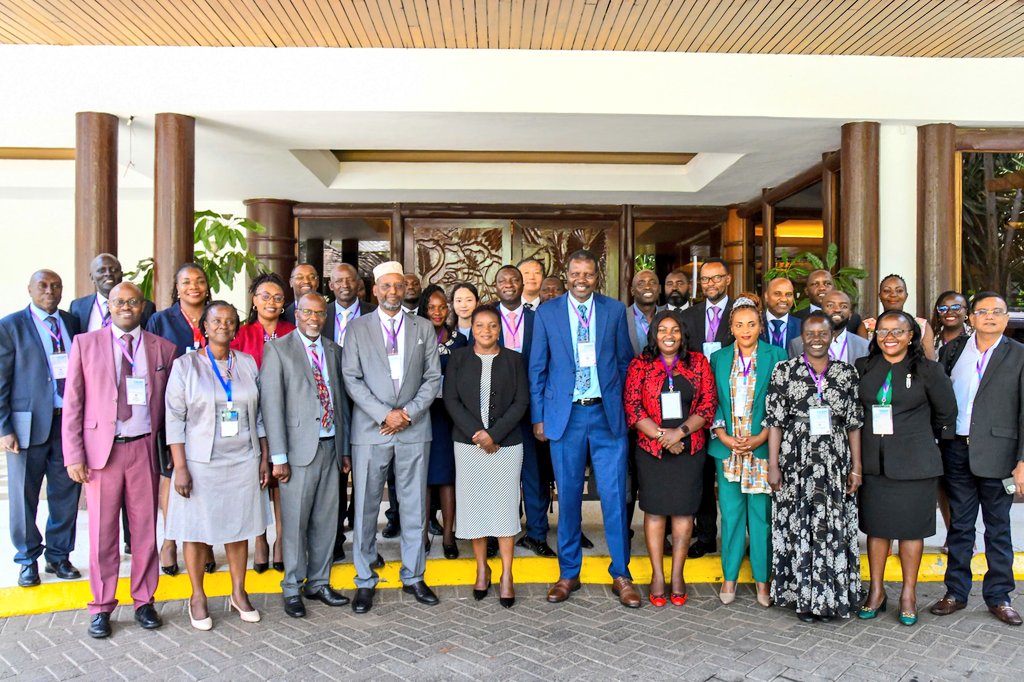
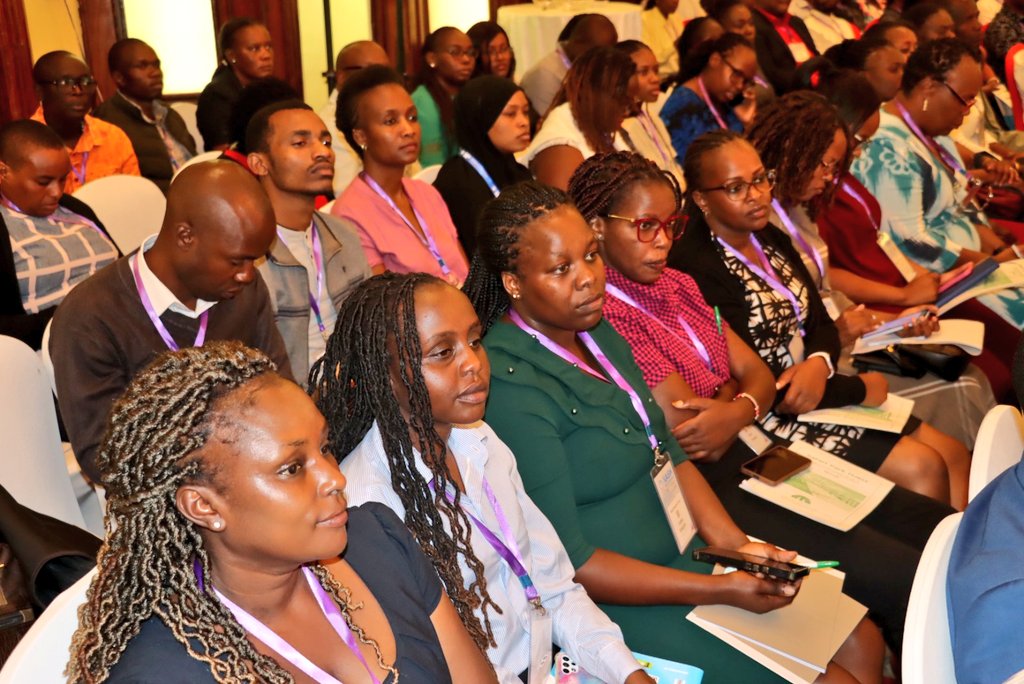
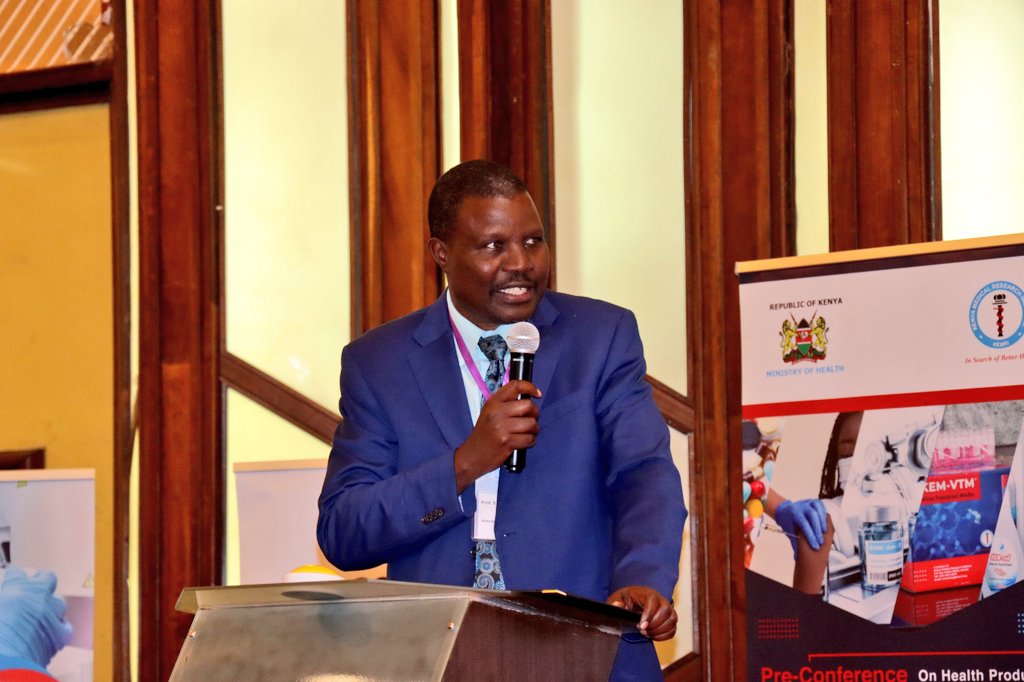
KASH is the KEMRI Annual Scientific and Health Conference launched in 2011 with the mission to: mainstream the scientific and health agenda of KEMRI by Dissemination, sharing and digesting various scientific outputs and other allied products including networking and strengthening Partnerships and collaborations with view to Improving on Health and Quality of life






Introduction
KASH is the KEMRI Annual Scientific and Health Conference launched in 2010 with the mission to mainstream the scientific and health agenda of KEMRI by Dissemination, sharing and digesting various scientific outputs and other allied products including networking and strengthening Partnerships and collaborations with a view to Improving on Health and Quality of life of the country’s citizens.
The conference is open to research scientists, health professionals and diploma, graduate and postgraduate students undertaking scientific and health-related courses.
Objective of KASH
1. To disseminate research findings
2. To strengthen research partnerships and relationships with other stakeholders
3. Capacity development for enhanced information sharing and continuous professional development
KASH Conference has transformed KEMRI research dissemination and has become the one annual event on the calendar of KEMRI that all staff, partners from academia, policy and industry, and health practitioners from the region look forward to.
The forum provides a great opportunity for sharing, cross-learning and mentoring of younger scientists as well as a platform for the discussion of current health challenges, the exchange of new knowledge and discussion on the way forward.
PRE CONFERENCE SPEAKERS
Keynote Address

Prof. Shaukat Abdulrazak
Principal Secretary for the State Department for Science, Research and Innovation

Dr. Ernest Wandera
Senior Research Scientist, Innovation and Technology Transfer Division, Kenya Medical Research Institute.
Plenary Title: Accelerating Kenya’s Local Vaccine Manufacturing: Leveraging KEMRI’s Strategic Role
Dr. Wandera holds a PhD in Medical Science (Tropical and Emerging Communicable Diseases) from Nagasaki University, Japan and a Postdoctoral Fellowship in Pathogen Point-of-Care Diagnostics from the University of Hull, UK and Mount Kenya University. He is driven by a strong desire to apply basic and clinical research knowledge in the development, implementation and evaluation of high-impact and cost-effective public health intervention tools such as vaccines, diagnostics and biotherapeutics.
Dr. Wandera has expertise in molecular biological assays including high-throughput genomics and recombinant DNA technology, immunological assays, and bioproduct development. He has broad experience in field studies having participated in several molecular epidemiological and vaccine impact and effectiveness evaluation studies. Additionally, he has conducted exploratory studies leading to the development of novel point-of-care diagnostic systems for pathogens such as rotavirus, Group B Streptococcus, COVID-19, and Cryptococcus neoformans.
Dr. Wandera has vast experience in biosafety, biosecurity and BSL-3 laboratory training for researchers and laboratory personnel in Kenya and the larger Eastern African region. He is a member of various institutional, national and continental technical working groups supporting continental and national health security initiatives.
Notably, Dr. Wandera leads the KEMRI Vaccine Discovery Research Team that is mandated to spearhead research and development of vaccine prototypes for priority diseases. He has co-authored several publications in peer-reviewed journals and presented his research work in various international and local conferences

Dr. Thomas Kariuki
Chief Executive Officer, Science for Africa Foundation
Plenary Title: Vaccine Manufacturing Progress in Kenya: The BioVax initiative
Dr. Wesley is a Pharmaceutical Sector Development Expert with over 25 years of experience advancing access to quality-assured medicines and vaccines across Africa. He is the Chief Executive Officer of Kenya BioVax Institute, where he leads the development of sustainable vaccine and biologics manufacturing capacity as a cornerstone of Kenya’s health security and a contributor to Africa’s goal of producing 60% of its vaccine needs locally by 2040.
Previously, he led market-shaping and demand-assurance initiatives at the Africa Centres for Disease Control and Prevention Partnership for African Vaccine Manufacturing, including the design of the African Pooled Procurement Mechanism, and has held senior advisory roles with GIZ and EU-supported programmes across the EAC and SADC.
Dr. Wesley has advised institutions such as the African Development Bank, COMESA, UNCTAD, and FCDO, and is recognized for bridging health, trade, and industrial policy to strengthen Africa’s pharmaceutical manufacturing ecosystem. He is a former Research Fellow at the Sarah Rothman Centre for Global Health, University of Toronto, and a registered pharmacist with postgraduate qualifications in Medicinal Chemistry and Business Administration (MBA).

Prof. Faith Osier
Chair of Immunology and Vaccinology, Faculty of Natural Sciences at Imperial College London
Plenary Title: International Vaccine Institute: Advancing Global Vaccine End-End Capabilities
Professor Osier is Chair of Immunology and Vaccinology, Faculty of Natural Sciences at Imperial College London, and Co-Director of the School of Convergence for Health and Technology.
She is Director of “Chanjo”, an African-led academic industry hub that implements a bottom-up approach to local vaccine manufacturing for endemic and epidemic diseases of importance to Africa.
She has won multiple international awards and is a Fellow of the Academy of Medical Sciences (FMedSci), the African Academy of Sciences (FAAS), the World Academy of Sciences (FTWAS), a TED Fellow, an EMBO member.
She is Past President of the International Union of Immunological Societies and was awarded the prestigious British Society for Immunology Lifetime Honorary Membership Award. She is passionate about emerging African scientists as key agents of change, delivering the health innovations our continent urgently needs.

Prof. Emmanuel Mutisya,
Chairman of University council, Kenya Advanced Institute of Science and Technology.
Plenary Title: Africa’s Initiative for Local Vaccine Manufacturing
Emmanuel Mutisya is a professor and researcher in sustainability science, an economic policy analyst, a seasoned project manager, and strategist in international development policy with more than 15 years of professional and program management experience. His expertise spans general project management and in carbon markets, design of graduate training programs, policy strategic planning, youth entrepreneurship, and sustainability science initiatives.
He is currently the Chairman of the University Council of Kenya Advanced Institute of Science and Technology (Kenya-AIST), the Chairperson of the Global e-Schools and Communities Initiative (GESCI), a Visiting Professor at the University of Nairobi, a Board Member, of HUMA – Institute for Humanities in Africa, University of Cape Town, South Africa, a member of the Governing Council of the African Forest Forum, and a Senior Consultant of Education and Skills Development at the African Development Bank.
He has held various positions in Kenya and globally. He was appointed the First Chairperson of the National Diaspora Council of Kenya by the President of Kenya (2015-2021). He was the Chairman of the Kenyans in Japan Association (2011-2019), Chairman of the Diaspora Consortium of Kenya (2015 – 2022) as well as the Coordinator of JICA funded programs in Africa under the TICAD framework. He was also a Project Manager at the United Nations University in Japan (2015-2017), where he coordinated the Education for Sustainable Development in Africa (ESDA) program and the African Youth Entrepreneurship Society (AYES) initiative. He was awarded the “Education for Sustainable Development in Africa Champion” in Kenya in 2019.
Prof. Mutisya holds a PhD in Sustainability Science from the University of Tokyo (Japan), master’s degree in public administration from the International Christian University (Japan) and a master’s degree in mathematics from Karlstad University (Sweden).
CONFERENCE SPEAKERS
Keynote Address

Mr. Kenneth Mwige
Director General, Kenya Vision 2030 Delivery Secretariat
Mr. Kenneth Mwige is the Director General of the Kenya Vision 2030 Delivery Secretariat (VDS) and an accomplished public servant, legal professional, and policy expert with over three decades of experience spanning government, the private sector, regional institutions, and international development organizations. His career is marked by strategic leadership in national development planning, governance and ethics, legislative and policy reform, anti-corruption, international relations, and results-based public sector management. Education and Professional Training
Mr. Mwige is an alumnus of Alliance High School. He holds a Bachelor of Laws (LLB) degree from the University of Nairobi and a Master of Laws (LL.M.) from Downing College, University of Cambridge. He also possesses a Diploma in Legal Practice from the Kenya School of Law, a Certificate in Legislative Drafting from the Institute of Advanced Legal Studies, University of London, and a Certificate in International Trade and Transport Law from Lloyd’s Maritime Academy, London.
Mr. Mwige has served in senior leadership, advisory, and statutory roles across key institutions, including the Office of the President, State Law Office, Kenya AntiCorruption Authority, Standard Chartered Bank, Law Society of Kenya, International Commission of Jurists (Kenya Chapter), Konrad Adenauer Foundation, and leading legal chambers in London. He has also held public offices such as Executive Director of the Public Complaints Standing Committee (Ombudsman), Secretary General of the Intergovernmental Standing Committee on Shipping, Gazetted Public Prosecutor for corruption offences, and Inaugural Chairman of the Embu Municipal Board. Key Achievements and National Contributions Mr. Mwige has played a pivotal role in shaping Kenya’s legislative, governance, and development architecture. His contributions include drafting and reforming constitutional amendments (2001–2003), public ethics and anti-corruption laws, banking and central bank legislation, public procurement frameworks, and leading the Marine Cargo Insurance localization policy implemented in 2017. As Director General of VDS, he provides strategic leadership for Kenya Vision 2030 implementation and delivery. His achievements include spearheading the VDS Transformation Strategy, VDS Strategic Plans (2018–2022 & 2023–2027), the Vision 2030 Scorecard (2008–2024) and mainstreaming knowledge management through documentation of the Vision 2030 Progress Reporting (2008-2024). Mr. Mwige spearheaded development of various government circulars inter-alia Flagship Programme and Project Identification Criteria issued as a Treasury Circular No. 01/2022, Head of Public Service Circular No. OP/CAB.39/1A on Synergized and Coordinated Government Communication and the Political Parties Manifesto Guidelines, 2022. He is currently working on, together with the State Department of Economic Planning, the post-Vision 2030 Long-Term Development Framework (Kenya @100).
In Conclusion Mr. Mwige has also led coordinated national communication and stakeholder engagement on Vision 2030, advanced investment mobilization and private sector participation, and championed a performance-driven, ethical, and inclusive organizational culture, with strong emphasis on innovation, knowledge management, and people-centered. Mr. Mwige brings deep expertise in governance and ethics, anti-corruption, international relations and diplomacy, banking and financial regulation, maritime and blue economy affairs, international trade, and development policy. He is a strong advocate for institutional reform, technology-enabled public service delivery, and active citizen engagement.
Plenary Speaker

Amir Sagi, Ph.D.
Plenary Title: The Monosex Advantage: Prawn Biotechnology for Sustainable Control of Aquatic Disease Vectors and Invasive Snails
Plenary Speaker

Amy J. Pickering, Ph.D..
Plenary Title: Disrupting environmental transmission of enteric pathogens and antibiotic resistance
Amy J. Pickering, Ph.D. is the Blum Center Distinguished Chair and Associate Professor in Civil and Environmental Engineering at the University of California, Berkeley. Dr. Pickering received her B.S. from Cornell University, M.S. from the University of California, Berkeley, and Ph.D. from Stanford University. Dr. Pickering’s lab leverages advanced tools in molecular microbiology to better understand how to interrupt environmental transmission pathways of enteric pathogens and drug resistant bacteria. Her lab also designs and evaluates novel water and sanitation technologies and interventions to reduce infectious disease, with a focus on scalable products that can raise the quality of service in underserved communities. Dr. Pickering’s research has influenced the United States Centers for Disease Control and Prevention (CDC) national guidelines on hand hygiene and on fomite transmission of SARS-CoV-2, and she has served on the World Health Organization expert panel that developed Global Community Hand Hygiene Guidelines. She has published >130 papers, received a Fulbright Fellowship, recognition as an ACS Environmental Au 2023 Rising Star in Environmental Research, Hellman Fellow, and NSF CAREER Awardee.
Plenary Speaker

Dr. Daniel Masiga
Plenary Title: Visceral Leishmaniasis in East Africa: Insights from disease mapping
Dr. Daniel Masiga is a distinguished infectious diseases biologist and the Head of Human Health at the International Centre of Insect Physiology and Ecology (icipe). With an expert background in Biochemistry, Molecular Biology, and Genomics, he directs high-impact research on disease vectors and pathogens, specifically targeting malaria, arboviruses, and Neglected Tropical Diseases (NTDs). A leader in continental capacity building, Dr. Masiga is the Principal Investigator for ENEZA Data Science and the Eastern Africa Network for Bioinformatics Training (EANBiT). His previous leadership as co-PI of the THRiVE consortium and Past President of the African Society for Bioinformatics and Computational Biology (ASBCB) was instrumental in shaping Africa’s bioinformatics landscape, including the development of H3ABioNet.He is currently Chair of the Kenya Ministry of Health Leishmaniasis Technical Advisory Group (TAG), and leads a Visceral Leishmaniasis (Kala-azar) mapping project, providing the spatial and temporal data necessary to drive elimination efforts in East Africa—the global epicenter of the disease. Dr. Masiga’s academic foundation includes degrees from the University of Nairobi, University College London, and the University of Bristol, followed by a Postdoctoral Fellowship at the University of Glasgow. He continues to influence global research standards through his service on review panels for Wellcome, UKRI, and DAAD. He is a Fellow of the African Academy of Sciences.
Plenary Speaker

Dr. Fredrick Sawe
Plenary Title: HIV Care: Past Lessons, Present Strategies, Future Directions, and the Quest for a Cure
Dr. Fredrick Sawe is the Director of the Kenya Medical Research Institute/Walter Reed Project (KEMRI/WRP) Kericho site, responsible for all research and HIV/AIDS related prevention, care, and treatment activities in the South Rift Valley Province. Under the United States Military HIV Research Program (MHRP) and HJF Medical Research International (HJFMRI), Dr. Sawe has conducted several HIV/AIDS studies, including HIV vaccines, therapeutics, and cohort studies, double- blind, randomized controlled, IND/FDA-regulated, from phase I to III, US Division of AIDS (DAIDS) and non-DAIDS-sponsored studies. To date, the site has conducted over 80 studies—both HIV and non-HIV—spanning vaccines, therapeutics, cohorts, surveillance, public health evaluations, and health economics. These studies range from first-in-human trials to phase IV. Vaccine studies include a) HIV (4), b) Enteric Shigella (4), c) COVID-19 (2), and d) one each of Tuberculosis, Ebola, Yellow Fever, Polio, Typhoid, RSV, Hepatitis B, and MERS-CoV.
The site enrolls participants of all ages, including pregnant women. Dr. Sawe has been/is a Co-chair, Principal Investigator (PI), and Associate Investigator on 4, 12, and 30 studies, respectively, that are either ongoing, about to start, or closed to follow-up. Shigella (controlled human infection).
Dr. Sawe is the Clinical Research Site (CRS) leader for the KEMRI/ Walter Reed Project (WRP), Kericho, and Clinical Research Center (CRC) for the US National Institute of Allergy and Infectious Disease (NIAID), DAIDS:
- AIDS Clinical Trials Group (ACTG),
- International Maternal Pediatric Adolescent AIDS Clinical Trials (IMPAACT),
- HIV Vaccine Trials Network (HVTN) and
- Corona Vaccine and Prevention Network (COVPN).
The studies conducted under these networks include HIV “remission/cure”, acute HIV infections in adults and neonates, Tuberculosis and HIV co-infections, cryptococcal meningitis, Kaposi’s sarcoma and immune reconstitution syndrome, evaluation of interventions to treat and prevent HIV infection and its consequences in infants, children, adolescents, and pregnant/postpartum women through the conduct of high-quality clinical trials.
Since 2004, Dr. Sawe has also overseen the KEMRI/WRP South Rift Valley Province (SRV) United States President’s Emergency Plan for AIDS Relief (PEPFAR)-funded comprehensive HIV/AIDS prevention, care, and treatment program, serving approximately 4 million people, 55,000 of them are on Antiretroviral Therapy.
Plenary Speaker

Ombeva Malande MB. ChB, MMed, FC Paed-Cert ID, MPhil - Paed ID, PhD
Plenary Title: Vaccination as a strategy for combating antimicrobial resistance
Ombeva Malande is a Vaccinologist and Paediatric Infectious Diseases Specialist. He is a Stanford Global Health Scholar, and a faculty member at Makerere University, Moi University, and Sefako Makgatho Health Sciences University, South Africa. Ombeva is the Director of the East Africa Centre for Vaccines and Immunization (ECAVI). He a member of the WHO Afro Regional Immunization Technical Advisory Group (RITAG). He has authored two books, supervised over 15 masters and 3 PhD students, has published 40 peer-reviewed scientific papers, and made over 150 expert presentations in local and international scientific meetings. He is a Rotarian who believes in Service Above Self. Ombeva is a respected poet, who for over 20 years has written award-winning poems for drama and music festivals for primary and high school children in Kenya. He is a weekly Columnist on Child Health with the Standard Media Group in Kenya.
Plenary Speaker

Prof Isabella Oyier
Plenary Title: Molecular Innovations for Health Facility-based Surveillance of Antimalaria Drug Resistance
Isabella Oyier is the Head of the Biosciences Department at KEMRI-Wellcome Trust Research Program (KWTRP), a Professor of Molecular Epidemiology, Nuffield Department of Medicine, University of Oxford a Calestous Juma Fellow, funded by BMGF and a Global Research Fellow at Reuben College, University of Oxford. Her current research focuses on integrating malaria molecular epidemiology into routine surveillance in Kenya. A project that partners with the Division of National Malaria Programme to implement malaria molecular surveillance activities. During the COVID-19 pandemic, she led the COVID-19 testing for the Coastal region. KWTRP was a regional COVID-19 genomic surveillance reference lab for Africa CDC and WHO-Afro and she led and coordinated this effort. In addition, she is coordinating the scale up COVID-19 immunological surveillance in the East Africa region, to determine genetic variants with immune escape potential. More recently she is co-leading a Wellcome funded 4 pathogen genomics surveillance project that cuts across 8 countries, Cambodia, Indonesia, Kenya, Laos, Malawi, South Africa, Thailand and Vietnam.
Plenary Speaker

Amir Sagi, Ph.D.
Plenary Title: The Extended Analysis of Datasets Project: An Innovative Approach to Building Research Capacity and Leadership of Young Scientists While Addressing Important Research Questions
Professor John Clemens is an infectious disease epidemiologist with over 30 years of experience designing, conducting, and analyzing large, population-based epidemiologic studies and vaccine field trials in low income countries and developing new methodologies for the clinical evaluation of vaccines. A graduate of Stanford (B.S.) and Yale (M.D.) Universities, Prof. Clemens is U.S.-Board Certified in Internal Medicine, and received his post-doctoral research training in clinical epidemiology at Yale.
From 1983-88, he served as a research scientist at the International Centre for Diarrhoeal Disease Research, Bangladesh (icddr,b), where he led the first efficacy trial of an oral vaccine against cholera (OCV), and where he conducted additional research on measles vaccine. After returning to the U.S., he served as Chief of the Epidemiology Section of the Center for Vaccine Development of the University of Maryland, and then as Chief of the Epidemiology Branch of the National Institute of Child Health and Human Development, E U.S. National Institutes of Health (NIH).
While at NIH he was the Director of the first WHO Collaborating Centre for Vaccine Evaluation in Developing Countries. In 1999 he became the first Director-General of the International Vaccine Institute (IVI) in Korea. While at IVI he led the team that developed a killed OCV (Shanchol) that achieved licensure in India in 2009 and WHO prequalification in 2010 and was the first OCV to be included in the global OCV stockpile funded by Gavi. In 2011 he moved to UCLA to become the Founding Director of a new Center for Global Infectious Diseases, and from 2013-21 Prof. Clemens served as the Executive Director of the icddr,b. He has worked as the Senior Scientific Advisor to the Director General of the IVI since 2021.
Prof.. Clemens is the author of over 500 peer-reviewed publications. He was the recipient of the 2010 Sabin Gold Medal and the 2018 Prince Mahidol Award in Public Health
Plenary Speaker

Joseph Caravalho, Jr., M.D
Plenary Title: Bridging Medical Research and Pandemic Preparedness in Africa
Dr. Caravalho leads HJF as President and CEO, joining in 2017. In this role, Dr. Caravalho guides the strategic vision for HJF, its subsidiaries, and its global workforce in pursuit of its vital mission to advance military medicine.
Prior to joining HJF, then MG (Dr.) Caravalho served as the Joint Staff Surgeon at the Pentagon in Washington, DC. He was the Chief Medical Adviser to the Chairman of the Joint Chiefs of Staff, providing recommendations to the Chairman, the Joint Staff, and Combatant Commanders on a wide range of medical and readiness issues.
Before becoming Joint Staff Surgeon, he was Army Deputy Surgeon General and Deputy Commanding General (Support) of the US Army Medical Command. During his Army career, Dr. Caravalho held clinical positions as a staff internist, nuclear medicine physician, and cardiologist.
For 38 years, he served the US Army in various leadership positions, including Commanding General of the Southern Regional Medical Command and Brooke Army Medical Center, the Northern Regional Medical Command, and the Army Medical Research and Materiel Command and Fort Detrick in Maryland. Dr. Caravalho graduated with a medical doctorate from the Uniformed Services University of the Health Sciences School of Medicine in 1983. He also has a bachelor’s degree in mathematics from Gonzaga University and a master’s degree in strategic studies from the Army War College. In 2019 he received an honorary doctor of laws degree from Gonzaga University. Dr. Caravalho is currently a member of both the Wounded Warrior Project Board of Directors and the Gonzaga University Board of Trustees. He is also a Senior Fellow at the Association of the United States Army.
Plenary Speaker

Prof. Mwangi Thumbi
Plenary Title: Mathematics of Life and Death: Modelling for Better, Faster Health Decisions
Thumbi Mwangi is an Associate Professor of Infectious Disease Epidemiology at Washington State University, Co-Director of the Center for Epidemiological Modelling and Analysis (CEMA) at the University of Nairobi, and a 2025 Calestous Juma Science Leadership Fellow. His work applies epidemiological modelling to understand infectious diseases transmission and guide control and elimination strategies in human and animal populations. He has published more than 130 peer-reviewed papers and generated evidence that has shaped health policy at national, regional and global levels, including informing Gavi’s expansion of access to rabies human vaccines, Kenya’s COVID-19 response, schistosomiasis elimination strategies in Kenya and across Africa. Under his leadership, CEMA has grown into a Center or Excellence supporting government health decision-making such as strategies for control of endemic and epidemic diseases, and data analytic and modelling insights guiding the design of health benefit package under Kenya’s Social Health Insurance Scheme.
Thumbi holds a Bachelor of Veterinary Medine and Surgery from the University of Nairobi and a PhD in Infectious Disease Epidemiology from the University of Edinburgh. He has held research positions at the Universities of Edinburgh, Glasgow and Nairobi, mentored graduate and post-doctoral fellows nationally and internationally including supervising 14 PhD’s to completion, and attracted more than USD 35 million in research funding from CEPI, DFG, End Fund, Gates Foundation, Kenya NRF, USAID, Wellcome Trust, and others. He has served in national and international roles, including: Chair of Kenya’s COVID‑19 Modelling Technical Committee; Chair of the United Against Rabies Forum Working Group on effective use of vaccines and tools; member of the WHO Rabies Modelling Consortium; member of the WOAH Rabies Status Evaluation Group; Commissioner of the Lancet Commission on Strengthening Epidemiological Modelling; Member of the Wellcome Population and Public Health Early-Career Advisory Group; and Editorial Board member of Philosophical Transactions of the Royal Society B.
KASH 16 THEME
Main Theme
The Future of Health: Scientific Research, Innovations, Technologies and Manufacturing for a resilient UHC
Sub – themes
- Reimagining Public Health & Health Systems
- Innovative Strategies for Infectious Diseases, NTDs, and AMR
- Harnessing Natural Products for Drug Discovery & Therapeutics
- Battling NCDs: From Prevention to Care
- One Health & Climate Resilient systems
- Transformative Sexual, Reproductive, and Child Health
- Genomics & Precision Medicine: Bridging Science to Impact
GUIDELINES FOR ORAL PRESENTATIONS
- All the oral presentations should be prepared using PowerPoint software.
- The maximum time allowed will be 10 minutes per presentation. You should plan to speak for 10 minutes. There will be a Q & A session at the end of each presentation or at the end of all presentations, at the discretion of the session chair.
- It is advisable that authors should have a maximum of 8 slides for a 10-minute presentation.
- We recommend a presentation format of 16:9 (screen size format).
- Make the letters on your slides BIG ENOUGH. The suggested minimum font size is 14.
- Try and put no more than 4 lines of text or 2 images on any one slide.
- Video recording and related media files should be AVOIDED.
- Avoid slideshow animations and effects It detracts from the quality of the presentation to flash numerous graphs, equations, or tables on the screen in rapid sequence to squeeze a presentation into its allotted time.
- The slides should use the slide template provided by the KASH committee on the KEMRI website
GUIDELINES FOR E-POSTER PRESENTATIONS
- The 16th KASH Conference 2026 will have all poster presentations will be displayed electronically (e-posters).
- E-posters provide viewers with a high-quality resolution of images and text. Like traditional posters, e-posters provide a concise snapshot of your work, but instead of a physical poster pinned to a board, e-posters are a single slide presentation that is viewed on a computer.
- E-poster should be submitted as a PowerPoint File (pptx) with an audio narration of a maximum of 5 minutes to accompany it. The narration is captured using the inbuilt recording feature in PowerPoint.
- Your e-poster should be created on a single slide (one slide only) composed in 16:9 ratio (widescreen) using PowerPoint.
- No animations or embedded videos will be permitted.
- Include title, authors, and institutional affiliation at the top of your e-Poster.
- All major sections of your posters should be clearly labeled or highlighted
- Text and legends for figures should be short. Make sure to use large, clear, easy-to-read print for text and legends.
- The use of color adds emphasis and draws interest to the presentation.
SUBMISSION OF ABSTRACT PRESENTATIONS AND POSTERS
Please submit your PowerPoint presentations and E-Posters by 2nd February 2026 to the abstract submission portal.
Please DO NOT email your presentation to the organizers submit it via the abstract submission portal by 2nd February 2026.
NOTE presenters will NOT be allowed to load their presentations at the conference venue. submit it via the abstract submission portal by 2nd February 2026
At the end of the session/conference, all slides will be stored by the KASH Secretariat for future reference. If you have any questions, please contact kash@kemri.go.ke and copy to mmongare@kemri.go.ke
KASH 16 ABSTRACT AND PROGRAMME

KASH 15 ABSTRACT AND PROGRAMME
KASH 14 ABSTRACT AND PROGRAMME
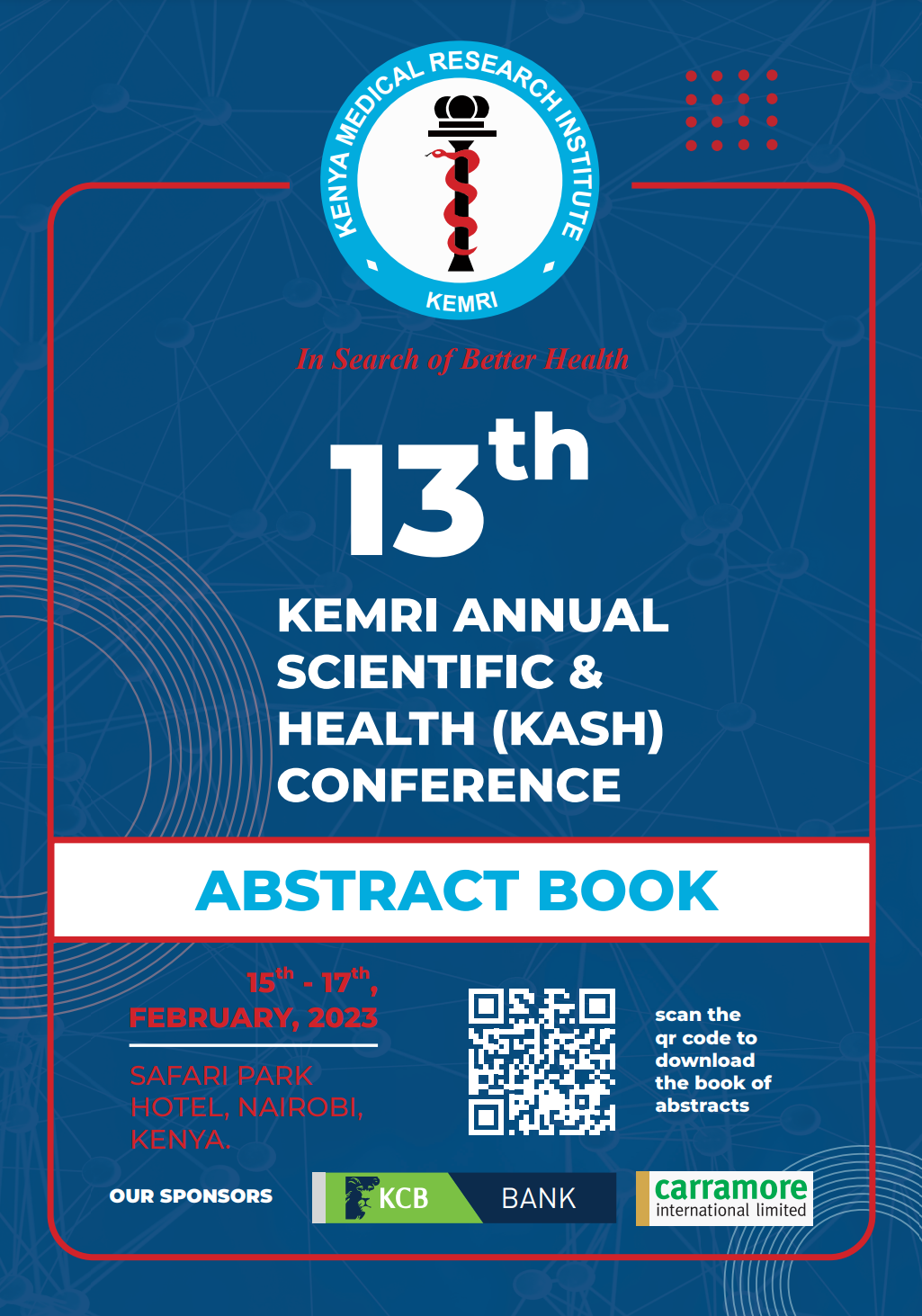
KASH 13 ABSTRACT AND PROGRAMME
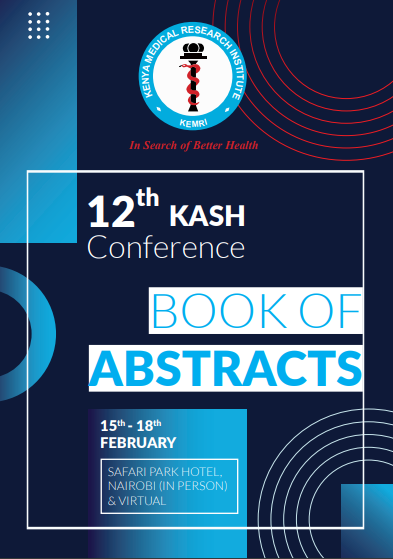
KASH 12 ABSTRACT AND PROGRAMME
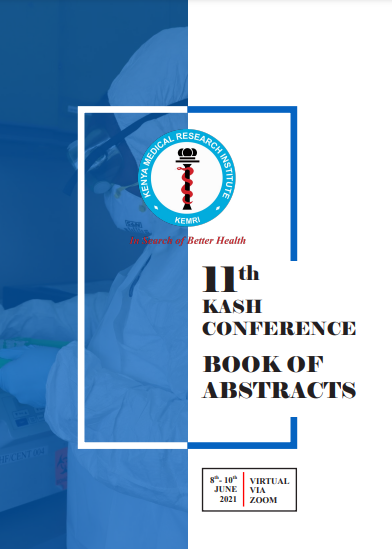
KASH 11
Important Dates and Information
ABSTRACT SUBMISSION
10ᵗʰ September – 30ᵗʰ November 2025
EARLY REGISTRATION
31st January 2026
CONFERENCE DATES
10ᵗʰ – 13ᵗʰ February 2026
REGISTRATION
REGISTRATION CLOSED
REGISTRATION
|
Category |
Registration Ends 31/01/2026 |
Onsite Daily Charges |
| Student |
KES. 5 000 |
KES. 5, 000 |
| KEMRI Staff |
KES. 8, 000 |
KES. 8, 000 |
| Non-KEMRI Staff Members |
KES. 10, 000 |
KES. 10, 000 |
KASH 16 Registration fee is payable to:
NAME OF ORGANIZATION OR PARTNER: KENYA MEDICAL RESEARCH INSTITUTE (KEMRI)
PHYSICAL ADDRESS: NGUMO OFF RAILA ODINGA WAY, NAIROBI, KENYA
NAME OF BANK ACCOUNT: KEMRI Conference
BANK NAME: KENYA COMMERCIAL BANK (KCB)
BANK BRANCH: KIPANDE HOUSE
ACCOUNT NUMBER: 1112776850
MPESA Paybill NO: 522522
CURRENCY OF ACCOUNT: ALL
AC/NO; 1112776850
REGISTRATION FEE IS NON-REFUNDABLE
Abstract and Symposium Submission
SUBMISSION CLOSED
16th KASH CONFERENCE: GUIDELINES FOR AUTHORS
To help you with your abstract submission, kindly note the following guidelines
- All abstracts must be submitted in English language.
- Abstracts can only be submitted on line via the link provided on the KEMRI web site
- The abstract text should not exceed 3000 characters, use the following format (Background, Methods, Results, Conclusion)
- Tables and graphs may be included as attachments.
- It is the author’s responsibility to submit a correct abstract. Any errors in spelling, grammar or scientific facts will be reproduced as typed by the author.
- Abstracts must not have been published or submitted for presentation to any other national or international meeting.
Choosing Abstract Sub-themes Categories
The abstract sub-themes categories are the general heading under which your abstract will be reviewed and later published in the conference printed matters if accepted. Please choose the sub-themes which best describes the subject of your abstract.
Notification of Acceptance or Rejection
Notification of acceptance or rejection will be sent to the corresponding author. Please note that only the corresponding author will receive mail concerning the abstract and is responsible for informing all co-authors of the status of their abstract. Authors whose abstracts have been accepted will receive instructions for the presentation of their abstract.
Abstract Blinding and Review
All submitted abstracts will go through a blind peer-review process carried out by an independent reviewing committee. The Scientific Sub-committee will post reviewer’s comments to the corresponding authors through emails.
KASH Conference Abstract Policy
An abstract cannot be submitted if it has been previously published or presented, unless there are major updates in the data, and may not be presented elsewhere after acceptance for KASH. If preliminary or partial data has been published, the author is required to indicate the details of the conference, meeting or journal.
KASH Conference Publication
All the accepted abstracts will be published in a special edition of the peer-reviewed African Journal for Health Sciences. If you have any questions regarding your abstract submission, please contact the abstract support team at kash@kemri.go.ke
RISING STAR SCIENTIFIC AWARD CALL
Background
KASH provides a great opportunity for sharing, cross learning and mentoring of younger scientists as well as a platform for discussion of current health challenges, the exchange of new knowledge and discussion on the way forward.
In view of improving the quality of presentations, capacity building and research dissemination from young scientists, KASH has initiated a Rising Scientific Star Award that is open to the young upcoming scientists. The young upcoming scientists are required to apply for this award and submit an abstract on the KASH online portal so that they may be enlisted for consideration by the KASH Rising Star Selection Panel. This Panel has developed the Guidelines and Criteria that is used for nomination and selection of Young Scientist Award which together with the registration form are posted along with the call for abstracts. The young scientists are provided with a forum to make their oral presentations during the Rising Scientific Star Session.

Guidelines, Eligibility and Selection Criteria
- The Young Investigator should be a Kenyan citizen working undertaking his/her research in Kenya
- The upper age limit of the young investigator applying for the award is 40 years for female and 35 years for male investigators.
- Registered/Enrolled in a recognised University locally or internationally as a Post-Graduate Student pursuing either PhD or MSc in any of the 7 Programmatic Areas of KEMRI (kemri.go.ke). Proof of studentship maybe requested by the Panel.
- Should not have won an award during the previous KASH Conferences.
- The abstract/paper submitted must be by the young Investigator as the lead author of paper and the research work must be certified by the Mentor/ Supervisor / Investigator /Head.
- Young Investigator can present only one paper in their oral session.
- Each nominee is required to make an oral presentation (5 minutes) about his/her research work which is rated by 4 independent reviewers. The reviewers will consolidate their marks and rank them according to merit.
Award
The top three presenters; Winner, Runners up and 2nd Runners up will be identified and given an award during the KASH Closing Ceremony.
GOLD SPONSOR


BRONZE SPONSOR


EXHIBITORS


KASH 16 VENUE
SAFARI PARK HOTEL
13th KASH Gallery
12th KASH Gallery
11th KASH Gallery
10th KASH & 40th Anniversary Gallery
KASH
Contact Us
If you have any query please contact
Kash – kash@kemri.go.ke
or
Dr. Damaris Matoke – dmatoke@kemri.go.ke
For any technical issues with uploading abstract please contact
MEET THE TEAM

Cecilia K. Mbae, PhD
KASH Chairperson
Dr. Cecilia Mbae holds a Bachelor of Science degree in Biochemistry/Zoology and Masters in Medical parasitology from Jomo Kenyatta University of Agriculture and Technology. She holds a PhD in Molecular and life sciences from the Open University, UK. Her PhD work focused on Molecular characterization of Cryptosporidium and Giardia among HIV positive and negative children living in urban informal settlements in Nairobi. Cecilia Joined KEMRI, Centre for Microbiology Research in 2004 as a Research officer, and is now a Senior Research Scientist in the same department. She is involved in various projects including mapping of salmonella and other enteric infections in Mukuru informal settlements, and is a PI at the Cystic Echinococcossis in sub-Saharan Africa Research initiative (CESSARi), which entails mapping of the disease in different areas and hosts in the participating countries. World Association of Echinococcosis.

Damaris Matoke Muhia, PhD
KASH Organizing Secretary
Damaris holds a Bachelor of Science degree in Biochemistry and Masters in Biotechnology from the University of Mysore, India. She holds a PhD in Molecular Medicine from Jomo Kenyatta University of Agriculture and Technology. Her PhD work focused on population genetics and insecticide resistance of malaria vectors in Western Kenya. Damaris joined KEMRI, Centre for Biotechnology Research and Development, Molecular Entomology laboratory in the year 2006 as an Assistant Research Officer and later rose to the positions of Senior Research Officer within the same department. She is involved in various projects encompassing monitoring of insecticide resistance, mapping of malaria vectors and studying of behavior changes of mosquitoes and sandflies in relation to vector control systems in Kenya. Damaris is a member of the Pan African Mosquito Control Association (PAMCA).

Dr. Joseph Mwangangi, PhD
KASH Committee Member
Joseph Mwangangi graduated with BSc (Zoology, Botany and Geography) from Kenyatta University in 1997. He joined KEMRI in 1998. Mwangangi graduated with PhD degree in Medical Entomology from Kenyatta University in 2007. His research interest is in malaria vector biology and ecology, novel approaches to the control of vector borne diseases and the monitoring of insecticide resistance. His current research interests include IVM within a community based model, empowering communities and public health stakeholders in disease control. He is TWAS Young Affiliate Fellow for Academy of Sciences for the Developing World (TWAS) and the TWAS Regional Office for Sub-Saharan Africa (TWAS-ROSSA) for period 2011 – 2015. He is an Official for the PAMCA, Kenyan Chapter and member of coordinating committee for PAMCA.

Carolyne Wandera
KASH Committee Member
Carolyne Wandera holds a Bachelor’s degree in Commerce Marketing Option (First Class Hons) and a Masters in Business Administration from the University Of Nairobi. She is also a certified Lead Auditor in ISO 9001:2015. Her interest is in Communication and Quality Management Systems. Currently working as senior Corporate Communications Officer at the Institute, she is involved in the publicity of the Institute and dissemination of research output.