TCTP Strengthens Regional Health Security
October 1, 2025
KEMRI Board Signs Performance Contract with Director General
October 8, 2025Cool and Safer Homes: How Simple Housing Modifications is Transforming lives in Kwale
By Lisper Mokaya and James Wodera
The snow-white rooftops shimmer against a skyline dominated by coconut trees in Mbalamwezi village, Kinango Sub-location, Kwale County. Occasionally, flocks of hummingbirds’ dart among the trees, their wings slicing into the sleepy skies. But on the ground, life inside the village homes has changed in a way many residents could not have imagined just a year ago.
Until recently, residents endured searing heat in their tinroofed homes, where midday temperatures turned living spaces into suffocating ovens. Today, however, freshly painted luminous white iron sheets absorb the blazing coastal sun and immediately deflect it back into the sky. The result is homes that are significantly cooler and healthier.
“This is phenomenal! The painted roof makes our house hospitable again,” said Mama Agnes, a resident. “Before this project, our houses were hot ovens that we only stayed in at night because we had no choice.” Mama Agnes is one of the beneficiaries of the Housing Optimization for Malaria and Environmental Sustainability, better known as the HOMES Study. The project is testing how simple, affordable housing innovations can improve indoor comfort and reduce mosquito populations in malaria-endemic regions.
The study, led by Dr. Benard Abongo a KEMRI senior research scientist, is funded by the Wellcome and implemented in partnership with Habitat for Humanity International, Technical University of Mombasa, Research World (Kenya), Charité University (Germany), and the County Government of Kwale. With over 100 households participating in Kwale and Siaya Counties, the project is exploring how better housing can contribute to climate adaptation, malaria control, and improved health.
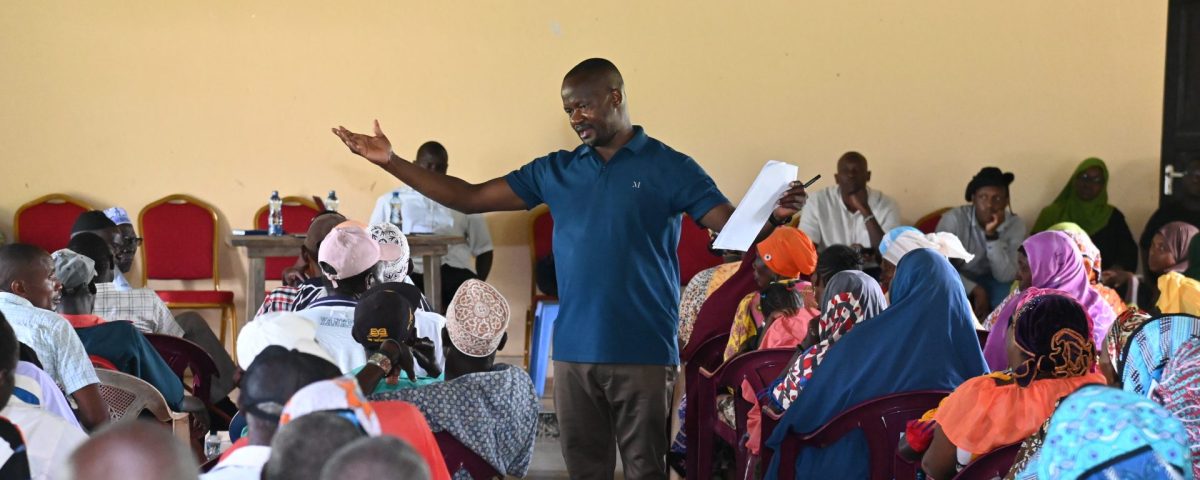
Last week for three days from Tuesday, 23rd, September 2025, stakeholders visited project sites in Mwambalazi and Nguzo C villages to review progress and engage with homeowners. The forum provided opportunity for researchers, partners, and community members to share experiences and discuss lessons that could shape future scale-up efforts.
The housing modifications are straightforward but powerful. They seek to reduce indoor temperatures which is achieve through the cool roofs approach that involves painting the iron sheets with reflective white coating. “This has contributed to lowering indoor temperatures by up to 10°C, which is significant especially during peak heat hours of the day”, explains Dr. Abongo.
The second approach involves introduction of opportunities for cross-ventilation. Here the project installed screened windows on opposite walls to improve airflow while blocking mosquitoes. “It is instructive that at a good percentage of our study houses did not have a single window at the inception, but now boast of three or four windows”, he intimates.
But there is more. The project that worked with local artisans, undertook the insulation of ceilings through weaving papyrus mat ceilings beneath roofs to reduce daytime heat buildup and introducing fiberglass insect mesh on doors and windows to provide a full-proof deterrent against Mosquitos. This mosquito-proofing technique extended to the eaves of houses including the popular baraza entrance.
While the artisans were taken through a crush building trainings involving the new technology, the community members were sensitized for knowledge and elimination of misinformation and disinformation about the project.
If results from the pilot are anything to go by. Then the research team, like the residents have reasons to be happy. “The preliminary data from the pilot tell an optimistic story. Houses with screens recorded a 54 percent fewer malaria-carrying Anopheles funestus mosquitoes, while cool-roof houses registered the lowest mean daily temperatures at 24.7°C, compared to 26°C in control houses”, notes the scientist.
“Cost-effective housing modifications can reduce malaria transmission while making homes more liveable,” he explains adding, “Kwale and Siaya were chosen because of their high malaria burden and strong community structures that can support such innovations.”
Such results fuel the motivation not just for KEMRI and Habitat for Humanity, but of all the collaborators and partners involved.
Habitat for Humanity oversaw the construction modifications of this project that has truly demonstrated how science and community engagement can reshape public health.
“What we see here in Kwale is a model that can inspire other regions,” said a Market Systems, Value Chains, Enterprise Development Specialist from Habitat for Humanity Mr. Masua Mutua noting that this project is at the organization’s “core-mandate of working with the community and empowering them to be more prosperous and vibrant by ensuring that they have decent, safe and affordable place to call home”.
“We have worked with homeowners are happy that they have the capacity of maintaining and doing repairs to their modified houses” said Musau.
Local families have already felt the difference. “Before the changes, our house was hot and full of mosquitoes,” said Grace, a resident of Mwambalazi. “Since the roof was painted white and the windows screened, the house feels cooler and safer. My children sleep better, and we are falling sick less often.”
The research team is convinced that by tackling both indoor heat stress and mosquito density, the HOMES Study will demonstrate that simple housing improvements can address the two pressing challenges at once, that of climate change and malaria control.
As the project continues in Kwale and Siaya, researchers and partners hope it will lay the groundwork for integrating housing improvements not only into Kenya’s but global public health strategies. For the residents of Kwale, the once-unbearable homes are now liveable, resilient spaces, which is roof that small changes in design can create lasting change in health and comfort.
HOMES study is part of a global study which unites nine pioneering projects across continents, tackling the health impacts of extreme heat in low- and middleincome countries that include India, Burkina Faso, South Africa, Mexico, Pakistan, Malaysia,Ghana, Zimbabwe and Tanzania. By combining local expertise, community engagement, and real-world interventions, the program drives practical, transformative solutions to build resilience against escalating heat challenges.