
PROMOTING HEALTH AND WELLBEING
Setting
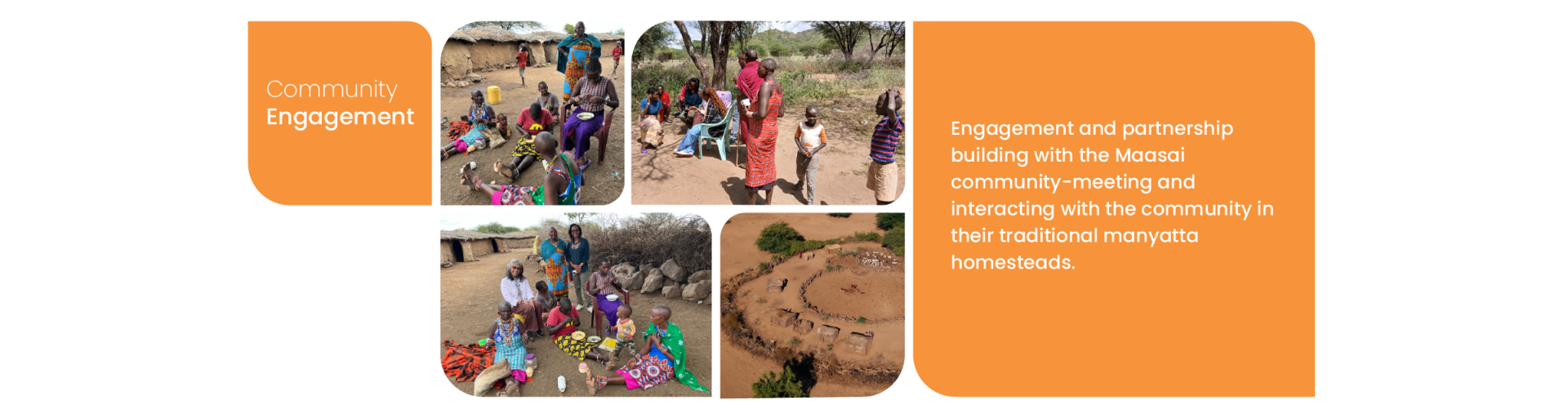
Kajiado is one of the largest counties in Kenya, covering 21,872 Km2, 98% of which is rural and hosts 44% of the population. The county is primarily semi-arid and historically home to the Maasai community, whose main livelihood is semi-nomadic pastoralism. Land fragmentation and climate induced shocks such as increasing frequency of prolonged droughts over the years have shrunk pastureland, caused livestock losses and undermined recovery efforts, adversely affecting the community’s health and wellbeing.
Context
Our work in Kajiado is aligned to the County Government priorities including improving access to primary care services and investing in NCD prevention.
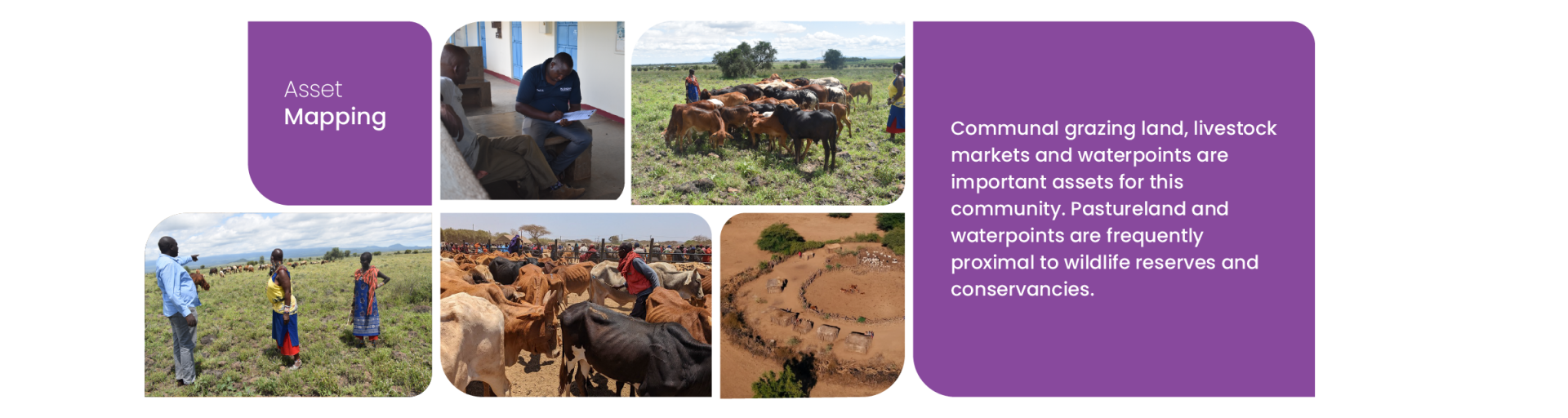
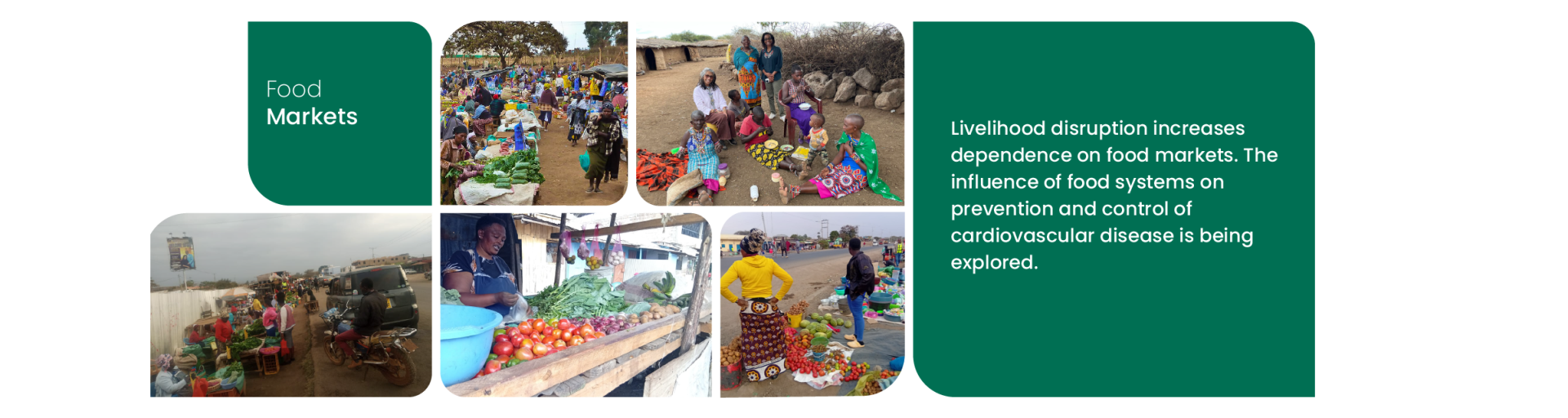
A number of critical issues are being explored in Kajiado county, including the centrality of markets as a community asset, the effect of geographical variation on the social determinants of health including the functioning of care and referral pathways, and the community’s lived experience of cardiovascular disease.
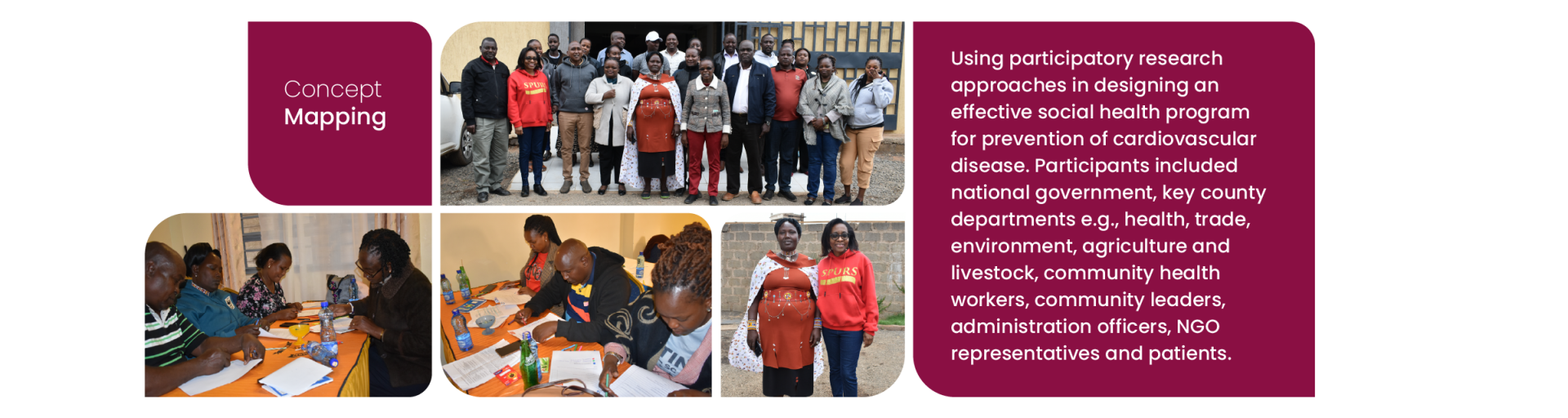
The intervention in Kajiado builds on experience gained from Vihiga county, which demonstrated the value of multisectoral partnership building and engagement through all phases of the research.
Progress to date



Funder

Partners

Project PIs

Dr. Lydia Kaduka
Dr. Kaduka is an Assistant Principal Research Scientist at Centre for Public Health Research in KEMRI. Her formal doctoral training is in Medical Biochemistry and post-doc in Healthcare Management. She has largely focused on NCDs, and stroke & cardiovascular diseases in particular. She has served as PI/Co-PI/Co-investigator on numerous projects, and marshaled and led research teams, mentored young investigators, and provided scientific direction in her line of work
Presently she serves as PI on a joint Medical Research Council (MRC, Cambridge, UK) – National Research Foundation (NRF, Nairobi, Kenya) Newton grant entitled, “Strengthening Primary Care Systems for Prevention & Control of Cardiovascular Diseases in Kenya: Feasibility Study of Health Kiosks in Markets”. This is a system-led intervention study to improve the reach and sustainability of cardiovascular disease prevention and health promotion interventions in communities through market-based health kiosks, in an effort to address inequalities in health care access. She currently serves on the Kenya National CVD Technical Working Group, and Chairs the Kenya National CVD Research and Monitoring and Evaluation Sub-Committee.

Prof. Seeromanie Harding
Seeromanie Harding is Professor of Social Epidemiology at King’s College London. Her research focuses on inequalities in health over the life course, and participatory approaches to systems perspectives to engage with the complex socio-cultural-political contexts that drive health inequities. UK-based studies include those in London that are exploring how hairdressing salons and primary care can jointly promote early detection of cardiovascular disease and breast cancer among women living in deprived and ethnically dense neighbourhoods, the Healthy Eating and Active Lifestyles for Diabetes (HEAL-D) study in African and Caribbean communities, and the eLIXIR programme that links information from routine health records and blood samples from mothers and their children to explores the early origins of physical and mental health disorders. International studies include the CONTACT (Congregations Taking Action Against Non-Communicable Diseases) study in the Caribbean, Health Kiosks in community Markets (HEKIMA) study in Kenya, Xunati Uti study in Brazil, and the recently funded IMPlementation of a multisectoral programme to improve Indigenous Adolescent Mental health in Brazil and Dominica (IMPACT). These studies explore the embedding of community systems (e.g., places of worship, community markets, schools) into the primary care pathway for prevention and control of non-communicable diseases. Before joining King’s College, she led the Medical Research Council Ethnicity and Health Research Programme at the University of Glasgow. Whilst there she established the Determinants of Adolescent, now young Adults, Social well-being and Health (DASH) study, a London based longitudinal study of ~6000 ethnically diverse young people. Equity, interdisciplinarity and collaborative partnerships with communities, policy actors and practitioners are key anchors in these studies.
She is Joint Head of the Department of Population Health Sciences at King’s College London, based within the Faculty of Life Sciences & Medicine, School of Life Course & Population Sciences. Population health research is led by over 160 experts, with patients and the public, to better understand how we can improve population health. Strong interdisciplinary research groups of social scientists, clinicians, health informaticists, statisticians and health economists, capacity building of early career researchers, and global health are key strengths of the Department.
Co- Investigators
KEMRI: Dr. Joanna Olale, Mr. Erastus Muniu, Dr. Joseph Mutai
Massai Mara University: Dr. Kennedy Karani