

Launch of the Kenya Climate Change and Health Strategy
October 22, 2025
Prof. Sam Kariuki Elected to the Prestigious U.S. National Academy of Medicine
October 22, 2025Kenya Validates Draft Framework for CBRN Preparedness

By Stella Njung’e
In a major step toward strengthening Kenya’s preparedness and response to emerging Chemical, Biological, Radiological, and Nuclear (CBRN) risks, stakeholders convened for a one-day workshop to validate and review the draft CBRN Kenya National Action Plan (NAP).
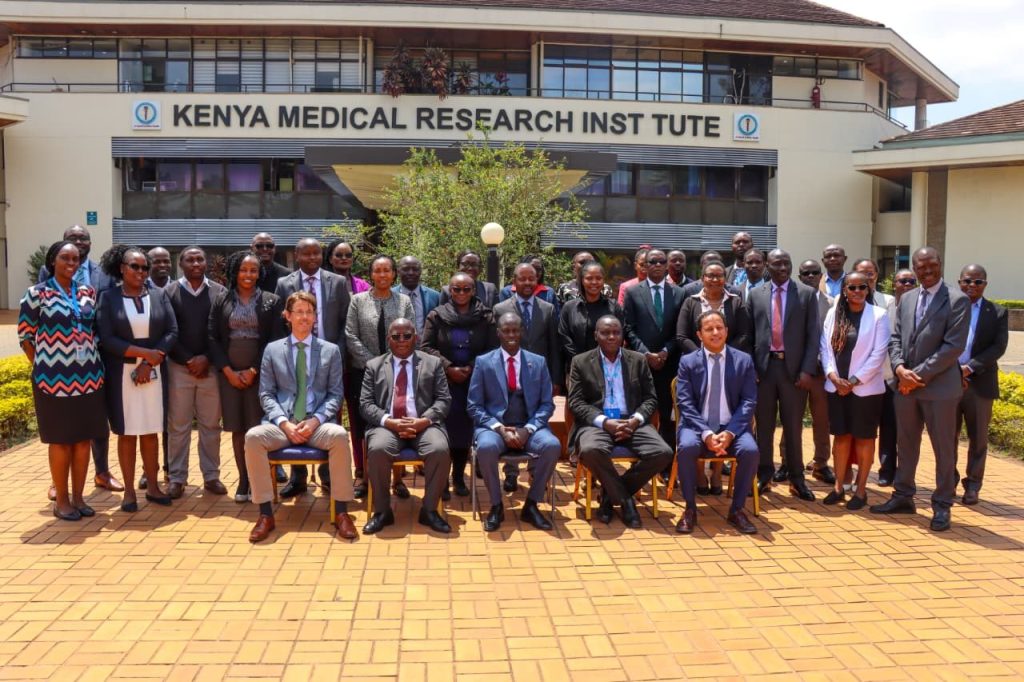
Hosted by the Institute, on 16th October,2025, the meeting brought together over 40 participants from government ministries, regulatory agencies, research institutions, and international partners to refine the country’s coordinated framework for managing CBRN threats.
Developed under the leadership of the Government Chemist Department, which serves as the National Focal Point for the European Union (EU) CBRN Centres of Excellence Initiative, the Plan provides a comprehensive and strategic framework for the prevention, detection, preparedness, response, and recovery from CBRN incidents which have implications for national security, public health, the environment, and socio-economic stability. It also supports resource mobilization, capacity building, and integration of risk management efforts across national and county levels. KEMRI has played a major role in the development of this document with Ms. Milkah Mwangi serving as the Deputy National Focal Point.
Speaking during the workshop, KEMRI’s Ag. Director General, Prof. Elijah Songok, represented by the Director Research and Development, Dr. Erick Muok, described the validation as a significant milestone in Kenya’s journey toward enhanced national resilience. “What we are validating today is not just another policy document, it is the culmination of our shared knowledge, effort, and vision,” he said. “This plan strengthens our national capacity to prevent, detect, and respond to CBRN risks while ensuring coherent coordination and accountability across sectors.”

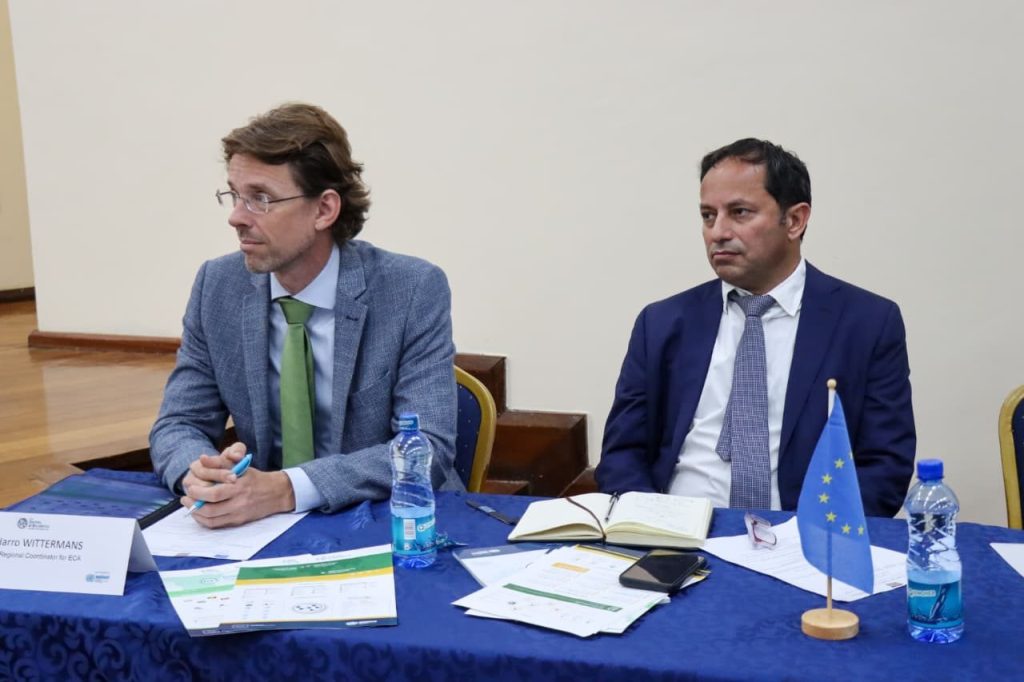
Once officially adopted, the success of CBRN National Action Plan will be dependent on a whole-of-government engaging multiple sectors including health, environment, security, research, and industry in both the public and private sectors. The document will also serve as a living document, that will evolve evolving with emerging technologies, scientific advances, and new threat dynamics.
While making his remarks the national focal point for the CBRN NAP, Mr. William Munyoki highlighted the journey since the inaugural team started this document and emphasised the nature of this document. “We started drafting this document, this has been due to a culmination of various factors. However, this delay, though unfortunate reflect on the complexities involved in multi sectoral coordination, technical development and stakeholder alignment,” he stated. “While we acknowledge that CBRN risks will keep evolving, this document further reflects our shared commitment to start and refine this document as the landscape changes,” concluded Mr. Munyoki.
Once adopted, the Plan is expected to enhance Kenya’s institutional capacity to manage CBRN risks effectively, promote public safety, and reinforce the country’s leadership role in regional and global efforts to counter CBRN threats.
While making the presentation, KEMRI’s Ms. Mwangi underscored the importance of national ownership and accountability in implementing the Plan, “This is our document, it is therefore important that we own in by ensuring it speaks our needs and challenges as a country.”
The development of the draft CBRN NAP has been a multi-agency effort, led by the Government Chemist Department, and supported by key national partners including the KEMRI, KNRA, National Environment Management Authority (NEMA), National Commission for Science, Technology and Innovation (NACOSTI), National Public Health Laboratory (NPHL), Kenya Agricultural and Livestock Research Organization (KALRO), Directorate of Occupational Safety and Health Services (DOSH), and the Kenya Bureau of Standards (KEBS). Others include law enforcement agencies such as the Directorate of Criminal Investigations (DCI), National Police Service (NPS), and the Office of the Director of Public Prosecutions (ODPP), alongside county governments, private sector, and civil society partners. The NAP had been developed with support from the EU.