Africa Adopts Landmark Declaration on Health, Environment and Climate Action (HECA)
October 29, 2025
Curtain Falls on Pan-African Conference on Environment, Climate Change and Health
October 29, 2025KEMRI Deepens Global Health Collaboration Through Strategic Engagements in China
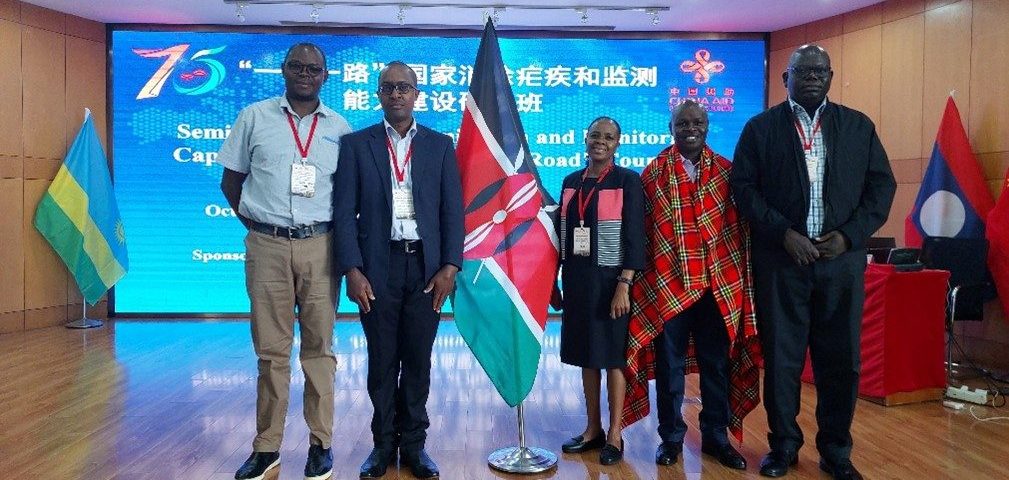
The Institute is expanding its international research and collaboration footprint through two major scientific engagements in China, underscoring the growing role in global health research, innovation, and diplomacy.
This October, KEMRI scientists joined peers from across Africa and Asia in two complementary meetings — one focused on Malaria Elimination and Monitoring Capacity Building, and the other on the Promotion of Global Public Health and Traditional Medicine Development — both organized under the framework of China’s Belt and Road Initiative (BRI).
These high-level engagements brought together senior policymakers, researchers, and health experts to share experiences, strengthen technical capacity, and enhance cooperation between China and developing nations in tackling infectious diseases and integrating traditional medicine into modern healthcare systems.
Malaria Elimination and Monitoring Capacity Building Workshop – Wuxi City, Jiangsu Province
The vibrant and historic city of Wuxi, in Jiangsu Province, is playing host to a delegation of research scientists and key stakeholders from malaria-endemic nations for the Seminar on Malaria Elimination and Monitoring Capacity Building for “Belt and Road” Countries, running from 23rd, October to 5th, November 2025.
Supported by the Embassy of the People’s Republic of China and hosted by the Jiangsu Institute of Parasitic Diseases (JIPD), the workshop has drawn participants from Kenya, Nigeria, Tanzania, The Gambia, Rwanda, Nepal, and Laos.
Kenya is represented by a strong KEMRI team comprising Acting Director Research and Development, Dr. Erick Muok, Ag. Deputy Director, Centre for Global Health Research (CGHR), Dr. Eric Ochomo, Malaria Molecular Entomologist and Coordinator of Molecular Medicine at the KEMRI Graduate School, Dr. Luna Kamau, Malaria Parasitologist, Centre for Sports Medicine, Dr. Edwin Too and Malaria Molecular Parasitologist, Centre for Biotechnology Research and Development (CBRD), Mr. Francis Kimani.
The two-week training features lectures, technical demonstrations, and site visits focusing on China’s successful malaria elimination strategies, laboratory testing and quality control, vector surveillance, drug resistance monitoring, and the use of mass drug administration in control programmes.
Participants are also scheduled to visit key facilities such as the China Centre for Disease Control and Prevention (China CDC) to observe China’s integrated malaria surveillance and information reporting systems that are key pillars that contributed to the nation’s malariafree certification in 2021.
“The seminar offers a rare opportunity for African and Asian scientists to learn from China’s journey to malaria elimination and explore practical models for replication,” said Dr. Muok adding, “it also provides a platform for fostering research partnerships that can accelerate elimination goals across endemic regions.”
Global Public Health and Traditional Medicine Conference in Beijing, China
By Dr. Jeremiah Gathirwa
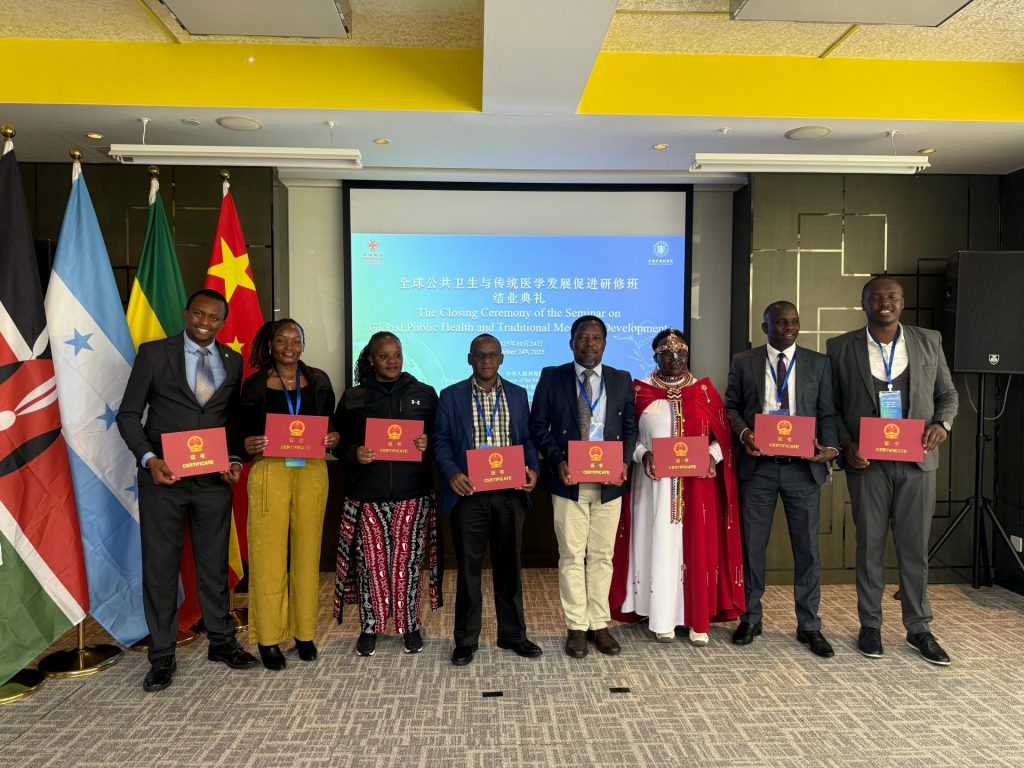
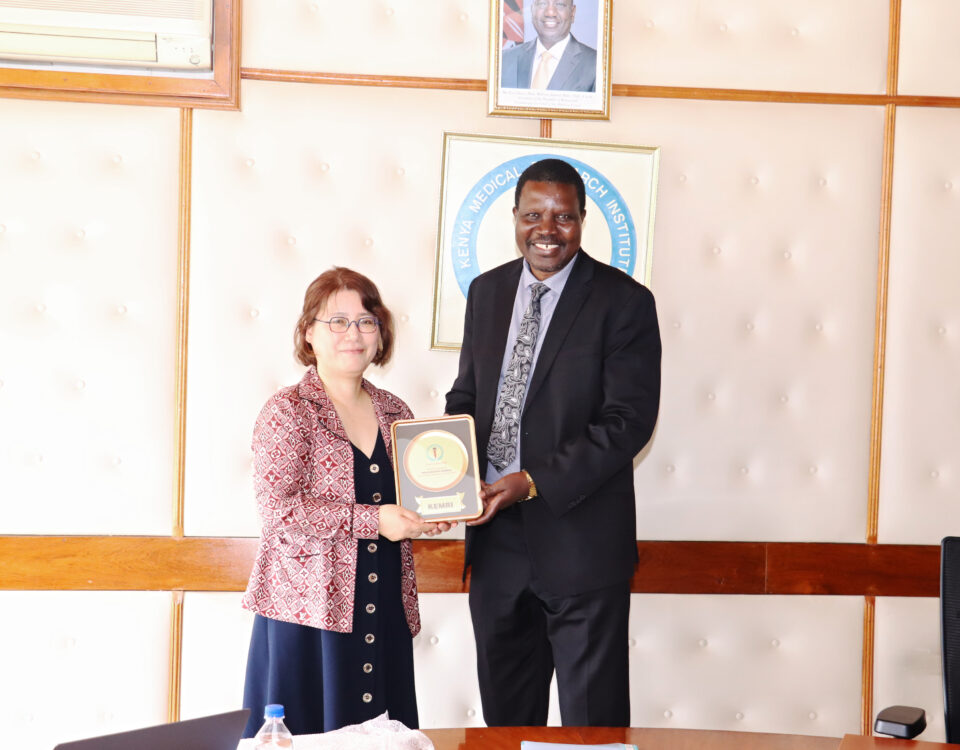
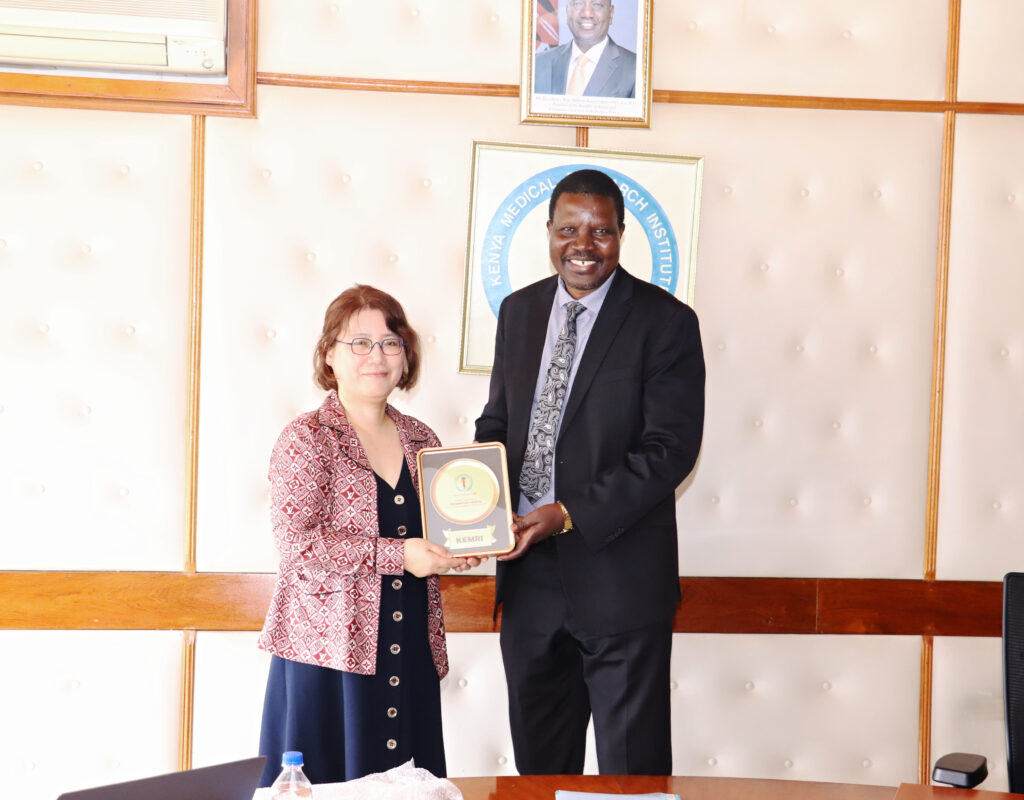
Earlier this month, another KEMRI delegation joined a high-level Kenyan team of health officials in Beijing for the Workshop on the Promotion of Global Public Health and Traditional Medicine Development, held from 11th, to 24th, October 2025.
Acting Deputy Director, Centre for Traditional Medicine and Drug Research (CTMDR), Dr. Jeremiah Gathirwa, and Research Scientist, Ms. Jecinta Ndung’u, represented the Institute as part of the larger Kenyan experts and practitioners that also included officials from the Ministry of Health and County Health departments.
Organized under the Belt and Road Initiative, the conference brought together policymakers, researchers, and practitioners from developing nations to exchange knowledge and study China’s success in integrating Traditional Chinese Medicine (TCM) into its modern healthcare system.
Over the two weeks, participants engaged in lectures, workshops, and field visits that showcased China’s comprehensive approach to traditional medicine — spanning legislation, research innovation, clinical application, and quality assurance.
Dr. Gathirwa described the experience as “a transformative exchange that demonstrated how traditional medicine, when supported by science, regulation, and education, can become a vital component of public healthcare.”
The workshops offered rich insights that will shape Kenya’s health research and policy landscape in two critical areas, infectious disease control and the formal integration of traditional medicine.
For malaria elimination, KEMRI scientists are keen to apply lessons from China’s evidence-based strategies, including community-level surveillance, data-driven vector control, and post-elimination monitoring systems.
For traditional medicine, KEMRI and the Ministry of Health have identified key opportunities that includes, the digitization of Indigenous Medical Knowledge through the developing a National Materia Medica of Kenyan Traditional Medicine to document and preserve indigenous remedies; Standardization and Quality Control by establishing national guidelines to ensure safety, efficacy, and consistency of herbal medicines.
The introduction of accredited academic programmes and short courses that merge traditional knowledge with modern biomedical science and forging of close collaborative research ventures with Chinese institutions to advance herbal drug discovery, preclinical validation, and innovation are also on the table.
On policy and integration, the meeting avers that there is need for supporting the Ministry of Health in aligning traditional medicine policy with Universal Health Coverage (UHC) priorities and WHO recommendations.
The dual participation of KEMRI scientists in these seminars reflects a growing synergy between Kenya and China in public health, research, and innovation. Both engagements not only build technical expertise but also deepen mutual understanding and collaboration between the two nations.
“These exchanges are invaluable in broadening our perspective on disease control, health innovation, and traditional medicine,” said Dr. Gathirwa. “They reinforce the importance of global partnerships in building resilient and sustainable healthcare systems.”
Besides KEMRI, other members of the Kenyan delegation included Mr. Brian Kenneth Kori (Assistance Secretary, Ministry of Health), Ms. Elizabeth Nyambura Ngige (Under Secretary, MoH), Dr. Michael Ndegwa Thuita, (Head Health Infrastructure, Projects and Grants Management, MoH), Dr. Betty Chepngeno Langat (County Director of Health Services, Kericho County Department of Health, Dr. Jim Clement Ayungo (County Director of Health Services, Migori County Department of Health) and Dr. Collins Kipkoech (Medical Superintendent, Londiani Subcounty Hospital).
Through such strategic collaborations, KEMRI continues to affirm its position as a leading regional research institution, bridging science, culture, and innovation to advance better health outcomes for all.