
PS Oluga Challenges Communication Experts to Support Government Projects
November 25, 2025
KEMRI Scientists Honoured with Africa’s Highest Scientific Fellowship
November 25, 2025Act Now to Protect Newborn Lives: KEMRI’s Role in Advancing Neonatal Sepsis Research
BY DR. SAMMY BAYA
As the world concluded the observance of World Antimicrobial Resistance Awareness Week (WAAW), held from 18–24 November 2025, KEMRI reaffirmed its leadership in advancing research that safeguards the health of communities. In line with this year’s theme – “Act Now: Protect Our Present, Secure Our Future”, the Institute highlighted ongoing scientific efforts to confront one of the most urgent yet often overlooked challenges in global health: Neonatal sepsis and the growing threat of antimicrobial resistance (AMR). Through rigorous research, surveillance, and innovation, KEMRI continues to strengthen Kenya’s capacity to protect newborns and curb the rise of drug-resistant infections.
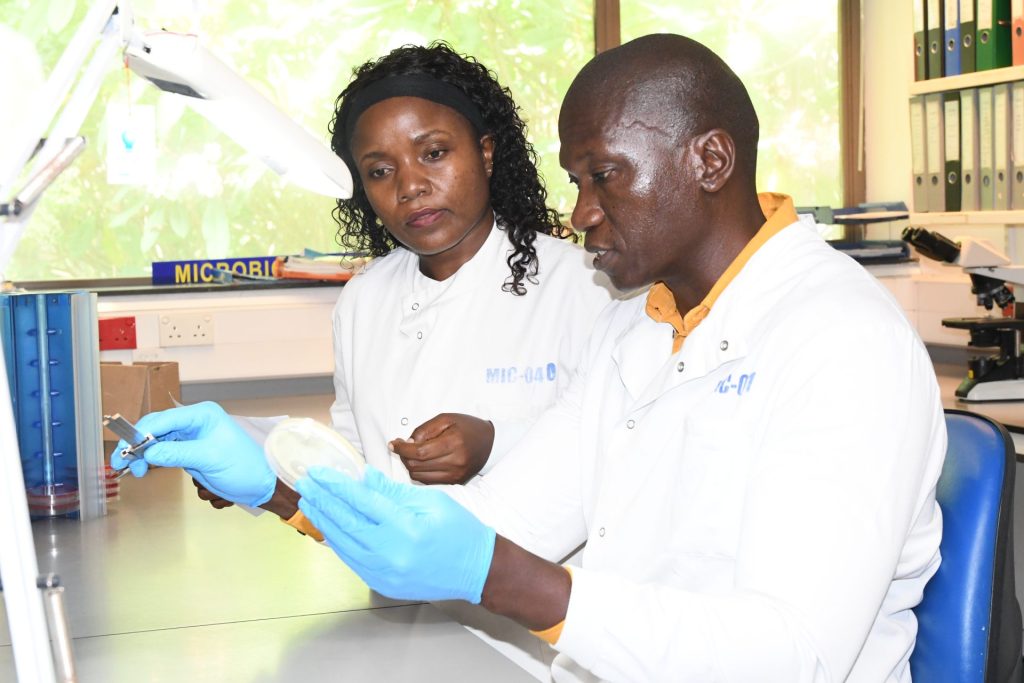
At KEMRI’s Kilifi Research Centre, Dr. Christina Obiero, a Research Scientist and Principal Investigator in the NeoSep1 Trial, is at the forefront of efforts to improve treatment outcomes for newborns with sepsis, a leading cause of infant mortality, particularly in low resource settings.
In an interview with KEMRI’s Principal Corporate Communications Officer, Dr.Sammy Baya, Dr. Christina Obiero spoke about her work on the NeoSep1 Trial, highlighting the promise of this research and how partnerships such as the Global Antibiotic Research & Development Partnership (GARDP) is helping shape the future of neonatal sepsis treatment and care across the continent.
Q&A: Dr. Christina Obiero, Research Scientist, KEMRI
Q: Please introduce yourself in the context of neonatal sepsis and AMR research.
I am a Research Scientist at KEMRI with a focus on infectious diseases in young children, particularly in newborns. For the past several years, my work has concentrated on neonatal sepsis, a life-threatening infection that remains a major cause of death among infants, particularly in Africa. Through the NeoSep1 Trial, we aim to develop safe and effective antibiotic combinations for newborns, while addressing the growing concern of antimicrobial resistance
Q: What is neonatal sepsis and antimicrobial resistance, in simple language?
Neonatal sepsis is a severe infection occurring within the first 28 days of life. It can be caused by bacteria that enter the bloodstream, leading to inflammation and organ failure if not treated quickly. Antimicrobial resistance happens when these bacteria become stronger and no longer respond to medicines that used to kill them, making infections harder or even impossible to treat.
Q: What gaps in current neonatal sepsis treatment prompted the NeoSep1 trials?
The antibiotics currently used to treat newborns were developed decades ago. Many of them are losing effectiveness due to resistance, and there’s limited evidence on the best combinations or doses for newborns. In addition, there are few antibiotics in the pipeline that have been formulated for newborns, and development of new antibiotics is costly and lengthy. The NeoSep1 trial is designed to fill this evidence gap.
Q: How does NeoSep1 differ from existing research?
NeoSep1 is unique because it tailors antibiotic treatment to newborns’ specific needs. We’re not just testing single drugs; we’re evaluating optimized combinations and dosing regimens suited for newborns. New antibiotic combinations (i.e., flomosef and fosfomycin, then give together or in combination with amikacin) will be compared to currently-used antibiotic combinations. Each site has a site-specific antibiotic randomization list that was defined following consideration of local protocols, patient profiles, and sepsis and AMR epidemiology. The study also involves hospitals across several countries, making the findings highly relevant for low- and middle-income regions. In Kenya, we aim to enroll approximately 600 of the total 3,000 newborns at three sites i.e., Kilifi County Referral Hospital, Coast General Teaching and Referral Hospital, and Mbagathi Hospital.
Q: What early insights show promise for improving newborn treatment outcomes?
The first phase of the trial investigated the pharmacokinetic and safety profile of flomoxef and fosfomycin antibiotics, when given in combination with each other or amikacin. Sixty-five newborns with sepsis were enrolled at three sites i.e., Kilifi County Referral Hospital, Tygerberg Hospital and Baragwanath Hospital (the two hospitals are located in South Africa). Results obtained confirmed the doses to be further investigated in the second phase of the trial, where we will randomize newborns with clinical sepsis, and who are at a moderate or high risk of dying, to receive one of eight antibiotic combinations. These insights will help us refine future trials and treatment protocols.