Stakeholders Convene in Nairobi to Advance Genomic Surveillance for Outbreak Response in East and Central Africa
June 8, 2026
KEMRI Strengthens Ebola Preparedness in Frontline Counties Through Strategic Donation of Protective Supplies
June 9, 2026KEMRI Strengthens Partnership with Baringo County to Advance Research-Driven Health Solutions

BY GLADYS MATHENGE
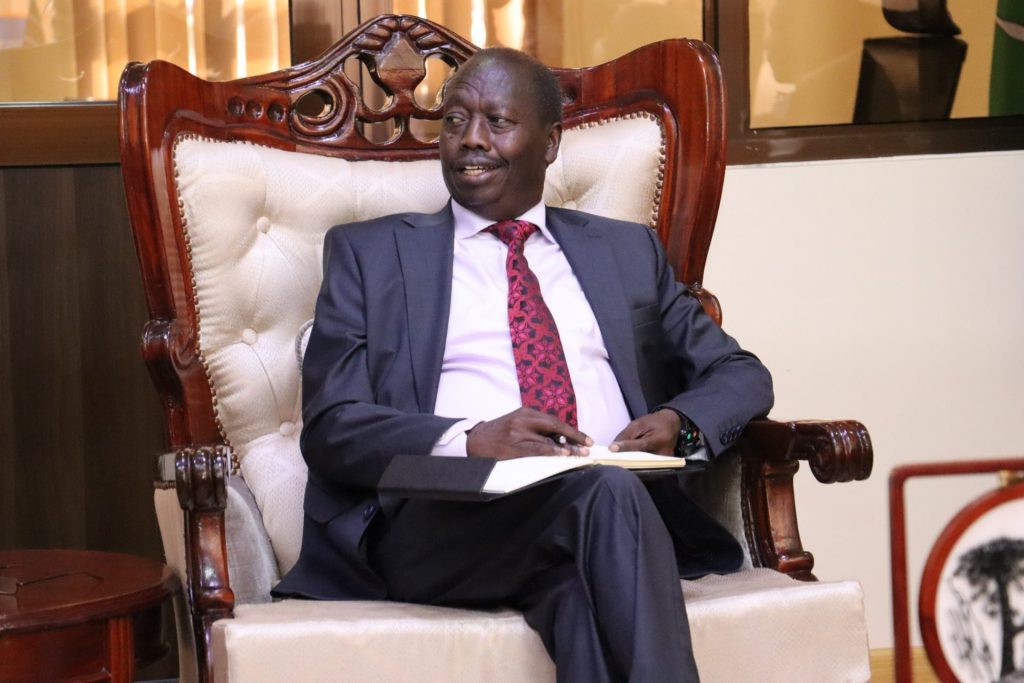
KEMRI has reaffirmed its commitment to strengthening public health interventions in Baringo County through research, innovation, and strategic partnerships, following a high-level courtesy call by Ag. Vice Chancellor and CEO, Prof. Elijah Songok, on Baringo Governor H.E. Benjamin Cheboi, that took place on Tuesday 2nd June 2026.
The meeting brought together county leadership and KEMRI officials to discuss critical health challenges affecting the county, including Hepatitis B, Kala-azar (Leishmaniasis), and snakebite envenomation, while exploring opportunities for deeper collaboration in research, disease prevention, treatment, and healthcare delivery.
Speaking during the engagement, Prof. Elijah Songok emphasized the importance of translating scientific evidence into practical health solutions that directly benefit communities.
“The findings from our research have provided important insights into the prevalence, transmission dynamics, and circulating Hepatitis B virus genotypes in Baringo. This evidence enables us to develop data-driven interventions, strengthen surveillance systems, improve early diagnosis and treatment, and guide public health policies aimed at reducing the burden of disease. Our focus is to ensure that scientific discoveries are translated into sustainable health solutions that improve patient outcomes and community health,” he stated.

A major focus of the discussions was KEMRI’s groundbreaking Hepatitis B research, which has identified Baringo as one of the country’s high-burden regions. Through community and hospital-based studies involving more than 3,000 participants, researchers established an overall Hepatitis B prevalence. The studies revealed that the sharing of injectable and sharp objects, certain cultural practices, and family-based transmission are among the major drivers of infection within communities.
To strengthen response efforts, KEMRI and the County Government are working towards establishing specialized centres for Hepatitis B testing, treatment, and research. Marigat Sub-County Hospital has been identified as a key facility that will support these efforts, positioning Baringo as a national centre of excellence in the fight against the disease.
“We are going to jointly lobby for Hepatitis B vaccines so that every household facing the risk is protected. We also intend to establish dedicated clinics for those already infected to ensure they receive comprehensive care and long-term follow-up,” Prof. Songok added.
The courtesy call also highlighted plans to strengthen efforts against Kala-azar (Leishmaniasis), a neglected tropical disease that remains endemic in several parts of Baringo County. Discussions noted that Kala-azar remains one of the most neglected tropical diseases affecting counties such as Baringo, West Pokot, Tana River, Kitui, Garissa, Bungoma, and Kilifi.
KEMRI Senior Research Scientist in Hepatitis B prevention, linkage to care and treatment expert, Dr. Missiani Ochwoto, outlined plans to initiate a new study investigating a potential vaccine against leishmaniasis, with Baringo among the selected research sites. The proposed study will contribute to ongoing international efforts aimed at developing what could become one of the world’s first vaccines against the debilitating disease.
“Kala-azar continues to pose a significant public health challenge in endemic regions such as Baringo and other affected counties across Kenya. Through this proposed vaccine study, we aim to contribute to global efforts to develop an effective preventive tool against the disease. Baringo’s inclusion as one of the study sites presents an important opportunity to generate scientific evidence that could support the development of one of the world’s first vaccines against leishmaniasis and ultimately reduce the burden of this neglected tropical disease,” said Dr. Ochwoto.
Another key agenda during the discussions was KEMRI’s ongoing initiative to develop Kenya’s first locally tailored snake antivenom. Through cutting-edge venomics research, the Institute is addressing the longstanding limitations of imported antivenoms by generating locally relevant, high-efficacy biological products designed to neutralize the unique toxin profiles of Kenyan snakes, including cobras, puff adders, and mambas.
Speaking on the initiative, KEMRI Research Scientist and Lead Snake Antivenom Development Study, Mr. Samuel Omari, noted that this initiative is particularly critical for high-burden areas such as Baringo County, where snakebite envenomation continues to cause severe health, social, and economic burdens. By integrating scientific innovation with national manufacturing capacity and regulatory frameworks, KEMRI is laying the foundation for a sustainable, locally produced antivenom supply that supports Universal Health Coverage and contributes to global targets for reducing snakebite deaths and disabilities.


“Snakebite envenomation continues to cause significant illness, disability, and loss of life in many parts of Kenya, including Baringo County. Our goal is to develop a safe, effective, and locally tailored antivenom that specifically targets the venom of medically important Kenyan snake species. Through our venom collection and venomics research programme, we are generating the scientific evidence needed to produce antivenoms that are better suited to local snakebite cases, ultimately improving treatment outcomes, reducing mortality, and strengthening Kenya’s capacity to respond to this neglected tropical health challenge.” Mr. Omari noted.
Other KEMRI members present during the discussions were KEMRI Kericho Director, Dr. Fredrick Sawe, KEMRI Kericho Senior Research Scientist, Dr. Josphat Kosgei and KEMRI-Eldoret Research Scientist, Dr. Edwin Too.
Baringo Governor H.E. Benjamin Cheboi welcomed the continued partnership, noting that scientific research remains critical in guiding healthcare planning and addressing longstanding public health challenges in the county.
“We appreciate KEMRI’s continued support and commitment to improving the health of our people through research and innovation. This partnership will strengthen our efforts to combat Hepatitis B, Kala-azar, snakebite envenomation and other health challenges while improving access to quality healthcare services across the county,” Governor Cheboi remarked.
He further called upon development partners and the international community to support ongoing efforts aimed at combating neglected tropical diseases and strengthening healthcare infrastructure in the county. Other County officials present included, County Epidemiologist, Dr. Robert Rono, Baringo County Director of medical services, Dr. Kibet Kangor, CECM Devolution and ICT, Maurine Limashep.
The engagement culminated in renewed commitments to deepen collaboration between KEMRI and the County Government of Baringo through research, innovation, and evidence-based health interventions.