
KEMRI Selected as Partner in New German-Kenyan Centre of Excellence on Artificial Intelligence
November 5, 2026
Three Consecutive ‘Very Good’ Ratings Put Institute on Course for Excellence
November 11, 2026Renewed Regional Momentum to Strengthen Diagnosis of Visceral Leishmaniasis
By KEMRI Bulletin Reporter
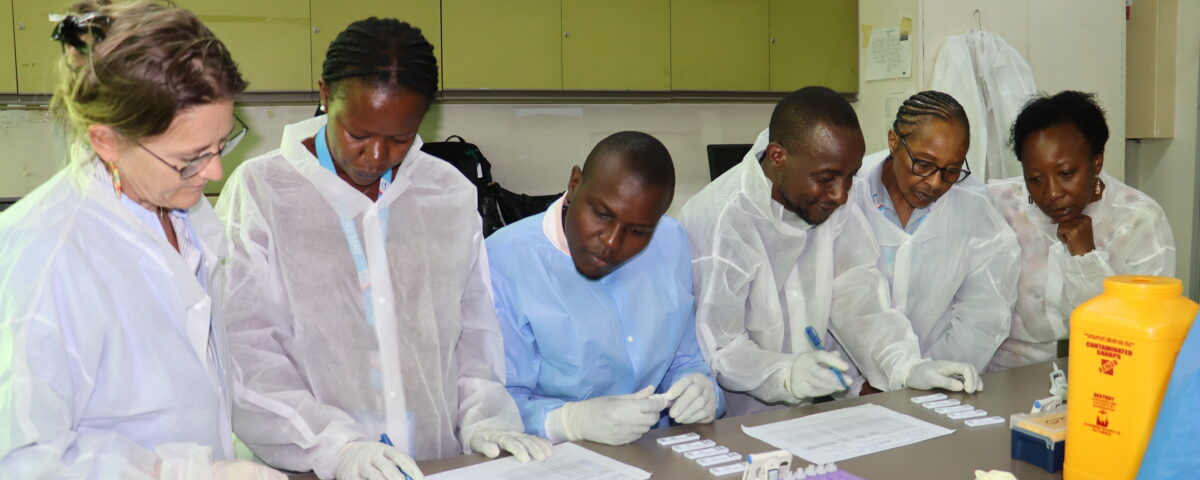
A three-day hands-on laboratory training at the KEMRI’s Centre for Clinical Research (CCR) has marked an important milestone in the Institute’s participation in a multicountry study seeking to strengthen the diagnosis of Visceral Leishmaniasis (VL) in East Africa.
The study, known as the Rapid Diagnostic Test (RDT) ViLEA Leishmaniasis Project, aims to evaluate the performance of five rapid diagnostic test kits for detecting VL in Ethiopia, Sudan and Kenya. The initiative seeks to generate evidence to inform the selection and use of reliable diagnostic tools, contributing to broader regional efforts towards the elimination of the disease.
“KEMRI is strengthening its contribution to regional efforts to improve the diagnosis of visceral leishmaniasis through its participation in this collaborative study, which brings together research institutions across Kenya, Ethiopia and Sudan,” said Dr. Margaret Mbuchi, a co-investigator in the study.
She explained that the initiative is aligned with the broader regional VL elimination strategy, with the Special Programme for Research and Training in Tropical Diseases (TDR) and the World Health Organization (WHO) Department of Malaria and Neglected Tropical Diseases supporting research to assess the reliability and performance of available diagnostic tools.
The study will be implemented in two phases, beginning with a laboratory-based evaluation of the selected rapid diagnostic tests, followed by field-based assessment to establish how the kits perform under real-world conditions.
As part of KEMRI’s project initiation activities, the three-day laboratory training was held from 3rd to 5th November 2026 at the CCR Immunology Laboratory. It focused on equipping the research team with the practical skills and technical knowledge required for the laboratory phase, while ensuring consistency in testing procedures across the participating study sites.
The training covered project-specific Standard Operating Procedures (SOPs), practical application of the selected rapid diagnostic test kits, interpretation of test results and the use of the Research Electronic Data Capture (REDCap) platform for accurate and standardised data collection and management.
The sessions were facilitated by Dr. Lieselotte Cnops, a TDR consultant, working alongside KEMRI’s Principal Investigator, Prof. Matilu Mwau, and the study’s co-investigators, Dr Jane Mbui, Dr. Mbuchi, Daniel Muturi, Gloria Awuor and Daniel Matano.
The laboratory training provides a critical foundation for the next phase of the study, ensuring that testing is undertaken using harmonised procedures and established quality standards. The subsequent field evaluation will further assess the diagnostic performance of the selected kits in settings where they are expected to be used.
Visceral leishmaniasis, commonly known as kala-azar, is a neglected tropical disease caused by Leishmania parasites and transmitted through the bite of infected female sandflies. It is among the most severe forms of leishmaniasis and, if left untreated, can be fatal.
The disease is characterised by prolonged fever, weight loss, enlargement of the spleen and liver, and anaemia. Its often-overlapping symptoms can make clinical diagnosis challenging, underscoring the importance of accurate, accessible and timely diagnostic tools.
Reliable diagnosis is central to effective case management, disease surveillance and control. However, the performance of rapid diagnostic tests may vary depending on the test used and the population or setting in which it is applied. Systematically evaluating available kits is therefore essential in identifying dependable diagnostic options that can support healthcare providers in detecting cases and initiating appropriate treatment.
Through its participation in the ViLEA Leishmaniasis Project, KEMRI is contributing its scientific expertise, research infrastructure and laboratory capacity to a collaborative effort addressing this important public health challenge.
Beyond generating evidence on the performance of the five diagnostic kits, the initiative underscores the value of regional scientific partnerships, harmonised research protocols and evidence-based interventions in tackling neglected tropical diseases.
As participating countries intensify efforts to eliminate visceral leishmaniasis, findings from the study are expected to contribute to a stronger evidence base for diagnostic decision-making and support the development of more effective strategies to reduce the disease burden across East Africa.
