Science, Research, and Innovation Week Highlights KEMRI’s Excellence in Health Research
June 2, 2026
Climate-Smart Housing Innovations Offer New Hope in the Fight Against Malaria
June 2, 2026Bridging Indigenous Knowledge, Natural Products and Science, Advancing Sustainability and Climate Resilience Through Research and Innovation
BY GLADYS MATHENGE
As climate change continues to intensify global environmental, health, and socio-economic challenges, the need for sustainable, locally relevant, and inclusive solutions has never been greater. Increasingly, conversations on resilience are recognizing that science alone cannot sufficiently address these complex challenges without acknowledging the wealth of knowledge embedded within indigenous communities.
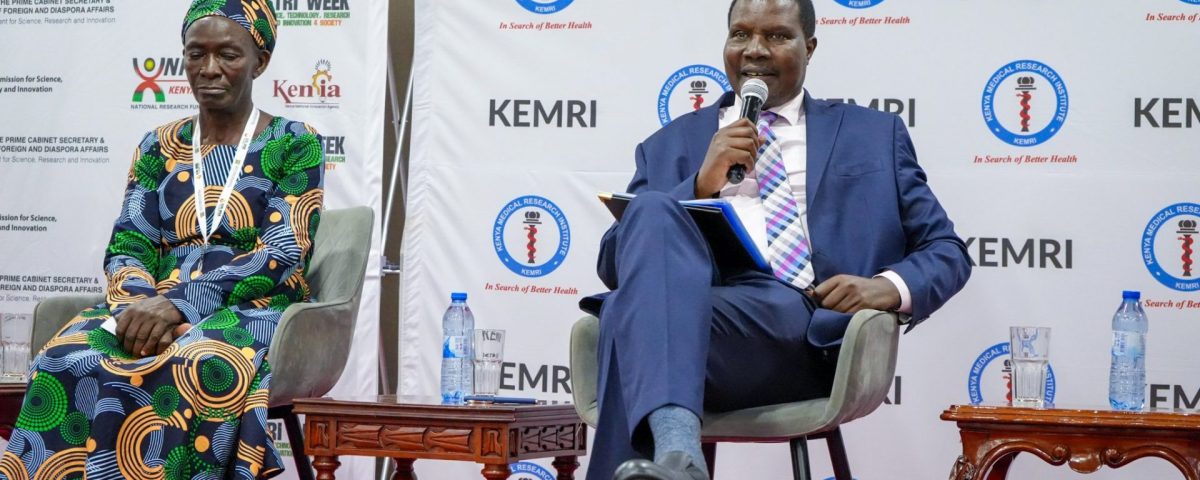
At KEMRI’s breakout and panel session held during the Science, Technology, Research, and Innovation (STRI) week, discussions focused on the critical intersection of indigenous knowledge, natural products, and scientific research in advancing sustainability and strengthening climate resilience. The session brought together voices from research, traditional practice, policy, and climate resilience sectors to examine how locally grounded knowledge systems can meaningfully contribute to shaping resilient and sustainable futures.
Speaking during the panel discussion, KEMRI’s Ag. Vice Chancellor, Prof. Elijah Songok, who underscored the urgent need to integrate indigenous knowledge systems with scientific innovation to drive sustainable development and address emerging global challenges.
According to Prof. Songok, indigenous knowledge remains an important but often underutilized resource in addressing contemporary issues such as climate adaptation, biodiversity conservation, food security, public health, and environmental sustainability.
“Communities have, for generations, developed practical knowledge, adaptive systems, and sustainable ways of living informed by their immediate environments. This knowledge holds immense value in helping societies respond to climate change, health threats, food insecurity, and ecosystem degradation. Scientific research provides an opportunity to validate, strengthen, and responsibly integrate this indigenous wisdom into evidence based, scalable, and sustainable solutions. When science and traditional knowledge work together, we create stronger pathways for innovation, resilience, and sustainable development that are rooted in local realities and informed by global scientific standards,” said Prof. Songok.
The discussions highlighted the growing global appreciation for indigenous knowledge as a complementary pillar to conventional scientific inquiry. Indigenous communities possess deep understanding of ecosystems, medicinal plants, agricultural practices, weather patterns, and natural resource management, knowledge that has sustained populations for centuries. However, panelists emphasized that integrating indigenous knowledge into mainstream research and policy frameworks requires respectful collaboration, ethical engagement, intellectual property protection, community participation, and co creation between researchers and knowledge holders.
At the forefront of these efforts is KEMRI, whose work in traditional medicine and natural products research continues to demonstrate the transformative potential of combining indigenous knowledge with modern scientific methods.
For decades, KEMRI has undertaken advanced research aimed at scientifically evaluating traditional medicines, medicinal plants, and bioactive natural compounds with the potential to address public health challenges. Through multidisciplinary research approaches involving pharmacology, biotechnology, microbiology, chemistry, and clinical sciences, the Institute has contributed significantly to validating traditional remedies and exploring their therapeutic applications.
KEMRI’s research in traditional medicine and natural products has contributed to the generation of scientific evidence on the safety, quality, and efficacy of herbal products and medicinal plant compounds used in disease management. The Institute has also advanced studies exploring plant based bioactive compounds with potential applications in infectious diseases, inflammatory conditions, and other areas of health research.
Beyond healthcare, KEMRI’s work in natural products research contributes to biodiversity conservation, sustainable utilization of natural resources, innovation in drug discovery, and the growth of local scientific capacity. By leveraging indigenous knowledge within a rigorous scientific framework, the Institute continues to support the preservation of valuable cultural heritage while promoting evidence-based health solutions.
The discussions further explored the importance of policy, governance, and cross sector collaboration in supporting equitable integration of indigenous knowledge and science. Participants noted the need for stronger frameworks that facilitate ethical knowledge sharing, safeguard indigenous intellectual contributions, and strengthen research ecosystems that value diverse systems of knowledge.
As KEMRI continues advancing research on traditional medicine, natural products, and scientific innovation, the message emerging from the Science, Technology, Research, and Innovation week, remains clear, meaningful sustainability and climate resilience will require collaboration across disciplines, cultures, and knowledge systems
By valuing both ancestral wisdom and scientific discovery, societies can unlock transformative solutions capable of responding to present challenges while safeguarding the wellbeing of future generations.
In addition to the plenary discussion, the KEMRI side event themed, “Advancing Product Development, Vaccines, Climate Change and Natural Products Through Science, Technology and Innovation.” During the discussions, KEMRI researchers highlighted ongoing efforts aimed at strengthening Kenya’s scientific and research capacity. Dr. Ernest Wandera presented on building Kenya’s capacity to develop and manufacture vaccines, underscoring the importance of local production in enhancing health security and preparedness for future disease outbreaks. Dr. Jeremiah W. Gathirwa also shared insights on harnessing natural products and indigenous knowledge for drug discovery and therapeutics, noting the potential of traditional knowledge systems in contributing to modern medicine and innovation.
The event further explored the intersection between climate change and public health, with Social and Behavioral Research Scientist at KEMRI, CGHR-Kisumu, Ms. Teresa Atieno Bange presenting on housing modifications for heat adaptation, thermal comfort and malaria vector control in rural African settlements. Discussions also focused on translating research into marketready solutions, with Dr. Allan B. Ole Kwallah speaking on accelerating health product development and commercialization in Kenya. Participants emphasized the need for stronger collaborations, investment in research and innovation ecosystems, and policies that support the development of locally driven scientific solutions for societal impact