
Bridging Indigenous Knowledge, Natural Products and Science, Advancing Sustainability and Climate Resilience Through Research and Innovation
June 2, 2026
Can a Smartphone Camera Tell Us What Kenya’s School children Are Eating?
June 8, 2026Climate-Smart Housing Innovations Offer New Hope in the Fight Against Malaria
By Lisper Mokaya
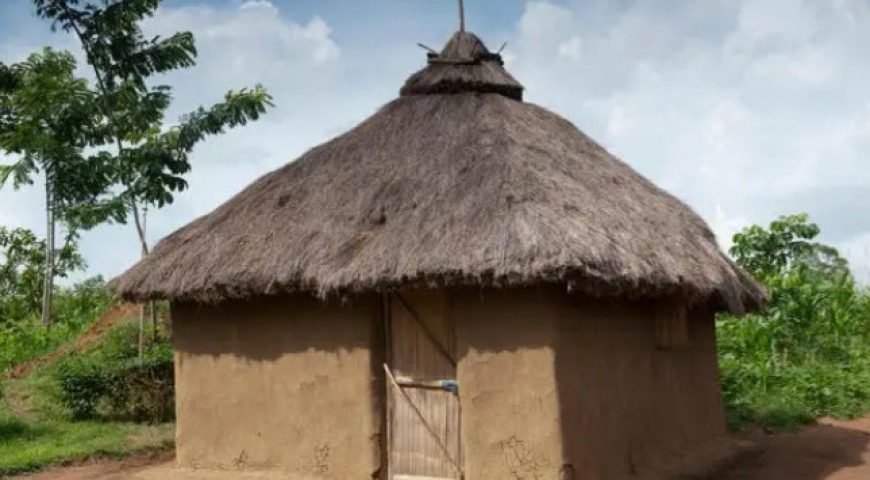
Every night across rural Kenya, millions of people sleep in homes that quietly work against their health. Heat absorbed during the day by iron-sheet roofs and high thermal-mass mud walls is trapped indoors and slowly released at night, creating uncomfortable and potentially dangerous indoor temperatures. Poor ventilation, with many homes lacking adequate windows further worsens indoor heat stress. At the same time, unscreened openings such as doors, windows, and eaves provide easy entry points for malariacarrying mosquitoes, exposing families to disease risk within the very spaces meant to protect them.
KEMRI’s Research Scientist, Teresa Bange presented preliminary findings from the Housing Optimisation for Malaria and Environmental Sustainability (HOMES) project at the Science, Technology, Research and Innovation for Society (STRI 4 Society) Week held on 20th May 2026, at the Kenyatta International Convention Centre (KICC) in a study that is asking an interestingly simple question; can changing the way we build our homes protect us from both the heat of a warming climate and the burden of malaria, simultaneously?
While presenting preliminary findings from HOMES, Ms. Teresa Bange demonstrated how climate-responsive housing innovations are emerging as an important public health intervention in Kenya’s hot and humid malaria endemic regions. The study, titled Effect of Housing Modification on Indoor Thermal Comfort and Malaria Vector Densities in Hot and Humid Zones of Western (Siaya County) and Coastal Kenya (Kwale County), focused on evaluating solutions to address housing vulnerabilities that contribute to heat stress and increased exposure to malaria-transmitting mosquitoes.
She noted that many households in hot and humid malariaendemic regions continue to experience dangerous indoor temperatures, especially during the day, due to poorly ventilated housing structures, iron sheet roofing that does not reflect heat and highlighted evidence showing sustained residual malaria transmission due to peak of indoor mosquito biting when people are outside protection of bed nets.
Thermal monitoring across study sites at baseline revealed a sobering reality: most homes fall within the “Caution,” “Extreme Caution,” and “Danger” heat index bands reaching between 27°C and 54°C indoors at different times of the day and night. Such conditions not only affect human comfort and productivity but also increase health risks associated with prolonged heat exposure and malaria risk when people are unable to use nets due to heat or must open windows for cooling. The main challenge, as Bange explained, lies in the architectural paradox. The very same openings: doors, eaves, and windows that allow heat to escape are also the primary entry points for disease-carrying mosquitoes.
In many rural homes, these openings are either absent, poorly positioned, or wrongly proportioned, limiting their effectiveness at both tasks. “Buildings heat up and cool down through their roofs, walls, and any gaps or openings,” Bange noted. “However, in many rural homes these openings are either missing, poorly positioned, or disproportionate, limiting their ability to keep the home comfortable while the same openings remain the main entry points for disease-carrying vectors such as mosquitoes.”
To address this dual challenge, the HOMES project explored affordable, passive cooling and malaria vector control interventions through a community-centred co-design approach. The process began with baseline social science research to understand why people build the way they do, community experiences of heat and malaria risk, perceived housing challenges, and willingness to adopt modifications. These insights were transformed into user requirements that guided co-creation workshops involving community members, public health experts, and built environment professionals. The result was a set of practical, locally grounded housing solutions designed to be acceptable, sustainable, and responsive to the everyday realities of the communities they aim to serve.
Among the co-created housing modifications tested were improved ventilation systems, screened eaves, screen door curtains, screened windows cool roofing technologies, and combined cross ventilation approaches. The interventions were piloted in Siaya county which informed the evaluation at Siaya and Kwale counties, regions that continue to experience high malaria burden and increasing climate related heat stress. The set of interventions were designed to address the dual challenge of high indoor temperatures and malaria risk due to mosquito entry, without requiring prohibitively expensive materials, specialist construction skills or reliance on electricity.
Findings from the pilot study, published in Nature Medicine at (https://www.nature.com/articles/s41591-025-04104- 9) showed that the housing improvements significantly reduced indoor mosquito densities while also improving thermal comfort within homes. Similarly, preliminary findings from the main study revealed that houses which previously fell within the “extreme caution” or “danger” heat index categories during the hottest parts of the day were shifted into the thermal comfort range following the interventions. These findings demonstrate the effectiveness of combined passive cooling strategies in naturally reducing indoor temperatures without reliance on electricity. Beyond improving comfort and reducing malaria risk, the approach offers a low-carbon, climate-resilient solution that supports environmental sustainability and presents potential opportunities for carbon financing and green housing innovations.
“Simple housing improvements have great potential to reduce indoor heat exposure and malaria transmission in rural African housing,” said Bange. “Healthy housing must now be viewed as an important climate adaptation and public health strategy.”
She emphasized that as climate change continues to reshape disease patterns and environmental conditions, housing interventions should become part of broader health and development planning across the continent.
The presentation further underscored the urgent need for policy frameworks that promote healthy housing standards in Africa. Bange called for increased public sensitization, stronger engagement of professionals in the built environment and public health and investment in capacity building on healthy housing designs.
“Relevant policies on healthy housing are urgently needed to improve health outcomes across Africa,” she noted. “There is also a critical need to sensitise communities, industry players, supply chains, built environment actors, and public health professionals on the importance of climate-responsive housing.” She further emphasised the need for local manufacturers to invest in the production of affordable, climate-sensitive housing materials and technologies such as reflective roof paints and vector-proofing solutions that support thermal comfort, disease prevention, environmental sustainability, and healthier living environments.
Backing up Bange’s presentation during a plenary session, Habitat for Humanity International’s structural engineer, Mr. Dancan Aballa emphasized that healthy housing should no longer be viewed solely as a construction issue. “Healthy housing is no longer just a construction issue. It cuts across public health, climate resilience, as well as economic productivity,” he said. “The challenge is not whether solutions exist the challenge is aligning finance, governance, markets, and community ownership to implement them at scale.” He further warned that Africa’s future housing crisis may not necessarily be defined by the lack of housing units, but by the increasing construction of homes that fail to protect human health and withstand climate pressures.
“The future housing crisis in Africa may not be defined by the absence of housing units, but by the widespread construction of homes that are thermally unsafe, disease-prone, economically inefficient, and climatically fragile,” he added.
The HOMES project is one of nine global heat adaptation projects under the Heat Nexus (https://heatnexus.org/ our-projects/) funded by Wellcome. Led by Principal Investigator Dr. Bernard Abong’o, the project brings together a multidisciplinary network of partners including Habitat for Humanity International, Technical University of Mombasa, University of Berlin, and other stakeholders working across housing, environmental sustainability, climate adaptation, and public health. Through these collaborations, the project continues to generate evidencebased, community-driven solutions aimed at improving housing conditions, reducing malaria transmission, enhancing thermal comfort, and strengthening climate resilience among vulnerable communities in Kenya and beyond.
The HOMES project demonstrates how KEMRI is advancing community-centred research and innovation to address pressing societal challenges at the intersection of climate change, environmental health, and infectious disease control. By developing sustainable housing solutions that improve thermal comfort while reducing malaria risk, the project directly aligns with the vision of STRI 4 Society, leveraging science, technology, research, and innovation to improve lives and build resilient communities