Can a Smartphone Camera Tell Us What Kenya’s School children Are Eating?
June 8, 2026
KEMRI Strengthens Partnership with Baringo County to Advance Research-Driven Health Solutions
June 9, 2026Stakeholders Convene in Nairobi to Advance Genomic Surveillance for Outbreak Response in East and Central Africa
By Lisper Mokaya
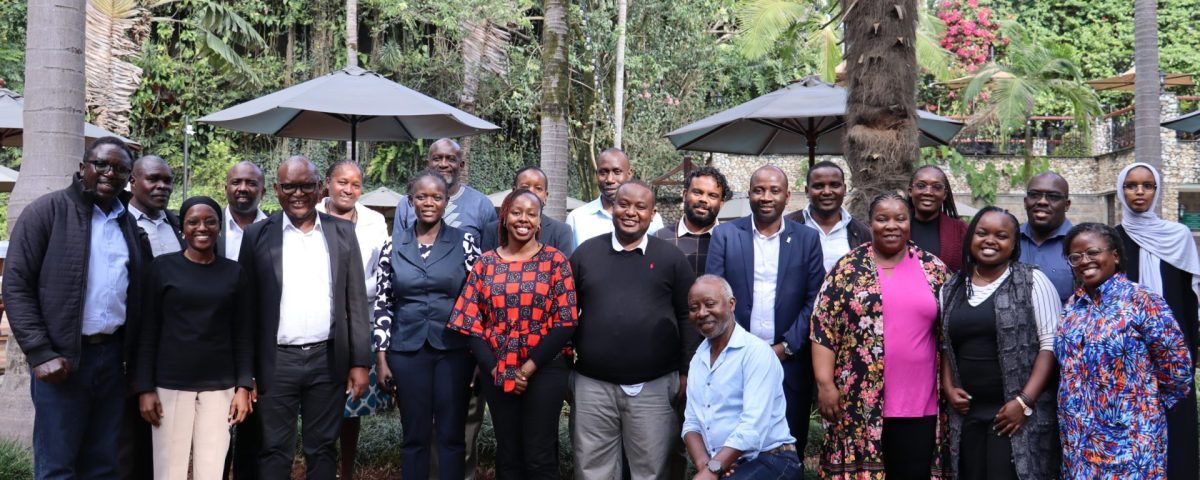
The Virus Genomics for Outbreak Response (ViGOR) Project team, led by Principal Investigator Prof. Charles Nyaigoti of the KEMRI-Wellcome Trust Research Programme (KWTRP), convened key national stakeholders in Nairobi to discuss strategies for strengthening disease surveillance, outbreak investigation, and epidemic preparedness across Central and East Africa.
The stakeholder engagement meeting held on 28th May 2026 brought together representatives from Ministry of Health, private health institutions, research organizations, and development partners, County government representatives and Community Healthy Promoters to explore how virus genomics and epidemiological modelling can be better integrated into routine disease surveillance and outbreak response systems.
The ViGOR project is being implemented through a collaboration between the KEMRI-Wellcome Trust Research Programme (Kenya), University of Warwick (United Kingdom), KEMRI Centre for Virus Research (CVR), Institut National pour la Recherche Biomédicale (INRB) of the Democratic Republic of Congo, and Institut National de Recherche pour l’Agriculture, la Pêche et l’Environnement (INRAPE) of Comoros.
The project seeks to strengthen outbreak investigation and response in the region by integrating genomic analysis and epidemiological modelling into routine surveillance systems, thereby enhancing the capacity of countries to detect, monitor, and respond to emerging public health threats.
Speaking during the meeting, Prof. Charles Nyaigoti emphasized the importance of collaborative approaches in strengthening regional epidemic preparedness.
“ViGOR aims to bridge the gap between advanced genomic technologies and public health decision-making. By integrating virus genomics, epidemiological modelling, and routine surveillance systems, we can generate timely evidence to support outbreak response and strengthen preparedness for future epidemics across the region,” — Project PI, Prof. Charles Nyaigoti
In his presentation, titled situate WP5 within vigor and IDSR strenghtening in Kenya, Prof. Agoti highlighted the role of (WP5), which focuses on strengthening the integration of virus genomics and epidemiological modelling into routine surveillance and outbreak response systems.
Prof. Nyaigoti explained that WP5 is strategically positioned within the ViGOR project to support the strengthening of Kenya’s Integrated Disease Surveillance and Response (IDSR) system by ensuring that genomic data and modelling outputs are translated into actionable public health intelligence for decision-making.
The meeting provided an opportunity for stakeholders to learn about the project’s objectives and planned activities, while also sharing perspectives on the practical integration of genomic and modelling data into existing outbreak response mechanisms.
Participants discussed current disease surveillance frameworks, laboratory systems, data-sharing mechanisms, and workforce capacity needs. The deliberations also highlighted challenges affecting surveillance systems, including limited genomic sequencing capacity, data integration gaps, and the need for stronger coordination among institutions involved in public health emergency response.
Stakeholders further identified opportunities for enhancing collaboration, strengthening laboratory networks, improving data utilization for decision-making, and building sustainable technical capacity within national surveillance systems.
According to the project team, insights gathered during the engagement will inform the co-development of actionable strategies aimed at supporting the integration of genomics and epidemiological modelling into routine Integrated Disease Surveillance and Response (IDSR) systems.
The ViGOR project is expected to play a significant role in advancing regional health security by fostering collaboration among public health stakeholders and promoting evidence-based approaches to outbreak detection, investigation, and response.
As countries continue to face emerging and re-emerging infectious disease threats, the project underscores the growing importance of genomic surveillance and predictive modelling in strengthening public health preparedness and protecting populations across Central and East Africa.
ViGOR aligns with National Institute for Health and Research (NIHR) call 4 priorities in; building resilience to the global threat from virus outbreaks, generating new leadership in LMICs, and undertaking high quality policy relevant research. Also present during the meeting was the Project Co- Investigator Dr. Benjamin Tsofa, Deputy Director Centre for Virus Research, Dr. Samoel Khamadi, among others.