New Community Advisory Board Strengthens EARN Trial Engagement in Kisii
October 7, 2026
East Africa urged to turn malaria genomic data into action
October 15, 2026EAC Malaria Meeting Calls for Urgent Action To Keep 2030 Elimination Goal Within Reach
BY LISPER MOKAYA
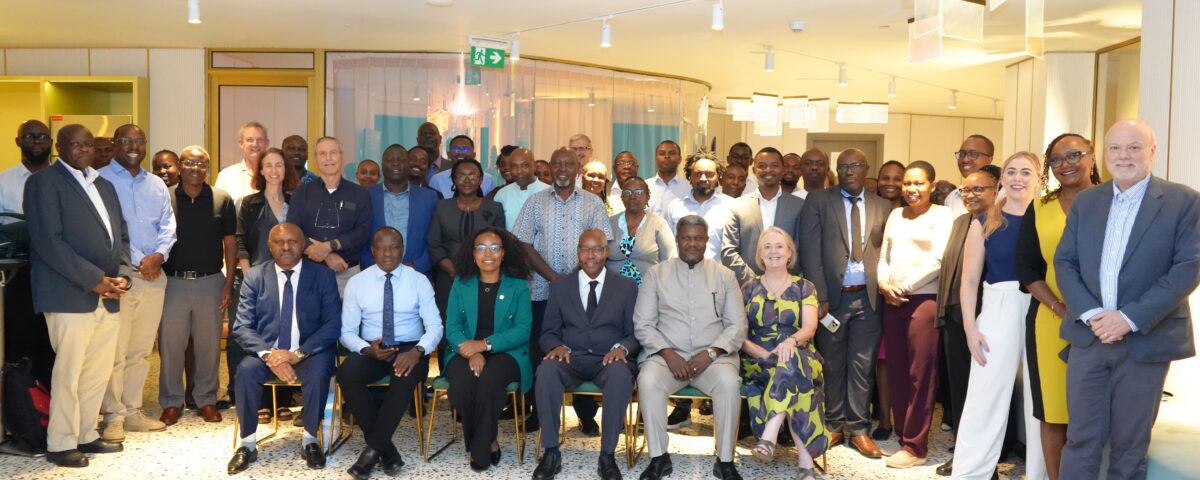
East African countries must move beyond sharing research findings and translate scientific evidence into coordinated action if the region is to achieve malaria elimination by 2030. This was the central message as regional health leaders, researchers, policymakers and development partners gathered in Nairobi for the 2nd East African Community (EAC) Malaria Stakeholders’ Meeting held on October 7th to 9th 2026.
Held under the theme “Malaria Elimination by 2030: Are We on Track?”, the meeting assessed progress towards the regional elimination target, examined emerging threats and identified practical measures to strengthen malaria control across EAC Partner States. Discussions focused on malaria genomics and molecular surveillance, case management and therapeutics, diagnostic innovation, vector control, vaccines, sustainable financing and cross-border collaboration.
The meeting was officially opened by Dr. Edwin Onyango, representing the Ministry of Health, who called for sustained regional cooperation and stronger health systems to accelerate progress towards malaria elimination. The opening ceremony was graced by the Ambassador of Israel to Kenya, H.E. Gideon Behar, alongside representatives of regional and international health organisations, including the World Health Organization (WHO), the RBM Partnership to End Malaria, the EAC Secretariat, CDC Africa and EAC DG/DSG, Infrastructure, Productive, Social & Political Sectors.
In his remarks Dr. Onyango’s central message was that malaria elimination will be decided where people live. Malaria elimination, he said, will ultimately be won or lost at the community and primary health care level, which is why malaria interventions must be firmly embedded in accessible and responsive primary care systems. He urged a shift from waiting for malaria to occur to prevention, including through approaches such as genomic surveillance, and from there to empowering communities “with the knowledge, tools and services” they need to protect themselves. He singled out Kenya’s community health promoters, who visit households, check on family health and refer people to services, including for malaria, as a vital link that must keep being strengthened.
Representing KEMRI’s Vice Chancellor and Chief Executive Officer, Prof. Elijah Songok, Dr. Erick Lelo underscored the importance of moving beyond knowledge exchange to coordinated action, emphasising the role of research, partnerships and regional cooperation in addressing the evolving malaria threat.
Dr. Lelo noted that malaria continues to cause preventable deaths, place pressure on health systems and constrain social and economic development. Although advances in surveillance, diagnostics, genomics, data science, vector monitoring and digital technologies are creating new opportunities, he emphasised that technology alone will not eliminate the disease.
“Impact comes when evidence is translated into action, when data informs policy, and when partnerships drive implementation,” he said, conveying KEMRI leadership’s call for stronger connections between scientific research, government priorities and public health interventions.
He reaffirmed KEMRI’s commitment to generating quality research, strengthening scientific capacity and building strategic partnerships that respond to the region’s health priorities. He also underscored the importance of African-led research and home-grown scientific expertise in developing solutions suited to local disease patterns and health system realities.
With malaria transmission and the movement of people and vectors extending beyond national boundaries, Dr. Lelo called on countries to strengthen data sharing, harmonise approaches and build networks that enable faster responses to changing disease patterns.
“Malaria does not respect borders, and neither should our solutions,” he said.
The call for coordinated action was reinforced by Ambassador Behar, who cautioned that changing environmental conditions, including climate change and shifting rainfall patterns, could complicate malaria control efforts. He urged countries to anticipate emerging risks and prepare their health systems to respond, rather than wait for threats to escalate.
Drawing on Israel’s experience in malaria elimination and research, the Ambassador expressed his country’s willingness to share expertise and support regional efforts. He emphasised that the EAC provides an important platform for countries to work together on a disease that cannot be effectively tackled through isolated national responses.
He challenged participants to ensure the meeting resulted in practical commitments rather than ending with discussions alone.
“The question always when we gather in conferences like this is what’s next?” he asked, urging participants to identify immediate actions, longer-term strategic priorities and professional contacts that could sustain collaboration beyond the meeting.
His message was clear: regional gatherings must produce tangible results that can be followed through and assessed on the ground.
Dr. Onyango similarly emphasised the importance of strengthening malaria prevention and treatment at community and primary healthcare levels. He highlighted the role of primary care networks and community health promoters in reaching households, encouraging timely care-seeking and ensuring that interventions reach the populations most in need.
He called for data-driven interventions that direct resources to the most affected areas and populations. As countries confront changing transmission patterns, treatment challenges and emerging drug resistance, he stressed the importance of sharing experiences, coordinating cross-border interventions and learning from one another’s approaches to malaria vaccination and case management.
The meeting’s technical discussions were supported by KEMRI’s malaria research leadership, including Deputy Director of the Biotechnology Programme, Dr. Damaris Matoke, and Mr. Kelvin Thiong’o, Head of the Malaria Department at KEMRI and Principal Investigator for the Malaria Therapeutic Efficacy Studies (TES). Mr. Thiong’o served as a key stakeholder lead during the active plenary sessions, helping steer discussions around the evidence, treatment challenges and strategic priorities shaping the regional malaria response.
The meeting was coordinated by Dr. Michael Katende of the EAC Secretariat, who served as Chair of the Organising Committee, working with the organising team to bring together researchers, national malaria programme representatives, policymakers and partners for the two-day engagement.
A major focus of the meeting was the growing threat posed by resistance to antimalarial medicines and insecticides. Participants noted that East Africa faces interconnected challenges involving both the malaria parasite and the mosquitoes that transmit it. These threats require stronger surveillance systems capable of detecting changes early and generating evidence that national malaria programmes can use to adjust interventions.
Discussions on malaria genomics highlighted the importance of identifying genetic markers associated with antimalarial drug resistance, diagnostic challenges and changes in vector behaviour. Participants called for a standardised East African framework for malaria genomic surveillance and data sharing, supported by stronger laboratory and analytical capacity, harmonised standard operating procedures and better integration of genomic findings with clinical, epidemiological, environmental and human mobility data.
The meeting emphasised that collecting genomic data is not enough. The information must reach decision-makers in time to inform treatment policies, surveillance priorities and public health interventions. Shortening the time between sample collection, analysis and policy action was identified as an important priority.
Participants also called for sustained surveillance of resistance markers, including Pfk13 markers associated with artemisinin resistance and other relevant markers that could help explain emerging resistance patterns. Integrating molecular surveillance with conventional disease and entomological surveillance would enable countries to develop a more complete understanding of where resistance is emerging, how it is spreading and which interventions remain effective.
The discussions further underscored the importance of strengthening regional molecular surveillance networks, including initiatives involving Africa CDC and the EAC Secretariat. Such networks could support standardised databases, shared evidence and more harmonised approaches to drug and vector control policies. Participants called for sustainable regional infrastructure and financing arrangements so that molecular surveillance becomes part of routine public health systems rather than remaining dependent on time-limited projects.
Vector control was another critical area of discussion. Participants noted that the effectiveness of some existing interventions is being challenged by insecticide resistance and changing mosquito behaviour, including outdoor biting. Reliance on pyrethroid-only insecticide-treated nets was identified as an increasing concern, reinforcing the need to expand the appropriate use of dual-active-ingredient long-lasting insecticidal nets, targeted indoor residual spraying and larval source management where evidence and local conditions support their use.
The meeting also called for enhanced surveillance of invasive mosquito species, including Anopheles stephensi, and further evaluation of interventions targeting mosquitoes that bite outdoors, such as spatial repellents and attractive toxic sugar baits. Participants stressed that genomic surveillance should complement, rather than replace, conventional entomological monitoring and should be designed around the information national malaria programmes need to make decisions.
The role of malaria vaccines in reducing illness and deaths also featured prominently. While participants acknowledged progress in vaccine introduction and uptake, they identified persistent challenges relating to community awareness, hesitancy among some community members and health workers, and the need for stronger coordination between national malaria control and immunisation programmes.
Recommendations included strengthening community engagement, improving documentation of vaccine implementation experiences and communicating the benefits and potential risks clearly. Participants also called for greater involvement of men and husbands in vaccination discussions, expanded outreach to hard-to-reach populations and stronger engagement with the private sector. They emphasised the importance of communicating the human impact behind vaccination statistics by showing how interventions affect children, families and communities.
Regional vaccine implementation experiences were considered valuable in helping countries learn from one another and improve planning, delivery and uptake. Participants also proposed exploring opportunities for local and regional vaccine manufacturing to reduce costs and improve access, as well as considering how malaria vaccination and prevention could be supported through insurance and community-based health financing arrangements.
On malaria case management, discussions centred on the need to preserve the effectiveness of existing medicines while preparing for emerging resistance. Participants examined multiple first-line therapy (MFT) approaches, including implementation experiences from Kenya, Rwanda and Tanzania, where rotating treatment options over a two-year period was discussed as one strategy for preserving treatment efficacy and delaying resistance.
The discussions highlighted the importance of adhering to the principles of testing, treating and tracking malaria cases, alongside stronger surveillance of treatment outcomes and medicine effectiveness. Participants also raised concerns about the potential implications of expanding MFT, including the possibility of increasing selection pressure on parasite populations and placing further pressure on medicines such as lumefantrine.
To address these concerns, the meeting called for accelerated consideration and registration of new antimalarial medicines as countries work towards the 2030 Global Technical Strategy targets. Participants proposed that EAC stakeholders develop a white paper examining the evidence and policy considerations for MFT approaches beyond artemisinin-based combination therapies, including the potential role of non-ACT combinations where supported by evidence and appropriate regulatory guidance.
They also called on Novartis and other medicine developers to provide clearer roadmaps for the development of new molecules, helping countries plan for registration, approvals and future treatment strategies. The RBM Partnership to End Malaria and other partners were urged to support an evidence-based case for timely regulatory consideration of promising new treatments. A future regional stakeholder meeting could also provide an opportunity for the private sector to share lessons from MFT implementation.
Beyond technical interventions, sustainable financing emerged as a cross-cutting concern. Participants observed that heavy reliance on external funding leaves malaria programmes vulnerable to changes in donor priorities and funding arrangements. They called for stronger domestic resource mobilisation, national co-financing and the development of regional financing mechanisms that can safeguard essential surveillance and control activities.
The meeting also encouraged countries to mobilise local resources for community-level interventions, including larval source management and targeted indoor residual spraying. Participants called for clearer identification of service delivery and financing gaps, engagement with governments to address them, and systematic tracking of progress. Innovative health financing approaches, including alignment with universal health coverage initiatives, were identified as potential avenues for sustaining malaria interventions.
Participants further stressed that malaria elimination should be treated not only as a health priority but also as a development and economic agenda. Stronger regional collaboration could support local manufacturing of health products, reduce dependence on external supply chains and improve access to essential tools. The meeting proposed an EAC webinar on local manufacturing and called for consideration of regulatory approaches that would help suitable locally developed products reach regional markets while maintaining appropriate standards of safety, quality and efficacy.
A key lesson running through the discussions was the need to connect research more closely with the decisions and realities of national malaria programmes. Participants called for researchers to engage policymakers, regulators and technical working groups from the early stages of research design, ensuring that studies answer practical questions raised by governments and implementing programmes. They also emphasised closer collaboration between vector and parasite research teams and stronger links between research institutions, industry and public health agencies.
The meeting urged countries to make better use of travel and population mobility data when targeting interventions, particularly in border communities and areas vulnerable to imported infections. Participants also called for malaria to receive sustained attention in broader regional and global health discussions, including climate-related forums, given the links between environmental change, disease transmission and public health preparedness.
Capacity development and long-term institutional support were identified as essential to sustaining these efforts. Although the region has a growing pool of scientific expertise, participants noted that progress depends on retaining skilled personnel, strengthening laboratories and analytical institutions, and establishing reliable systems for financing and using research. They called for frameworks that connect researchers, national malaria programmes, policymakers and regulators through formal mechanisms that support evidence-informed decisions and implementation.
The discussions also highlighted the need for political commitment to translate into practical action, with clear responsibilities, measurable priorities and follow-up mechanisms. Participants underscored that the immediate priority must remain reducing malaria illness and preventing deaths, while maintaining a clear pathway towards elimination.
In his closing remarks, Ambassador Behar returned to the need for participants to turn what they had learned into practical results. He distinguished between simply acquiring information and developing the ability to apply it to real-world challenges.
“There is a difference between knowledge and know-how,” he said. “Know-how is to take this knowledge and transfer it, translate it into action.”
He reaffirmed Israel’s commitment to supporting continued engagement and expressed hope that the meetings would provide a platform for sustained collaboration.
“Finally, we need to translate knowledge into actions, and this is my message to you: translate what you learned here to actions on the ground,” he urged participants.
Giving the final remarks on behalf of KEMRI leadership, Research scientist Dr. Bernhards Ogutu reminded participants that the fight against malaria requires sustained commitment beyond individual meetings and funding cycles. He urged stakeholders to maintain momentum, strengthen collaboration and remain focused on the shared goal of eliminating malaria.
“The malaria conversation has never been as timely as it is now. Do not get fatigued; the malaria agenda is a marathon. Let’s work together and ensure this nightmare is won,” he said.
His message reinforced the urgency of the regional effort and the need for stakeholders to remain committed even when progress is slow or resources are constrained. Achieving malaria elimination by 2030 will require sustained political commitment, long-term investment, strong regional partnerships and the translation of scientific evidence into practical interventions that protect communities.
For KEMRI and its regional partners, the meeting reinforced the importance of African-led research, stronger scientific networks and collaboration that extends beyond the conference room. The challenge now is to maintain the momentum, translate the recommendations into country-level priorities and track progress towards a region where malaria causes fewer illnesses and deaths, and where elimination becomes an achievable reality.