KEMRI, US CDC reaffirm commitment to sustained collaboration amid changing health cooperation landscape
October 7, 2026New Community Advisory Board Strengthens EARN Trial Engagement in Kisii
BY DUKE ISABOKE
The Economic Advantages of Readers for Near Vision (EARN) Trial has strengthened its community engagement and team collaboration in Kisii County through the establishment of a Community Advisory Board (CAB) and a team-building activity aimed at strengthening relationships among study staff.
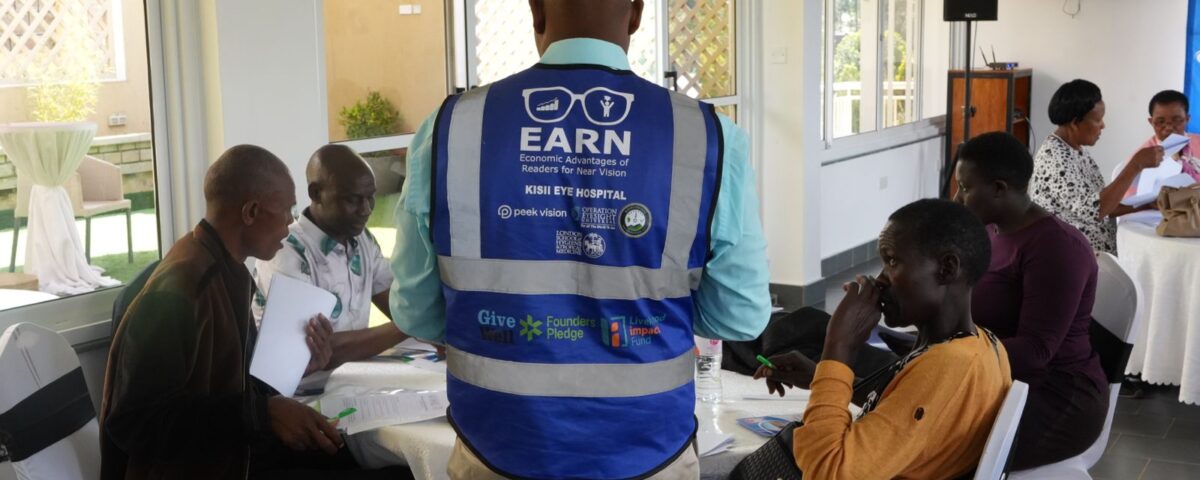
On October 1, 2026, the EARN research team and the newly established CAB held their inaugural meeting in Kisii County. The meeting brought together community members, leaders, health representatives and the research team to discuss the study objectives and progress to date, community engagement, and the role of the CAB in facilitating meaningful engagement with participating communities.
The meeting formally established the Board and provided an opportunity to familiarize members with the ongoing eye screening programme and the EARN Trial. Members discussed how the CAB could support community engagement, address concerns and misconceptions about the study, and provide the research team with insights into local beliefs and cultural practices.
While making her remarks, the EARN Trial Principal Investigator (PI), Ms. Sarah Karanja, welcomed the establishment of the CAB and acknowledged the important role its members would play in supporting the study’s engagement with participating communities.
“We look forward to working closely with the CAB members as key partners in community engagement. Their insights and understanding of the local context will be valuable in helping us address community concerns and strengthen communication throughout the EARN Trial,” said Ms. Karanja.
The CAB was established to provide a structured platform through which community concerns could be raised and communicated to the research team, while also supporting the sharing of study information and results with the wider community.
The EARN Trial seeks to determine whether providing near-vision glasses to working-age people with presbyopia can improve household consumption and vision-related quality of life. The study also seeks to assess the effect of improved near vision on individual income and productivity. Participants will be followed for two years, with assessments conducted at baseline, 12 months and 24 months.
Presbyopia is an age-related condition that makes it difficult to see objects clearly at close range. The EARN Trial focuses on people aged between 35 and 65 years who experience difficulty with near vision and live within the study area.
The study is being implemented through a partnership involving KEMRI, Kisii Eye Hospital, the International Centre for Eye Health (ICEH), the London School of Hygiene and Tropical Medicine (LSHTM) and the Ophthalmology Education and Research Unit (OEU).
Community engagement forms an important component of the study. Activities include chiefs’ barazas, community sensitization and health education, household and community mobilization, distribution of information, education and communication materials, and coordination of community screening activities.
The study team works closely with county and sub-county health departments, chiefs and assistant chiefs, community health promoters, Kisii Eye Hospital, Peek Vision and OEU to support community mobilization and implementation.
During the meeting, CAB members raised questions about the geographical representation of the Board, the role of the County Government, screening and referral processes, the use of digital screening tools, and the reasons for differences in participation between men and women.
The relatively low participation of men was highlighted as an area requiring further attention. Members observed that work schedules and differences in health-seeking behaviour could make it more difficult for some men to participate in screening and research activities. The CAB recommended strengthening engagement through chiefs, churches, community gatherings and other structures that could reach different groups within the community.
Screening activities are conducted through community health structures in the study area. A total of 22 Community Health Promoters are involved in screening activities, with 15 working in Nyaribari Chache and seven in Bobasi Constituency. Digital tools, including mobile phones and Peek Vision, are used to support screening and identification of people who require further assessment.
Between January and September 2026, 171,128 people were screened against a target of 198,000, representing approximately 86 per cent progress towards the screening target. Of those screened, 26,458 were identified as positive, while 12,081 were referred to the EARN study. A total of 9,289 people attended the EARN study, while 6,514 attended triage.
People identified with other eye conditions during screening were referred for further assessment and appropriate care through triage at Kisii Eye Hospital. These services included cataract care, refractive correction, surgery and post-operative follow-up.
For the EARN research team, the establishment of the CAB provided an important mechanism for ensuring that community perspectives remained part of the study throughout implementation. The Board will meet quarterly and work with the Community Liaison Officer to raise concerns, review relevant information and support communication between the study team and the wider community.
The CAB comprises 12 members drawn from community health structures, local leadership, pilot study participants, church representatives and community members. Jane Yobesh was elected Chairperson, while Stephen Machuka was elected Vice Chairperson. The members will serve for an agreed 27-month period and meet every three months, with additional engagement where necessary.
As the newly elected Chairperson, Ms. Jane Yobesh welcomed the opportunity to lead the Board and urged members to remain engaged with the communities they represent.
“I am thrilled to lead the Board and encourage my fellow members to remain committed, actively engage with the communities they represent and ensure that community concerns are brought forward and addressed,” said Ms. Yobesh.
The meeting resolved to strengthen collaboration with chiefs, churches and other community structures, improve screening coverage in underserved areas, provide clear information on the EARN Trial and referral processes, and develop a mechanism for reporting community concerns and complaints.
Team-Building Activity for EARN Trial held on 2nd October 2026 Crown Hotel, Kisii County
On October 2, 2026, the EARN Trial team held a team building activity to celebrate a significant milestone in the trial’s implementation. They successfully recruited 8,313 participants out of a target of 10,000. The event offered an opportunity to acknowledge the team’s contributions, strengthen working relationships, address operational issues, and prepare for the final phase of recruitment and follow-up.
The Study PI, Ms. Sarah Karanja, thanked the team for their dedication and contributions to the progress of the EARN Trial. She emphasized the importance of maintaining teamwork and positive working relationships. She also outlined plans to complete participant recruitment by end of November 2026 and announced a workshop in December 2026 to prepare for participant follow-up.
Thereafter, the team participated in a wellness session facilitated by Njeri, a yoga instructor. The session highlighted the importance of maintaining physical, emotional and mental well-being while respecting planned activities and making time for team bonding. The team-building aspect provided staff with an opportunity to engage with one another outside their regular research activities, to strengthen interpersonal relationships, and to enhance collaboration among staff.