
KEMRI Joins National Dialogue to Advance Kenya’s Universal Health Coverage Agenda
August 20, 2026
PAMCA Returns to Nairobi as Africa’s Mosquitoes Evolve
September 11, 2026KEMRI and Partners Call for Stronger Research, Regulation to Advance African Traditional Medicine
By Nicole Cherop
Traditional medicine remains deeply woven into the lives of millions of Africans, drawing on generations of indigenous knowledge, cultural practices and locally available resources. As interest in its potential contribution to modern healthcare grows, the need to strengthen research, regulation, quality and safety has become increasingly important.
It is against this backdrop that the Kenya Medical Research Institute (KEMRI) hosted the African Traditional Medicine Day commemoration on Monday, 31 August 2026, bringing together government representatives, researchers, traditional health practitioners, regulators, development partners and other stakeholders to advance the role of Traditional, Complementary and Integrative Medicine (TCIM) in Kenya’s healthcare system under the theme, “Strengthening African Traditional Medicine through Research, Regulation and Integration for Universal Health Coverage.”
The commemoration officially opened by the Cabinet Secretary Ministry of Health, Hon. Aden Duale, EGH aimed to showcase Kenya’s progress in strengthening the Traditional, Complementary and Integrative Medicine (TCIM) sector; promote scientific research, innovation and evidence generation; strengthen collaboration among key stakeholders; and increase public awareness of the contribution of African Traditional Medicine to healthcare.
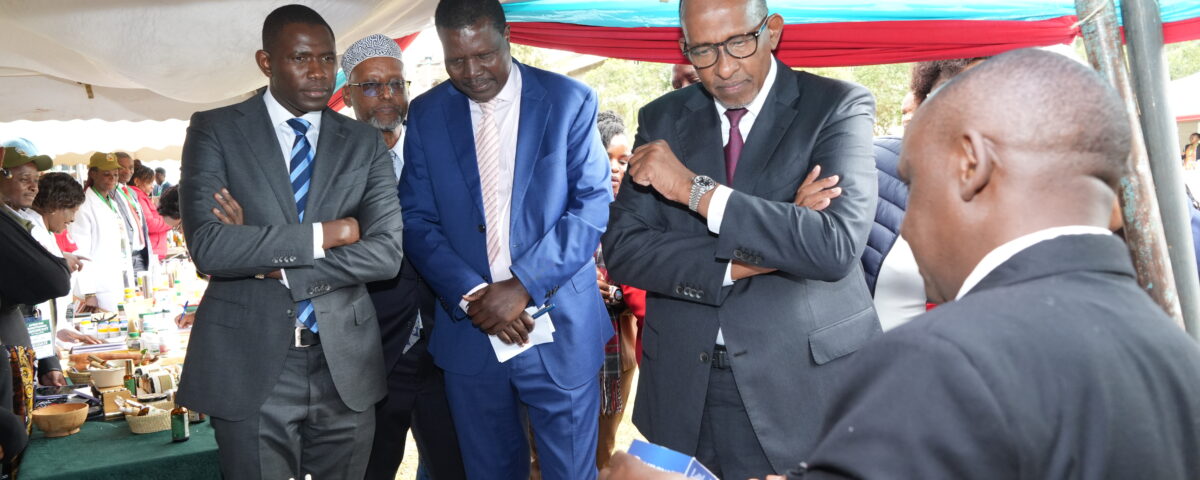
The event also featured an exhibition showcasing traditional medicine products, research innovations, policy initiatives, quality assurance technologies and educational materials.
In his welcoming remarks, KEMRI Vice Chancellor(VC) and Chief Executive Officer (CEO), Prof. Elijah Songok, emphasised KEMRI’s role in generating scientific evidence to inform health policy, practice and innovation
“Our responsibility is to generate scientific evidence that can inform policy, healthcare practice and innovation,” Prof. Songok said.
He noted that KEMRI’s work includes research into medicinal plants and traditional therapies, assessment of safety and efficacy, standardisation and product development.
In addition, Prof. Songok stressed that research must be supported by strong quality assurance and regulatory systems.
“Evidence generation must go hand in hand with quality assurance, regulatory assessment and product development,” he said.
He called for stronger collaboration among researchers, traditional health practitioners, regulators, policymakers, academia, industry, communities and development partners to ensure traditional medicine contributes safely and effectively to healthcare.
The Chairman of the KEMRI Board of Directors, Dr. Abdullahi Ali, highlighted the cultural and community importance of African Traditional Medicine, noting that it is deeply connected to indigenous knowledge and biodiversity.
“We have a responsibility to preserve this heritage while ensuring that the interventions provided to our communities are supported by evidence and appropriate safeguards,” Dr. Ali said.
He emphasised that building an evidence-informed traditional medicine sector requires investment in research infrastructure, skilled personnel, reliable data, quality assurance and sustainable partnerships.
Principal Secretary, State Department for Medical Services, Dr. Ouma Oluga, reaffirmed the Government’s commitment to strengthening TCIM as part of Kenya’s broader health agenda.
He highlighted the need for an enabling environment that supports research, appropriate regulation and the responsible integration of traditional medicine into the healthcare system.
The PS noted that stronger collaboration between government, researchers, practitioners, regulators and other stakeholders would be critical to advancing the sector.
Opening the commemoration, Cabinet Secretary for Health, Hon. Aden Duale, emphasised the importance of protecting indigenous knowledge and the communities that have preserved it.
“We must respect and protect our indigenous knowledge and the communities from which it originates,” Hon. Duale said.
He noted that safeguarding indigenous knowledge would help preserve Kenya’s heritage while supporting a safer, healthier and more self-reliant healthcare system.
The CS reaffirmed the Government’s commitment to integrating traditional medicine into the broader healthcare delivery system and strengthening its contribution to Universal Health Coverage through policy, research and collaboration with communities.
Hon. Duale also recognised KEMRI’s role in advancing health research, highlighting its researchers, specialised laboratories and partnerships.
“KEMRI has a critical role to play as a centre of excellence in health research. We must continue to utilise its expertise and infrastructure to address our national health priorities,” he said.
The commemoration also featured perspectives from the Trust for Indigenous Culture and Health (TICAH), the World Health Organization (WHO) and other stakeholders on the role of research institutions, regulators and practitioners in advancing TCIM.
Discussions centred on strengthening evidence generation, quality assurance, regulation, innovation and responsible commercialisation of traditional medicines.
Stakeholders noted that Kenya is working towards the integration of evidence-based traditional medicine into the national healthcare system by 2028, alongside efforts to strengthen policy and regulatory frameworks for safe, quality and effective TCIM practices.
The event concluded with key recommendations and priority actions aimed at strengthening research, regulation, innovation, quality assurance and collaboration across the sector.
The commemoration reaffirmed the shared responsibility of government, research institutions, traditional health practitioners, regulators, academia, industry, development partners and communities to preserve Africa’s rich traditional medicine heritage while ensuring its potential contribution to Universal Health Coverage is advanced through science, evidence, innovation and appropriate safeguards.
The commemoration was hosted in collaboration with the Ministry of Health, WHO, TICAH, and National Museums of Kenya.