
KEMRI Showcases Research and Innovation Capabilities in the Inaugural meeting of KEMRI Strengthens Ethical Oversight of AI Pharmaceuticals and Vaccines
August 13, 2026
KEMRI Hosts Cochrane Kenya Review Jam to Strengthen Evidence-Based Research
August 13, 2026KEMRI Strengthens Ethical Oversight of AI in Health Research

By Gladys Mathenge
KEMRI through its Scientific and Ethics Review Unit (SERU), has strengthened its capacity to review the ethical implications of artificial intelligence (AI) in health research following a specialized AI for Health Research Ethics Review Training held on Wednesday, 5th August 2026.
Held under the theme “Practical AI Ethics Review for Health Research,” the one-day training brought together KEMRI SERU reviewers for an intensive and highly interactive programme designed to enhance their understanding of AI technologies and strengthen their ability to assess AI-driven health research protocols.
Opening the training, Head of SERU, Mr. Enock Kebenei, underscored the importance of ensuring that rapid technological advancement is matched by equally strong ethical oversight in research.
“As artificial intelligence becomes increasingly integrated into health research, our responsibility as ethics reviewers is to ensure that innovation is accompanied by strong ethical safeguards. We must equip ourselves with the knowledge and tools necessary to critically assess AI-driven research and ensure that the rights, safety and well-being of research participants remain at the centre of our work.” He noted.
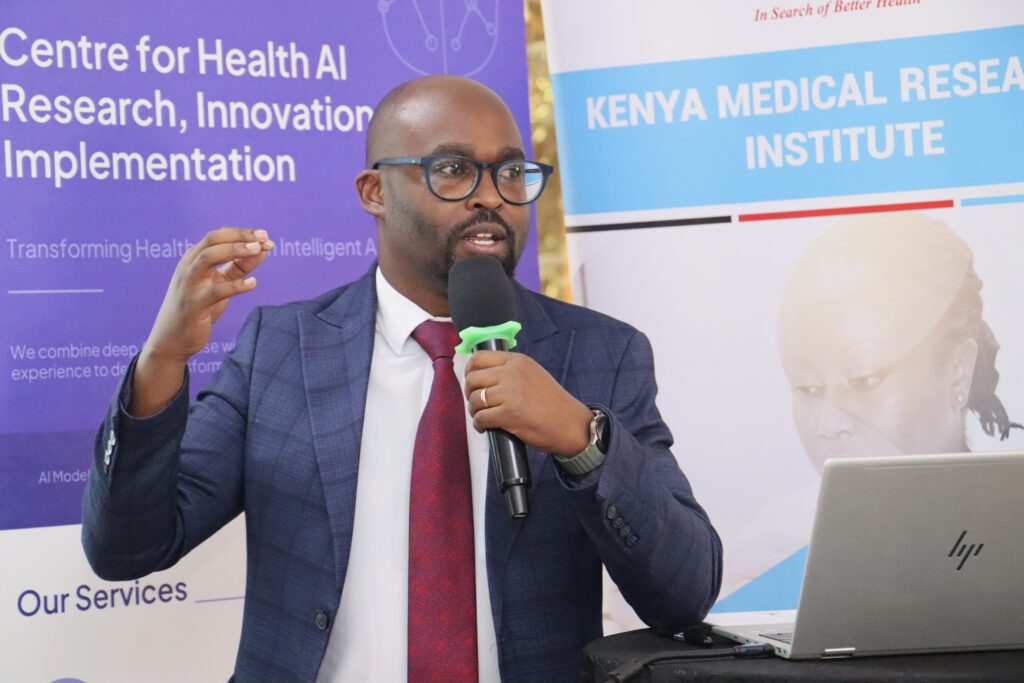
The training was facilitated by IntelliSOFT, award-winning AI developer, Dr. Fredrick Mutisya, who led participants through practical discussions on AI ethics review and AI models used in health research.
Dr. Mutisya emphasized the need for ethics reviewers to understand not only what AI systems can do, but also how they work, the data they depend on and the risks they may present to research participants and communities. “AI is not simply a technology that we approve or reject; it is a system that must be understood, questioned and evaluated within its context. Ethical review requires us to understand how an AI model works, what data it relies on, who may be affected by its decisions and what safeguards are in place when things go wrong.” He stated.
The programme covered key areas of AI literacy, including machine learning, deep learning, computer vision and large language models, alongside concepts such as training data, validation, hallucination and model drift.
Participants further examined core AI ethics principles, including autonomy, well-being and safety, transparency and explainability, accountability, equity and inclusion, responsiveness and sustainability. Particular attention was given to bias, fairness and data rights, including representation and measurement bias, consent models, data minimization, automated decision-making, crossborder data transfer and data sovereignty.
The training provided a significant capacity-building opportunity for KEMRI SERU reviewers, equipping them with practical knowledge to navigate the emerging ethical challenges presented by AI in health research.
Through case-based discussions, practical exercises and a protocol review workshop, the KEMRI SERU team was able to apply the principles discussed to real-world ethical review scenarios. Working in groups, they reviewed a deliberately flawed AI health research protocol using the Kenya AI Ethics Review Checklist before presenting and defending their recommendations during a simulated Ethics Review Committee plenary.
This practical approach strengthened reviewers’ ability to identify ethical risks that may not be immediately apparent in conventional health research protocols. It also enhanced a shared understanding among reviewers on how to interrogate AI-related issues, including algorithmic bias, data governance, informed consent, transparency, explainability, validation, human oversight and accountability.
Importantly, the training will support greater consistency and confidence in the review of AI-related research proposals submitted to SERU, while strengthening the Unit’s preparedness to respond to rapidly evolving technologies in health research.
The programme forms the first part of a practical capacity-building initiative for KEMRI SERU reviewers, with further discussions expected to build on the knowledge and skills gained during the training.
By strengthening the expertise of its ethics reviewers, KEMRI is reinforcing its commitment to ensuring that technological innovation is accompanied by responsible and robust ethical oversight. The initiative further positions SERU to effectively safeguard the rights, safety and welfare of research participants while supporting responsible innovation in AI-enabled health research.