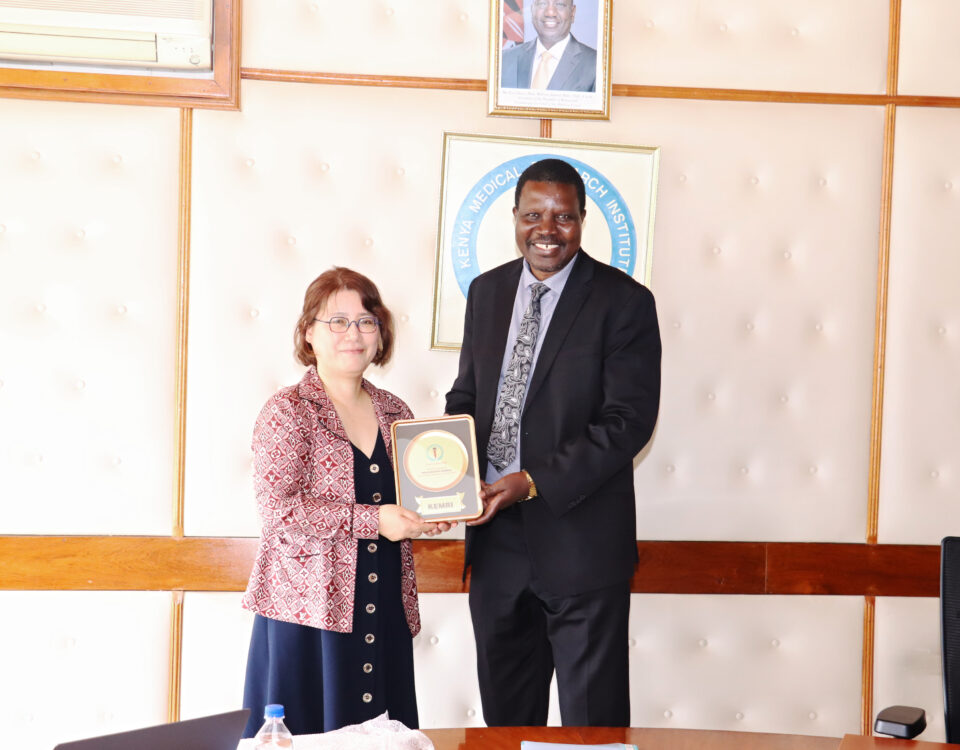

KEMRI to Lead Integration of Herbal Medicine into Kenya’s Health System
March 25, 2026
Yes! We Can End TB!
March 25, 2026KEMRI Takes Lead in Africa’s Fight Against Tuberculosis with Promising New Drug Research
By Dr. Elizabeth Kigondu
As the World attention turned to Tuberculosis this week, the Kenya Medical Research Institute (KEMRI) emerged at the forefront of Africa’s scientific response, spearheading innovative research that could reshape treatment and control of one of the world’s deadliest infectious diseases.
Despite being identified in 1882, TB remains a persistent global health threat. According to the 2024 report by the World Health Organization, approximately 10.7 million people develop active TB each year. The burden remains heaviest in South-East Asia (34%), the Western Pacific (27%), and Africa (25%), with countries such as India, China, the Philippines, and Pakistan accounting for more than half of global cases.
Low- and middle-income countries continue to bear the brunt of the epidemic, accounting for nearly 95% of TB-related deaths. In Sub-Saharan Africa, the crisis is intensified by high HIV/AIDS prevalence and the growing threat of antimicrobial resistance.
Kenya remains among the 30 high TB burden countries globally and is listed among 14 nations facing a triple burden of TB, TB/HIV co-infection, and drug-resistant TB. Ministry of Health data shows that in 2024, 96,865 TB cases were notified out of an estimated 124,000, raising treatment coverage to 77%, up from 69% in 2023.
However, significant challenges persist. Weak health systems, delayed diagnosis, and the ease of airborne transmission—where infection can occur from inhaling only a few bacterial droplets—continue to sustain the epidemic.
Current TB treatment regimens, typically lasting four to six months, are often undermined by patient non-adherence. This has contributed to the emergence of multidrugresistant (MDR), extensively drug-resistant (XDR), and totally drug-resistant (TDR) strains.
Standard treatment relies on first-line drugs such as isoniazid, rifampicin, ethambutol, and pyrazinamide, alongside second-line therapies including bedaquiline, linezolid, and clofazimine. These regimens are not only lengthy but can also be costly and associated with significant side effects.
Vaccination efforts have similarly faced limitations. The bacille Calmette-Guérin (BCG) vaccine remains the only available TB vaccine and, while effective in protecting children, shows inconsistent efficacy against pulmonary TB in adults.
In response to these challenges, KEMRI is playing a pivotal role within the Grand Challenges African Drug Discovery Accelerator (GC ADDA), a continent-wide initiative funded by the Bill & Melinda Gates Foundation and LifeArc.
Through this collaboration, KEMRI scientists are advancing cutting-edge research into a novel class of anti-TB compounds known as proteolysis targeting chimeras (PROTACs). These innovative molecules work by selectively degrading essential proteins within the TB bacterium by engaging the mycobacterial ClpCP protease—an approach that represents a new frontier in drug development.
The project, now in its second year, has already yielded promising results, with several candidate compounds demonstrating strong potential in early studies. Plans are underway to advance these candidates into animal models and, subsequently, clinical trials.
KEMRI’s leadership in this initiative signals a growing shift towards African-driven solutions to Africa’s health challenges. Scientists involved in the project express optimism that these efforts could soon lead to the development of effective, locally driven TB therapies.
As the global community continues to grapple with TB, KEMRI’s work offers renewed hope—not only for Kenya but for millions affected worldwide—that the next generation of life-saving treatments may emerge from the continent hardest hit by the disease.
The fight against tuberculosis is far from over, but with institutions like KEMRI leading the charge, the prospects for a breakthrough have never been more promising.