KEMRI Researcher Leads Charge to Transform Mental Healthcare in Kenya
May 15, 2026
KEMRI Strengthens National Ebola Preparedness & Strategic Response Capacity
June 2, 2026LEA-WH Fellowship Immersion Week Kicks Off
By Stella Njung’e
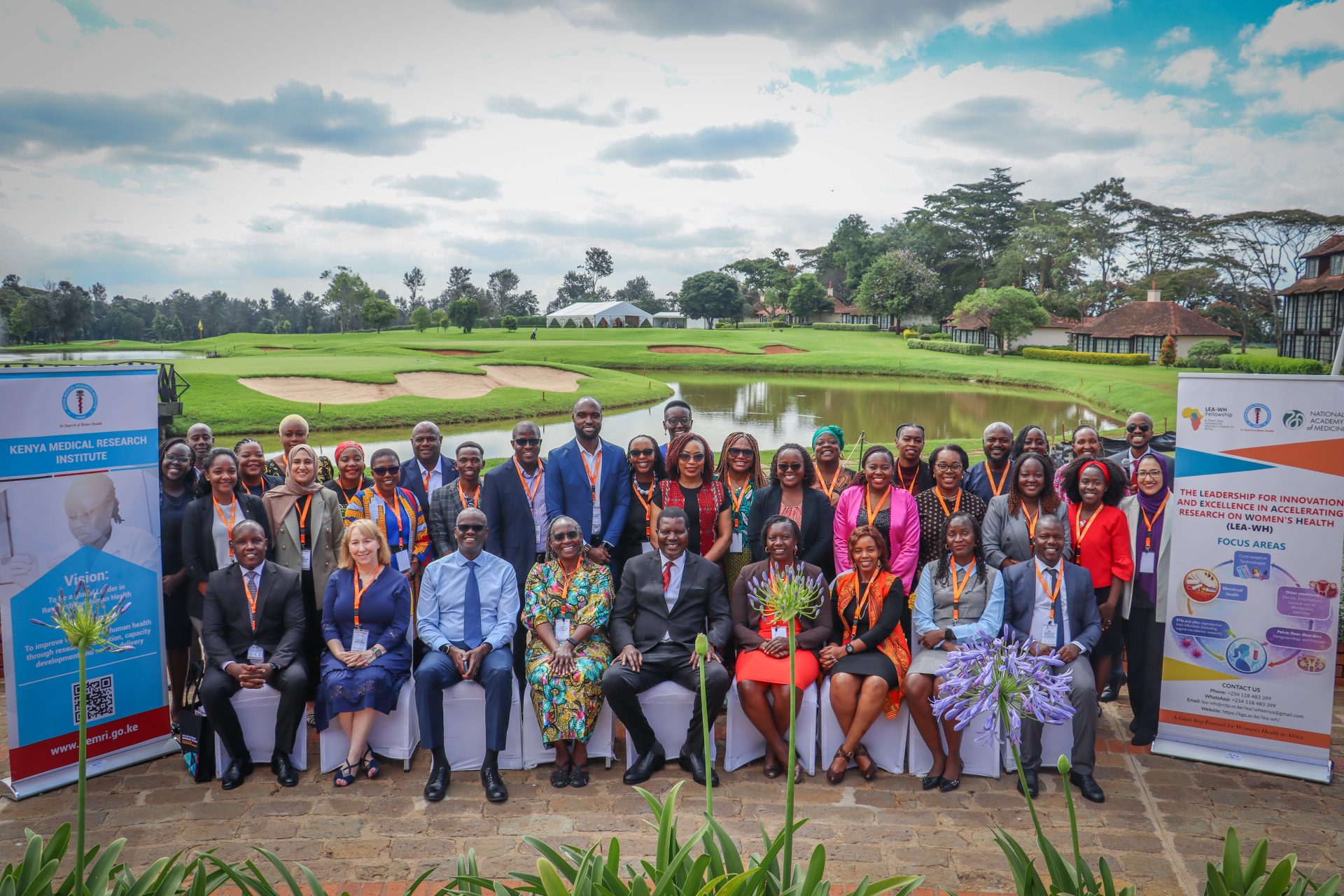
The inaugural cohort of the Leadership for Innovation and Excellence in Accelerating Research on Women’s Health (LEA-WH) Fellowship has kicked off its Immersion Week in Nairobi, bringing together 20 fellows from 11 African countries for a five-day meeting taking place from 11th – 15th March 2026.
The fellows, drawn from Nigeria, Cameroon, Malawi, Ghana, Kenya, Ethiopia, South Africa, Zimbabwe, Uganda, Botswana and The Gambia, represent the dual tracks of the programme: research and innovation. The cohorts research and innovations work, will focus on the programme’s nine priority areas in women’s health, including Sexually Transmitted Infections (STIs) and reproductive tract infections, menopause, menstrual health, cervical cancer, vaginal microbiome, endometriosis, contraceptive technology and Pelvic Floor Disorders (PFDs).
The Immersion Week marks the beginning of a transformative journey for African researchers and innovators committed to advancing women’s health across the continent. Guided by the theme, “Who We Are and Why We Are Here,” the opening day set the tone for reflection, connection and purpose-driven leadership, providing fellows with an opportunity to align their individual passions with a shared commitment to strengthening women’s health research, innovation and health systems in Africa
The fellowship comes at a critical time when women’s health remains significantly underfunded in research, development and innovation. Globally, women spend nearly 25 percent more of their lives in poor health compared to men, while Africa continues to face a disproportionate burden of maternal mortality, reproductive health complications, cervical cancer, infertility, gender based violence and unequal access to quality healthcare. Sub-Saharan Africa alone accounts for nearly 70 percent of global maternal deaths, while the continent bears about 25 percent of the global disease burden but contributes less than two percent of global health research output.
While making his official opening remarks, KEMRI Ag. Director General (DG), Prof. Elijah Songok, stated the fellowship comes at a critical moment for women’s health research and innovation in Africa, noting that the continent has an opportunity to lead in developing context-specific solutions to its health challenges.
“Scientific excellence alone is not enough. Today’s leaders must also understand policy engagement, implementation science, entrepreneurship, partnerships, financing and systems thinking,” said Prof. Songok.
He described LEA-WH as an investment in African researchers and innovators who can bridge science, policy and implementation to improve women’s health outcomes across the continent.
The twelve-month immersive fellowship is designed to nurture Africa’s next generation of women’s health leaders by equipping them with technical expertise, leadership skills, mentorship and networks required to develop scalable, context-relevant solutions for women’s health challenges. Through the Immersion Week, fellows are expected to build connections with peers and mentors, deepen their understanding of the fellowship journey and begin shaping projects that respond to priority women’s health needs across the continent.
Reflecting on the significance of the programme, and her journey as a reproductive health Researcher, LEA-WH Principal Investigator (PI), Prof. Elizabeth Bukusi, emphasised that the fellowship presents an opportunity to change the trajectory of women’s health through Africanled science and innovation.
“Together, we can change the trajectory and ensure that not just African women, but women all over the world, have a fighting chance to live their full lives and contribute to global issues and challenges,” she said.
Speaking on behalf of the Gates Foundation, the programmes funder, Dr. Jordan Kyongo described LEA-WH as the largest and most significant training initiative undertaken by the Foundation’s Women’s Health Innovation Team. He noted that the programme was intentionally designed to bridge the gap between research and real-world implementation by equipping researchers with both scientific and leadership skills.
He further emphasized that women’s health extends far beyond reproductive health alone, highlighting the need for greater attention to conditions that disproportionately affect women or present differently among women, including autoimmune diseases, diabetes and pain related conditions. He also noted that despite growing investment in women’s health globally, much of the funding remains concentrated in product development, leaving major gaps in the introduction and scale-up of innovations, particularly in low-income settings.
“The work ahead is important, and we have every confidence in the cohort assembled here today,” he said, while encouraging the fellows to pursue impactful, evidence-driven solutions that can transform women’s health outcomes across Africa and beyond.
On his part, World Health Organization (WHOs), Dr. James Kiarie underscored the need for stronger and more coordinated action to improve women’s health outcomes in Africa. He noted that despite the high burden of poor health outcomes on the continent, efforts to address them remain limited, calling on fellows to view themselves not only as individual researchers and innovators, but as part of a broader team working towards shared impact. He challenged the fellows to generate evidence that can inform policy and support the development of products and solutions designed with African realities in mind.
“The science that changes the world is the science pursued with the greatest conviction. But importantly, always be guided by the evidence. Remember today, somewhere in Africa, there is a woman waiting for an innovation that does not exist, a diagnostic test that does not exist, a treatment that does not exist, and a policy that addresses her context,” he said.
Through its dual-track model, LEA-WH supports researchers advancing scientific knowledge in reproductive and women’s health, while also building capacity among product developers and innovators working to translate discoveries into scalable, context-relevant solutions. Over the course of the year, fellows will participate in technical training, leadership development, mentorship, global convenings and structured project support.
Implemented by KEMRI and the National Academy of Medicine (NAM), the programme CO-PIs are Dr. Hellen Barsosio, Dr. Serah Gitome and Dr. Nyawira Gitahi. The programme’s technical components are supported by R&D and Technical Training Lead, Prof. Nelly Mugo, Leadership Development Lead, Dr. Rose Bosire, and Curriculum Development Lead Dr. Martin Bundi. T
he launch of the Immersion Week signals a major step in strengthening African leadership in women’s health research and innovation, with the inaugural cohort expected to contribute to evidence generation, policy influence and the development of solutions that respond to women’s health priorities across the continent.
Also speaking during the opening ceremony were Kelly Robins, NAM and Dr. Griffins Manguro, Gates Foundation