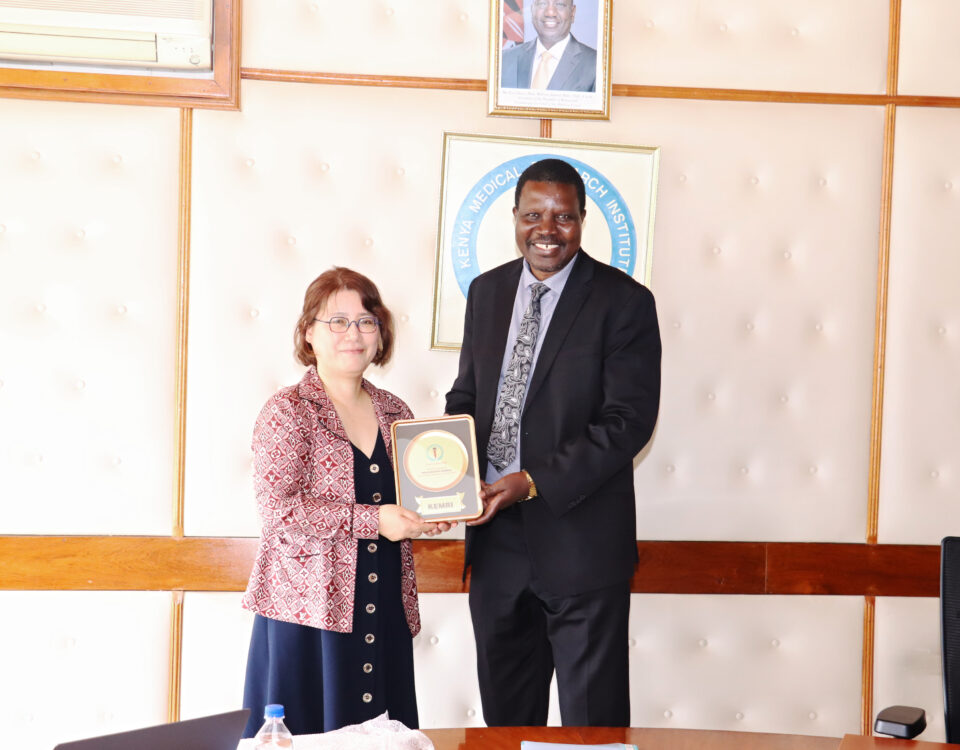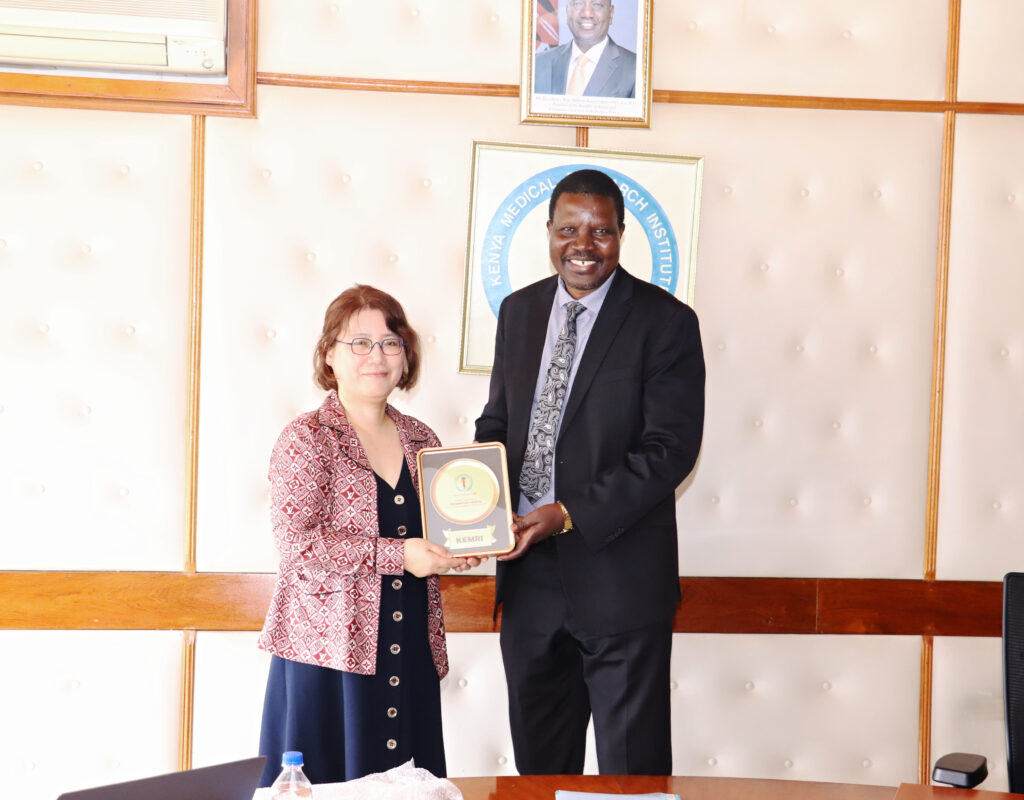

KEMRI CONFERRED WITH A CHARTER
May 15, 2026
LEA-WH Fellowship Immersion Week Kicks Off
May 15, 2026KEMRI Researcher Leads Charge to Transform Mental Healthcare in Kenya
BY VELLERIE MUSYOKI
The Kenya Medical Research Institute (KEMRI) is at the forefront of efforts to strengthen mental health systems in Kenya, with one of its Principal Research Scientists spearheading a multi-pronged initiative that bridges the gap between communities, faith-based institutions and primary healthcare facilities.
Dr. Linnet Ongeri, a Consultant Psychiatrist and Principal Research Scientist heading the Mental Health Unit at KEMRI’s based at the Centre for Clinical Research, has dedicated her career to expanding the reach of mental health care beyond hospital walls. Her work focuses on suicide prevention, substance use, perinatal mental health, and the integration of mental health services into primary healthcare systems across Kenya. As the country marks Mental Health Awareness Month, her efforts underscore the urgent need to address mental health as a public health priority.
For many Kenyans, the first point of contact when experiencing mental distress is not a psychiatrist’s office, it is a pastor, an imam, or a trusted community elder. Her passion for mental health advocacy, however, began long before policy discussions and research publications. “When I was doing clinical work, I kept seeing patient after patient and noticing the burden of mental health conditions,” she says. “I started asking myself what could be more impactful in terms of scaling care in the country.”
This passion for impact led Dr. Ongeri to the Kofi Annan Fellowship in Global Health Leadership Programme (KAF-GHLP) under the Africa Centres for Disease Control and Prevention, where she served from 2024 to 2025. The Afrocentric leadership programme focuses on value-based leadership, ethics and equity within African health systems. “I wanted to improve my leadership skills while thinking about the context that I live in,” she noted. During the fellowship, her project centred on suicide prevention, particularly the role of religious leaders in supporting individuals experiencing mental distress.
Through interviews with suicide attempt survivors, psychiatrists, psychologists and community leaders, a consistent pattern emerged: many individuals in mental health crises turn first to religious leaders because they are trusted and deeply embedded within their communities. However, many of those leaders acknowledged lacking the skills to respond compassionately to someone experiencing a suicidal crisis a critical gap that Dr. Ongeri’s work sought to address.
In response, Dr. Ongeri and her fellowship team collaborated with the Interreligious Council of Kenya to co-develop a suicide prevention curriculum tailored specifically for religious leaders. Informed by focus group discussions and in-depth interviews with faith leaders and individuals with lived experience of suicide attempts, the curriculum culminated in a practical pocketbook designed to guide religious leaders in recognising warning signs, responding compassionately, and referring individuals to specialised mental health services. The pocketbooks are expected to be formally launched on National Suicide Prevention Day, 10 September, and subsequently distributed to religious leaders across Kenya.
This initiative aligns closely with KEMRI’s broader mandate of strengthening mental health systems through implementation research and policy translation. At the institutional level, KEMRI conducts research on the burden of mental health conditions while simultaneously testing practical interventions within real-life healthcare settings. This includes training frontline healthcare workers to identify, screen, manage and refer patients with mental health conditions at primary healthcare facilities
KEMRI’s Mental Health Unit is also advancing research in perinatal mental health, including antenatal and postnatal depression and anxiety areas that Dr. Ongeri describes as significantly under-recognised despite their growing burden. On substance use, KEMRI is exploring how existing healthcare systems can better support affected individuals through early screening, motivational interviewing and treatment within routine healthcare settings, reducing the reliance on costly rehabilitation centres.
Despite progress in systems strengthening, stigma remains one of the most significant barriers preventing people from seeking mental health care. Dr. Ongeri noted that mental illness continues to be widely misunderstood, with many communities associating it with curses or demonic possession. She emphasises that mental disorders span a wide spectrum, including common and treatable conditions such as depression and anxiety, and that improving mental health literacy is essential to dismantling fear and discrimination. “Anyone can get a mental health condition and it’s really okay not to be okay,” she said.
Dr. Ongeri is also calling for greater attention to mental health in the workplace. With 60 per cent of the world’s population spending a significant portion of their lives in work environments, she identifies workplaces as critical spaces for mental health intervention. Psychosocial risks such as excessive workloads, workplace bullying and discrimination can profoundly affect mental wellbeing, and she is urging organisations to invest in sustained mental health programmes, leadership engagement, staff training and confidential referral systems. “Leadership has a huge role to play in destigmatising mental health. When leaders speak openly about mental wellbeing, it encourages others to seek support without fear,” she said.
As Mental Health Awareness Month continues, Dr. Ongeri reaffirms that the responsibility for mental health does not rest solely with healthcare systems it is a shared obligation across homes, schools, workplaces, places of worship and healthcare facilities alike. Her message to Kenyans who may be struggling silently is clear: seek help, speak up and know that healing is possible. “Mental health is really everyone’s business,” she says. “It spans all the fields of our environment.”